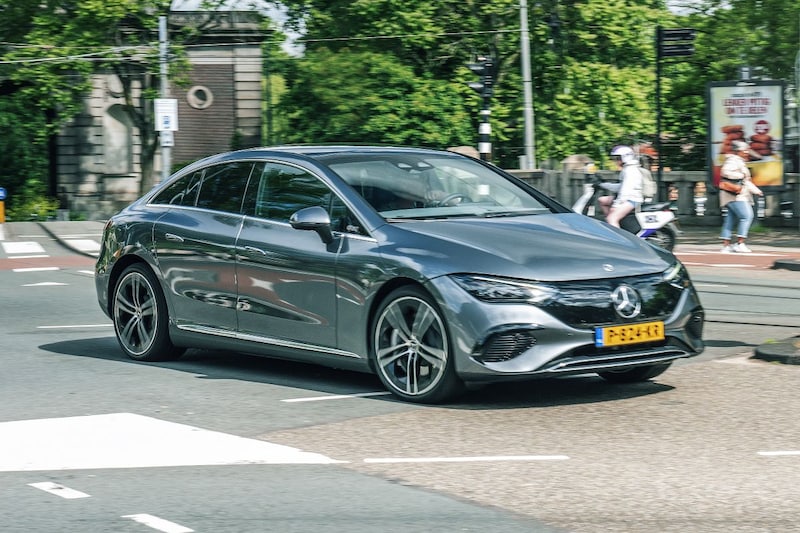
It was an interesting combination of news stories. First there was a warning from the grid operators that the overload of the grid in some places is so great that no new charging stations for electric cars can be installed. Quite a problem, which we could have foreseen in the past ten years. Now my expertise does not lie with the Dutch power supply, so I will not judge the causes and failures of policy without knowing all the details, but the overload as such is a fact. A cheerful week later we found a remarkable test balloon of the State Secretary for Infrastructure and Water Management in De Telegraaf. It wants to oblige business drivers to drive electrically from 2025. A remarkable plan about which I dare to say something. Now this fantasy is not exactly a bill. When an idea like this ends up in De Telegraaf just before the holidays, it is no more than a test balloon that has been deliberately leaked. This summer, the cabinet will start devising measures that will be presented on Budget Day. This way you can find out what ‘the world’ thinks about it. Well, Mrs. Heijnen, I can tell you, it’s a stupid idea. And you know the main argument. It is not always realistic to drive electrically. After all, that also applies to members of the cabinet . In April, your colleague minister Bruins Slot informed the House that she and all your cabinet colleagues will not have to pull the plug for six years. This is due to the limited supply, requirements in terms of interior space and full agendas that do not combine well with charging electric cars. Although a number of direct colleagues of mine thought this was blatant nonsense, I could agree with it. Complaining about this is like complaining that heads of state are going to fly to an environmental conference. They can be difficult by rowing boat and it is not about that one flight. It is about global, or in our case national policy for the masses. That’s where the profit is. You also have to deal with safety, a Mercedes EQS (which is the only car that would meet most requirements) is too expensive and driving on petrol or diesel gives you the flexibility that comes with a job as a minister. So I completely AGREE with Bruins Slot. But let the same reasons now also apply to a number of business drivers. The representative who traverses all of Europe cannot easily charge electrically everywhere and a CEO who is driven by a driver may also have requirements in terms of interior space. Some people also like to tow a caravan with their lease car and that is quite difficult with many EVs. Suppose this strange measure succeeds, what will the people do for whom an EV is not an option? Surprise: they buy a second-hand petrol or diesel. A car that consumes more than a new car, and they may also buy it in addition to their business EV, for which they keep track of kilometers. So there are even more cars on the already busy roads. In the meantime, the market share of EVs in business cars is already extremely much higher than that of cars with a combustion engine and many companies meanwhile require their employees to drive electrically. Because a company knows perfectly well whether that is real or not. You know what is a good idea? Keep the discount on the addition to encourage (rather than oblige) EVs longer, because in the last five years we saw how effective that was. No, it doesn’t have to go to 0 percent, but something like 15 percent is nice. Because EVs are still more expensive than cars with a combustion engine. Oh yes, get to work like hell with the power grid in the Netherlands, because that’s where the real problems lie. Not with the business driver who is already plugging in on a large scale in the Netherlands.
In addition to being an experienced test editor, Roy Klejwegt is also the man who is involved in AutoWeek
with all the news from The Hague. Here he regularly explains about the national
car policy.
This column was previously in AutoWeek 27