
Sedan enthusiast Jan Lemkes: ‘four the four-door’

sedans. Except in the premium segment, Western Europeans have had little use for it for a long time and with the rise of the SUV, the rest of the world seemed to largely follow that example. The battle is not over yet, however, as the saloon shape seems to have a unique advantage for electric cars. That raises the question for sedan enthusiast Jan Lemkes: are we on the eve of a glorious comeback?
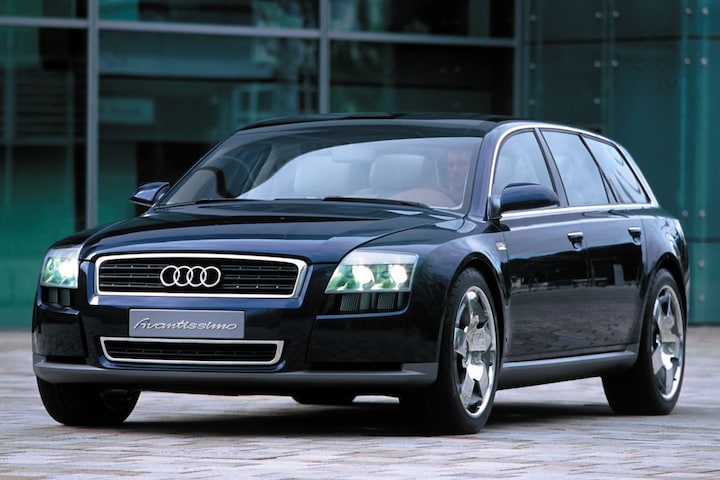
‘Like a child draws a car’ is often said about the sedan. If that is still true, it is special, because for today’s children, sedans are no longer the standard in the car field. This applies even more in Western Europe than in the rest of the world, because here we already preferred alternatives such as the hatchback and the station wagon before the rise of the SUV and the crossover. That is not surprising, because they offer a lot of practical advantages. Sedan aficionados like me may object that a sedan rear window stays dry in the rain and luggage in a locked trunk is less likely to be stolen, but in reality the reason for embracing the sedan is not so rational. Whether your child experiences it that way or not, a sedan is still ‘the car’. Its profile consists of three separate compartments, for engine, passengers and luggage, just the way we conservative car enthusiasts like it. In higher segments, a sedan is simply more upmarket in my opinion. A BMW 5-series Touring is a fantastic car, but as a sedan, the same model fits better in the picture for an expensive hotel. That may also explain why no brand has dared to make a station wagon based on a top limousine. Audi once seemed to be planning it and presented the Avantissimo Concept in 2001, but ultimately stuck to the A8 Limousine.
My sedan love doesn’t stop with words, but was already expressed in deeds at the very beginning of my car career. My first car was a sedan, although it had very little to do with top limousines. No, the Daihatsu Charade sedan with its apparently ‘stuck’ butt is clearly a sedan in the ‘less successful’ category. Car designer Niels van Roij says that there is even a special word for that kind of converted hatchbacks: ‘shatchbacks’. “These are difficult designs, because a car that is born as a hatchback often cannot simply be transformed into a sedan,” says Niels. “Nowadays that is even more true, because hatchbacks are much higher than before and have a higher shoulder line. If you then try to turn it into a sedan, you will see that a lot of things look different than you had in mind.”


Shatchbacks usually bypass Western Europe
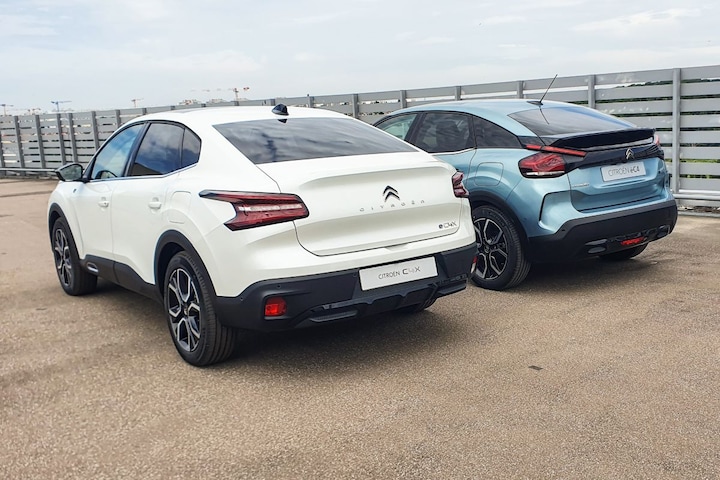
‘Shatchbacks’ usually end up in countries where the market simply demands a sedan and therefore often pass Western European noses. Over the years, a few seeped through to our price lists. In the current car landscape, one literally stands out: the Citroën C4 X. This is a (mild) crossover, and therefore an even higher model than a regular hatchback, with a ditto ass as a result. Not really ugly as far as I’m concerned, but not really harmonious either. Citroën makes no secret of the fact that it mainly targets markets outside Europe and only carries the four-door C4 X in the Netherlands as an electric ë-C4 X. This means that it more or less unintentionally fits back into the trend, because as mentioned before, the EV is chasing the rise of the sedan.
Magic word: streamline
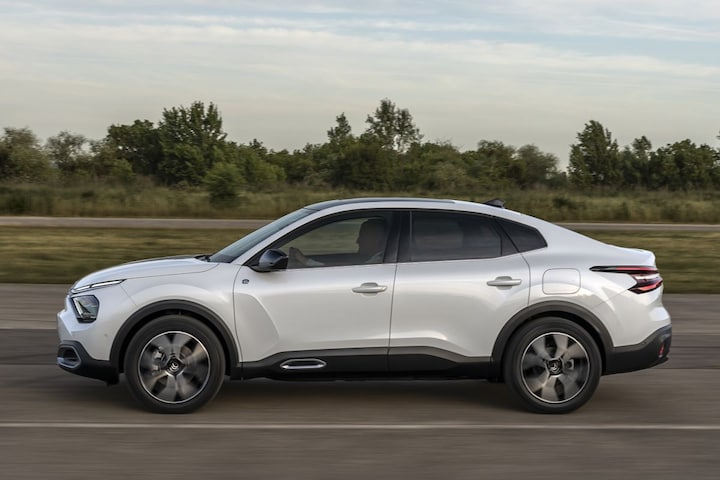
The magic word in that context: streamline. As the figures elsewhere on these pages show, even the high ë-C4 X, never designed for a streamline, gets just a bit further on the same charge current than its otherwise identical brother without ‘butt’. The fact that such an excellent rear end immediately has a positive effect on the driving range is no surprise to researcher and EV expert Auke Hoekstra of Eindhoven University of Technology. “The optimal streamline is the teardrop shape, so the best shape for an EV is one where the roofline slopes nicely towards the rear,” he says. “However, that should not go too fast, because then the air will let go of the body, as it were, and unwanted swirls will arise,” says Hoekstra. According to him, this also explains why modern sedans rarely have a clearly distinguishable tailgate. “That kink between the rear window and tailgate causes swirls, which you want to prevent as much as possible.”
Advantage of the fairing in the Citroën ë-C4 X:
- Citroën ë-C4 – 50 kWh battery capacity – 357 kilometers WLTP range
- Citroën ë-C4 X – 50 kWh battery capacity – 360 kilometers WLTP range
+ 3 kilometers profit
It is more important for EV to squeeze as many kilometers as possible out of energy
The whole streamlining story of course applies equally well to sedans with a conventional combustion engine on board, but in those cases this theme often seems secondary to other aspects. Hoekstra can explain that too. “A combustion engine is always much less efficient than an electric motor, but it is most efficient at a constant, somewhat higher speed,” he says. Such a power source therefore has relatively little difficulty with dragging a car for a long time, even if it cuts through the wind less optimally. “That is a big difference with an electric motor, which simply means that driving faster costs more energy.” In addition, Hoekstra notes that it is simply more important for an EV to squeeze as many kilometers as possible from the available energy. “Charging takes longer than refueling and cannot be done everywhere, so range is important,” he says. “Streamline this as well, although that could well change again if the batteries become cheaper and charging will be even faster in the future.”

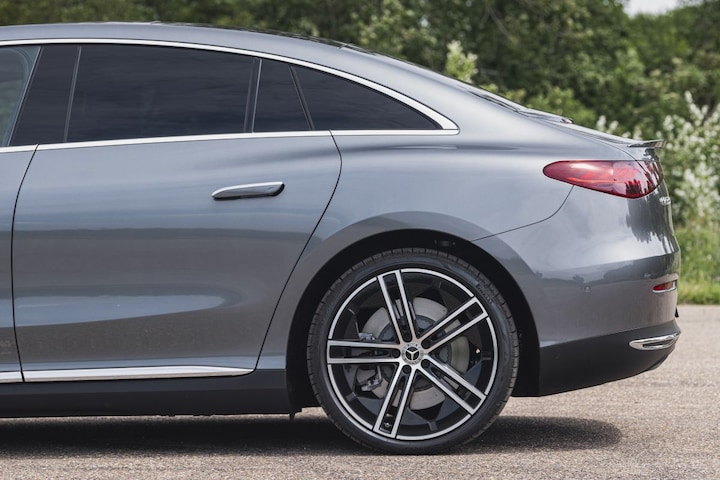
Mercedes-Benz EQE: unlike the larger EQS, a real sedan.
Sedan or liftback
Teddy Woll, head of aerodynamics at Mercedes-Benz, has no doubts about the sedan’s advantage. “With no other body shape you can achieve so much profit when it comes to range,” he says in an interview with the AD. Woll has some authority in this area, because Mercedes-Benz has often been the streamline king of the car world in recent years. The A-class sedan, secretly also a ‘shatchback’, was briefly the most streamlined car in the world, only to be overtaken by the electric EQS of the same brand. That über-EV has now also relinquished that title to the Dutch ‘solar car’ Lighyear 0. But wait… the EQS and the Lightyear are not sedans, but five-door ‘liftbacks’ with a large fifth door. Is the more versatile liftback not the streamlining answer that the car industry is apparently looking for? Yes and no. Yes, because it doesn’t have to matter for the shape in most cases. Hoekstra also acknowledges that the small boot lid as such is not a necessity. “The shape of a model like the Toyota Prius also works very well,” he says.
However, there is another factor: costs. “The development costs for car manufacturers are currently skyrocketing, because the market demands both SUVs and EVs,” says Niels van Roij. “Such a large tailgate is nice, but it also means that extra costs have to be incurred to keep the body rigid enough. A sedan is naturally stiffer and quieter, so that makes a difference,” says the car designer. Add to that the fact that some markets simply require a sedan, and the worldwide introduction of the same model is also a form of cost saving and it still looks nice for the real sedan.
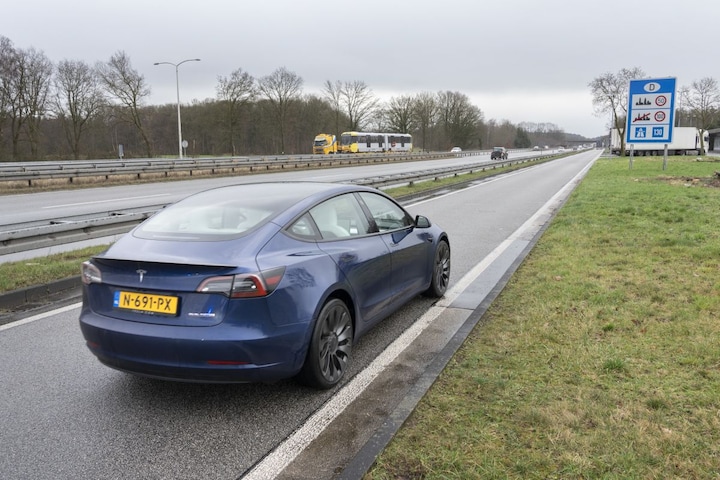
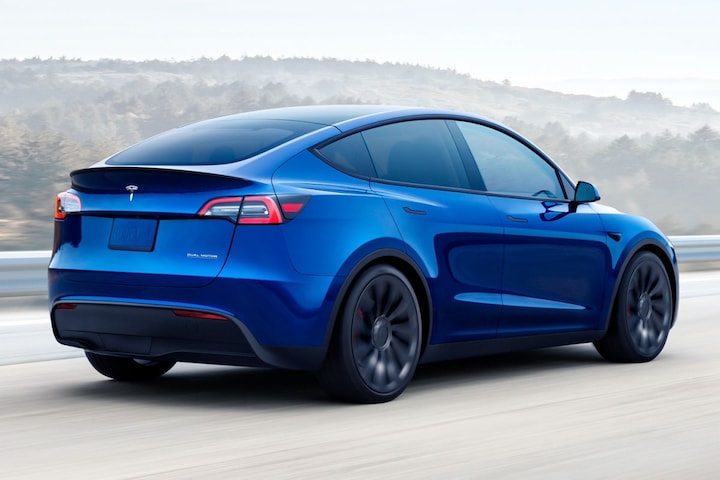
Advantage of the fairing with the Tesla Model 3:
- Tesla Model Y Long Range – 75.0 kWh battery capacity – 533 kilometers WLTP range
- Tesla Model 3 Long Range – 75.0 kWh battery capacity – 602 kilometers WLTP range
+69 kilometers profit
Tesla Model 3 looks like a hatchback but is a sedan
In this context, the Tesla Model 3 cannot go undiscussed. It looks like a hatchback, but is a sedan. Why? All of the above, plus the fact that a full, continuous glass roof is necessary to create enough headroom for rear passengers under the steeply sloping roofline. There is simply no room for the hinges and reinforcements that would be required for a large hatchback lid. The fact that the model with its small loading opening is somewhat less practical is also easily brushed aside in the ‘hatchback country’ of the Netherlands if there are enough advantages in return. After all, anyone who doubts this need only look at the sales figures of Tesla’s entry-level model. In the – striking – form of the Hyundai Ioniq 6, the concept of the Tesla Model 3 is followed, because this car also has a real, small sedan lid. The Volkswagen ID Aero seems to have a hatch hinged above the rear window, but as a streamlined, low model with a butt, it is actually still fully part of the trend.
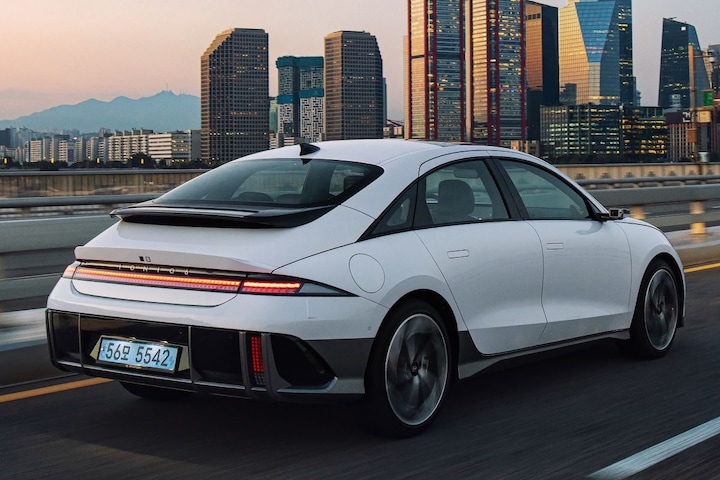
Hyundai Ionic 6.

Volkswagen ID Aero.
Good or bad design not linked to body shape
No one knows what the future holds, but there are enough indications to say that the sedan is experiencing at least a small revival. Does that lead to great joy for a design expert like Niels van Roij? “Not necessarily, because a good or bad design is not linked to a body shape. So I think an SUV or a small hatchback can be just as good design as a sedan,” he says. What if we silence the car designer in him and make it a little more personal? “As a human being, I definitely like sedans. In fact, my first car was a Volvo 940 sedan and I still own it and drive it to this day. The four-door 940 has a facet edge on the C-pillar that is missing from the station wagon. That makes me very happy.”
Ah, sedan lovers. Beautiful people!
– Thanks for information from Autoweek.nl