
Living legend

This week it is no less than fifteen years ago that the current Nissan GT-R went into production and the car is still being built. That’s why today we reflect on the history of Nissans with a GT-R badge: the icons of the Japanese touring car class, the Nürburgring, video games and movies and the sprint cannon that did a great job of dividing opinion on the well-established internet in 2008 . A short history.
The Nissan GT-R as we know it today (model generation R35) is a thoroughbred sports car. While Nissan’s previous coupés with blown six-cylinder were often known as Skyline GT-R, the R35 is the first to do it solely with the GT-R name. The current iteration, which already went into production at the end of 2007, is therefore only available as the sports coupé as we know it. Its predecessors were also available in other body styles and as a non-performance model without the GT-R addition.
However, we will not consider them today. Focusing on the GT-R-badged cars, the R35 GT-R actually has five predecessors – all six-cylinder. The first two made their debut in the late 1960s and early 1970s. While the original, nicknamed ‘Hakosuka’ (photo 2), has since become a true collector’s item, the second has been virtually forgotten. After that generation, there followed a period without the label, until the first GT-R with R designation was presented to the world in 1989: the Nissan R32 GT-R.
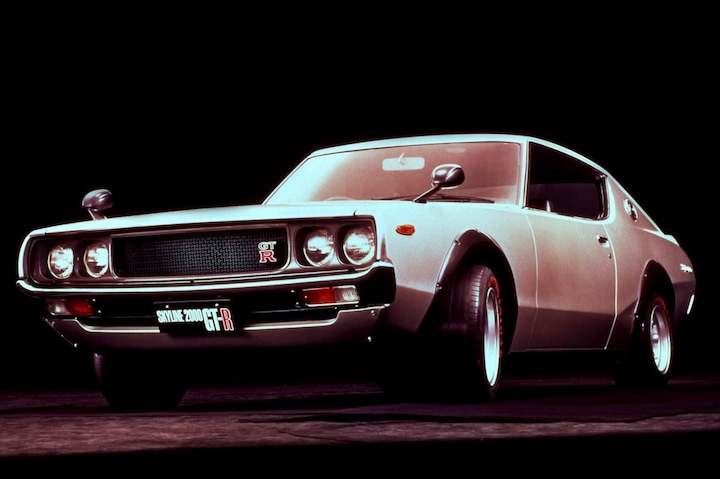
The second model to receive the GT-R badge, a car that is not very well known compared to other GT-Rs.
The birth of Godzilla
The party started with that car as we still know it today, including four-wheel drive and turbo technology. The R32 even had four-wheel steering. Together these things ensured that the GT-R offered decent performance in all conditions, with a torquey engine and endless traction. This also showed in racing: in racing trim, the R32 was unprecedentedly successful as a touring car in Japan, earning it the nickname Godzilla – a nickname that would be dusted off again and again for later generations. That nickname (and the car itself) was given extra cachet when the car appeared on the cover of the first Gran Turismo game for the original PlayStation in 1997. The series of racing simulation games became very popular in the years that followed and the GT-R was one of the favorites of many of the racers.
The next GT-R according to the contemporary recipe appeared in 1995 and had – you guessed it – the designation ‘R33’. It was very similar both technically and in design to its predecessor and was the first production car to dive under 8 minutes for a lap on the Nürburgring Nordschleife. A record that would later be broken by… the R34 GT-R. Before we highlight it, first some attention to the ultimate R33: the 400R (1995), a thoroughly tackled homologation special of the R33. It had a six-in-line drilled in the length and width under its hood, which was now 2.8 instead of 2.6 liters. The now legendary engine code ‘RB26’ became RBX-GT2, the engine produced 400 hp and Nissan built only 44 of the hundred planned copies of the special. It was not only significantly addressed in terms of the engine, but also looked much thicker from the outside. This allowed it to make an appearance in every Gran Turismo game and it became one of the most imaginative GT-R versions.

The 400R had a lot more power, a striking body kit and three-piece wheels.
2 Fast 2 Furious
Although the R34 GT-R could also do something about it. That car was used from 1999 to 2002 and again had roughly the same recipe as the R32 and R33, with the same engine in the base. Partly because of his features as Paul Walker’s car in 2 Fast 2 Furious, the second film in the popular street racing series, the R34 became almost the most popular of all generations. Although he probably owes that partly to his good looks and to the hole that the car left behind. After the R32, R33 and R34, for the first time in years, there was no Nissan GT-R for a long time, so there was enough time to miss the third ‘modern’ GT-R.
Although from 2007, when the ‘current’ R35 GT-R was presented, there was actually no reason to do so. The new one got a 3.8-liter six-cylinder under its hood, with cylinders that were now arranged not in line, but as a V. That engine was connected to a double-clutch gearbox with a launch control function (very modern at the time), with which the car-with-smart-traction control reached 100 km / h almost as quickly as the then all-powerful Bugatti Veyron – but then for a fraction of the price. Even notorious sprinters like the much more expensive Porsche 911 Turbo bit the dust in the face of the new GT-R, and the public couldn’t wait to dust off the Godzilla name again. This car crushed everything.
However, this did not only have positive consequences. The emphasis on acceleration times, further fueled by how well the 3.8-litre lent itself to excessive tuning (now over 2,000bhp), suggested that the Nissan GT-R was a bit of a one trick pony had become. The internet, which was now accessible to many at the time, was divided into two camps. One thought the GT-R was a great piece of technology, the other thought it was an overly-loved computer-on-wheels.
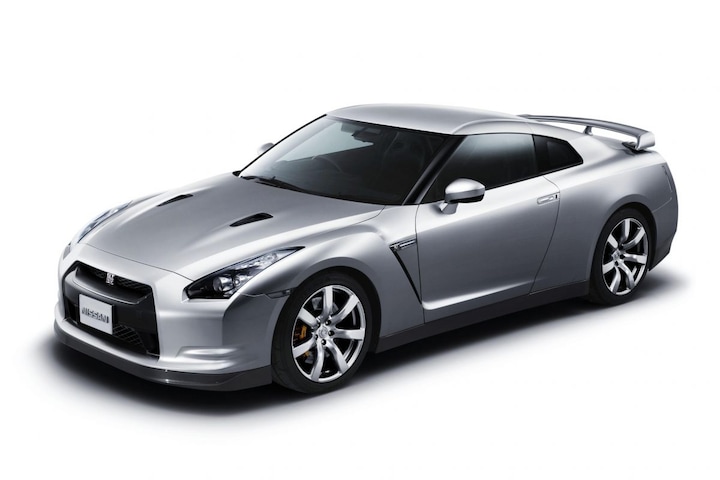
The original GT-R, which looked almost exactly like the concept that preceded it.
Different zeitgeist
We are now years further and the GT-R is still among us. Although the car is no longer available in Europe, because it no longer meets the modern noise requirements applicable here, copies are still rolling off the band. The Nismo version today has more than 600 hp and, despite its old basis, is a car that still knows how to divide opinions. When the R35 came out, it was a relatively large, heavy car with a lot of technology. This would make it a sterile car on the track, which offered little emotion.
Most of the press seems to be coming back to that today. Due to the arrival of EV and hybrid violence and much more modern gearboxes, the Nissan GT-R is almost called analogous. In addition, the car was very heavy for 2007 standards, but today the Nissan weighs roughly as much as a new BMW M2 – and modern tires and brakes know what to do with that.
The R35 will therefore not soon be forgotten when the car finally goes out of production. A successor with hybrid technology will most likely ‘just’ come and we are curious whether that car will be just as groundbreaking as the current one after its introduction. We have been dealing with the rumors about what the ‘R36’ would be since 2013, but even today we know very little about it. As soon as that changes, you will read it here. On to the next!
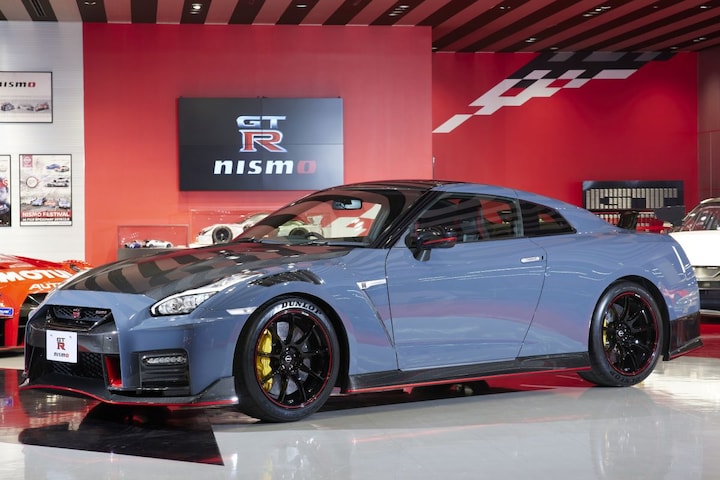
To this day a machine with awesome potential.
.
– Thanks for information from Autoweek.nl