
The 3-second rule is well known and serves as a guide for many people when it comes to dropped food. You can find out here whether there is really something to it.
“Three-second rule!” Most of us have heard the exclamation before. It often sounds when food falls on the floor. It is based on the assumption that the food that has fallen down is still safe to eat if it has only been on the floor for a maximum of three seconds.
There is also a “5 second rule” that works in the same way – the food can only touch the floor for two seconds longer. In this article we will clarify whether the two rules are actually correct.
3-second rule: what’s it?

A 2014 study from Aston University shows that the 3-second rule isn’t complete nonsense. In fact, the study showed that fewer bacteria stuck to food that was on the floor for a short time than to food that was in contact with the floor for a longer period of time.
The study was carried out by Anthony Hilton, Professor of Microbiology at Aston University, and his biology students. They examined the transfer of the two types of bacteria Escherichia coli (E. coli) and staphylococci to foods such as toast, pasta and cookies. The individual foods were left on the floor for different lengths of time – from three to 30 seconds.
Whether and how much bacteria are transferred to the dropped food depends largely on how long it remains there. The type of floor also has an influence on how clean food stays: Surprisingly, fewer bacteria pass on to food from carpets than from laminate or tile floors, for example.
The 3-second rule ignores other factors
A study carried out two years later confirmed the results of the 3-second rule. Researchers at Rutgers University also found that food is more likely to be attacked by bacteria if it sits on the ground for longer.
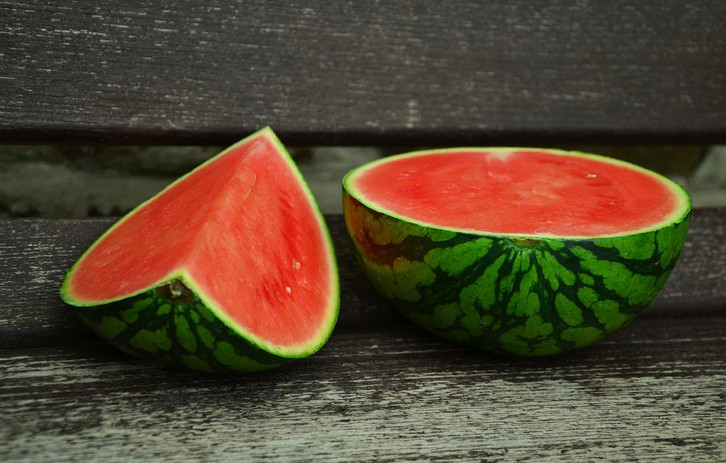
However, the study also showed that other factors are of equal or greater importance in contaminating a food with bacteria. In addition to the type of floor covering (the Rutgers study also found that carpet surprisingly contributes less to transfer), the moisture content of a food has an impact on how heavily it becomes contaminated with bacteria. Bacteria are therefore particularly transferred to moist foods such as watermelon.
Conclusion: Does the 3-second rule make sense?
In principle, the 5 or 3 second rule is not wrong. Of course, you don’t have to throw away every piece of food that’s briefly fallen on the floor. Especially if it happened in your own home and not on the street, you can turn a blind eye to it.
You should keep in mind that there is always a risk of infection with bacteria when eating dropped food. However, this rarely has serious consequences.
By the way: You can find out how you can clean your apartment as effectively as possible here:
Edited by Lucas Drebenstedt
Read more on Techzle\.com:
- Greedweed, dandelions & co.: 10 weeds that you can eat
- Apple cores: eat with them or not?
- Eating intuitively: How to become more mindful when eating
** marked with ** or orange underlined Links to sources of supply are partly partner links: If you buy here, you are actively supporting Techzle\.com, because we then receive a small part of the sales proceeds. More info.