
Niels van Roij wants Chris Bangle back
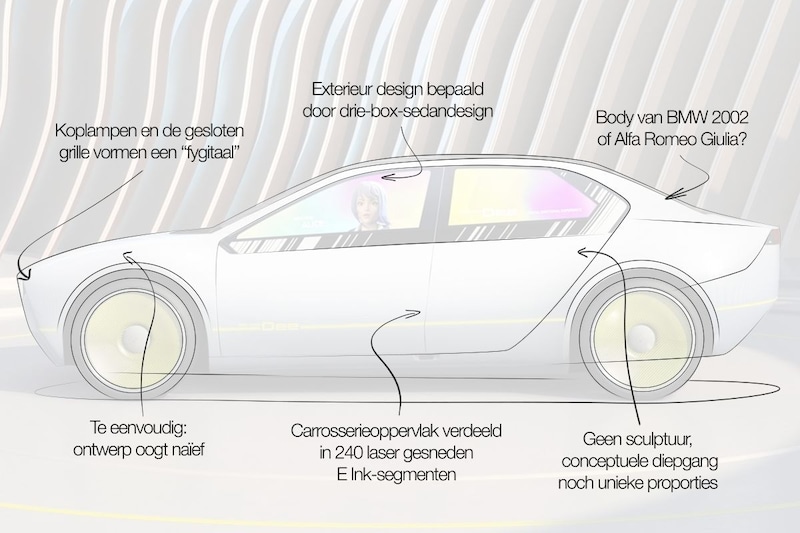
BMW has given its vision of the future digital experience, the BMW i Vision Digital Emotional Experience, or Dee. Car designer Niels van Roij definitely gets an Emotional Experience from Dee …
Creating a stronger bond between people and cars is Dee’s goal. BMW has also refined the use of color change technology. After the iX Flow with E Ink, which could only change from black to white, the i Vision Dee can compose its exterior from 32 colours. The body surface is divided into 240 laser-cut, individually controlled E Ink segments. You can generate a variety of patterns.
BMW is completely silent about the weight of the displays and controlling peripherals, which are of great importance for an electric car. And nobody knows what the display body is for us or who is waiting for it. BMW’s marketing and design machine seems to focus mainly on shocking (XM and iX!) and going viral on social media. Establishing a relevant vision for the future and customer retention is apparently unimportant.

BMW iX Flow
The digital Dee experience begins outside the vehicle, with a personalized welcome scenario that combines graphics, light and sound effects. The headlights and the closed BMW kidney grille form a “phygital” – according to the marketing gurus. A combination of physical and digital, allowing the vehicle to produce different facial expressions.
More than twenty years ago, Toyota applied a similar idea to the Pod concept car in 2001. So old and bad news. The flat expression of ’emotions’ on a car’s face can be classified as ‘sad superficiality’. Characteristic of the design leadership problem at BMW.

Toyota Pod
The design of i Vision Dee has been deliberately reduced to draw attention to the digital experience and brand DNA, according to the BMW press release. The exterior is defined by the three-box sedan design. The first reaction may be that it makes Dee look better than the brutalist XM and iX. The brand, and with almost the entire current BMW line-up, undeniably sacrificed the identity that made its cars – rightly so – so popular in recent decades. But the simple proportions of the Dee are so brash that the design becomes simplistic. Dee looks naive.
Great effort has been invested in an unnecessary technology gimmick. Pasted on a body that may look a bit like a classic BMW, but can also look like a 1970s Alfa. The vision behind the technology is paper thin. The digital layer is little more than a clever diversion from what is a reasonably proportioned, very generic sedan.
There are good ways to do minimalism, with plenty of excellent examples within the BMW portfolio. The problem with Dee is that there are no features or lines at all, on an extremely stretched grille and – kudos, come on – a Hofmeister nod. Due to a lack of compassion and identity, Dee is uninteresting and therefore anything but emotional. It is diametrically opposed to what BMW claims the design does.
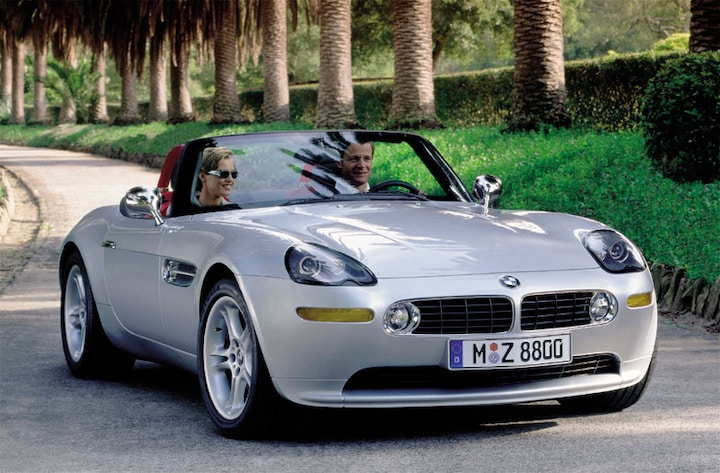
Sublime aesthetics, innovative sculpture control, perfect proportions and conceptual depth were once hallmarks of BMW. Think of the i3, i8, GINA Concept, Z4 and Z8. Or the exceptionally emotional surfacing of the 1-Series M Coupé, Mille Miglia Coupé Concept and M1 Concept. Dee cannot be in the shadow of these pioneering BMW designs.
(Text continues after photos of BMW Gina, 1M, M1 concept, Mille Miglia and Z8 respectively)


BMW M1 Concept from 2008

Electric propulsion and digitization can be a new opportunity for car design. BMW has a point there. However, a BMW should excite. Not in the XM way, but like Chris Bangle did. He got BMW out of the doldrums, brought it where it needed to be: in the field of exciting dynamics, stimulating sportiness and fiery characters.
The Digital Emotional Experience is anything but the ultimate driving machine, it is a flat marketing hype. Bring Back Bangles!
.
– Thanks for information from Autoweek.nl