
Apart from the price, little changes
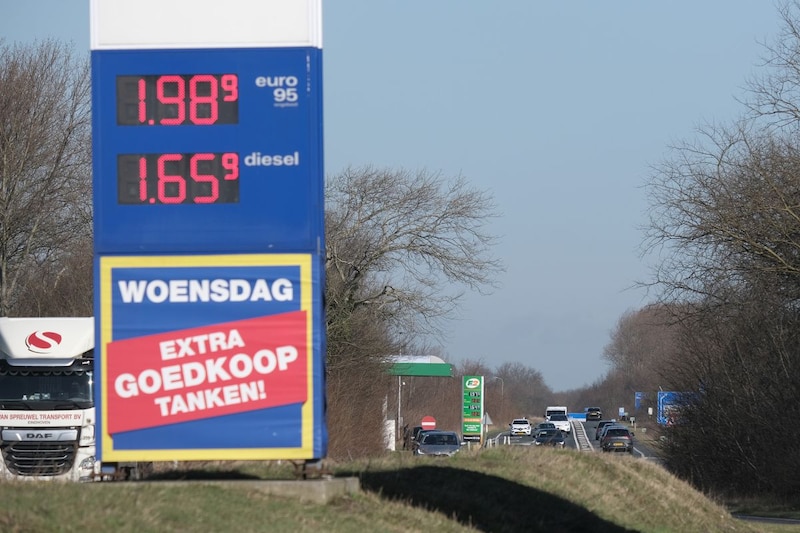
There will be a fuel excise increase on Saturday and half of the excise duty reduction due to the high energy prices will lapse. The expectation is that the price of a liter of petrol at the pump will rise by more than ten cents in one go. This is a reason for the government to measure ‘the border effect’, but how do you deal with it as a consumer?
‘Unique’, is what the spokesperson for the sector association Beta Gasstations calls the excise duty reduction that took place on April 1, 2022. The Russian invasion of Ukraine and all the sanctions that followed caused the prices of fuel – and therefore of almost all other products – to skyrocket during that period, so the government decided to do something it had never done before: to temporarily increase the excise duties on fuel. to lower. A petrol price that rose locally to above €2.50 per litre, together with other more expensive living expenses, formed an undesirable situation, so we paid relatively less tax at the pump in the past fifteen months.
The reduction would always be temporary, but it ended up being in effect for longer than originally thought. The original idea was a reduction that would apply until the end of 2022, but that was extended to July 1, 2023. Next Saturday, the entire reduction will not be canceled either: first half of the excise duty reduction will lapse, after which – so it is now plan – on 1 January 2024 the other half of the reduction will disappear.
Saturday’s price increase: more than ten cents more
The reduction implemented on April 1, 2022 meant a price reduction of 17.3 cents for a liter of petrol, 11.1 cents for a liter of diesel and 4.1 cents for a liter of LPG. Please note: these are the ‘bare’ prices, which do not correspond to the actual prices for the consumer. For example, the VAT rate of 21 percent is levied on the entire amount including excise duties, so that a price reduction of 17.3 cents for the consumer price – in theory – means a reduction of almost 21 cents.
Half of this will be canceled on Saturday, causing the price of a liter of petrol to rise by more than ten cents. It does not stop there, the increase will eventually even be about 13.8 cents. Here’s the thing: not only will the reduction be cancelled; the annual inflation correction of the excise duty also takes place on 1 July. This normally takes place on January 1, but due to the strong inflation and the already high prices, it was postponed this year – just like the reduction of the excise duty reduction. Diesel is expected to be about ten cents more expensive, LPG more than three cents.
For 2024, the inflation correction must again ‘normally’ take place on 1 January, but because that would be quite shortly after this correction, it is not yet certain whether this will continue, also because the rest of the excise duty reduction will then lapse and the price will then will increase anyway. The government intends not to allow fuel prices to rise too suddenly in order to properly map out the ‘border effect’ of price fluctuations, which is also the reason why the excise duty reduction will not be canceled completely at once. In the coming period, the changes in consumer behavior in the border regions as a result of the (therefore also limited) price rise will be closely monitored, so that policymakers can keep these effects in mind when determining future prices. That’s a good thing for filling station owners in those regions.
Short-lived effect
For those who do not pay to fill up across the border, it can save a few euros to fill up today, although it is expected that it will be busy at the filling stations, the spokesman for Beta Tankstations says. The price increase has little impact on the overall demand for fuel, but will lead to a bit more activity this week and a bit more calm next week. After that, the majority will be ‘used’ to the new price situation and the situation is expected to return to normal. The fairly strong price increase on 1 July has little influence on how petrol station owners will determine their prices in the coming period; the average operator will perhaps keep a closer eye on what the competition is doing, but normally also uses this method to determine the rates. In principle, you do not have to count on extra discounts or otherwise deviating pricing.
All in all, the changes to the pump as of July 1 are therefore not as significant as it may seem. Inflation corrections resulting in a sudden price increase of a few cents are normally nothing more than an annually recurring phenomenon, only this time it is accompanied by the phasing out of a discount that no longer serves the purpose for which it was created: offsetting exorbitant fuel prices.
The rates at the pump have been a lot more stable for some time now, with the price of diesel again significantly lower than that of petrol ‘as usual’. Incidentally, that difference will shortly be slightly larger due to the relative nature of the VAT rate on the excise duty reduction that is now taking place. The fact that petrol prices are now (temporarily) rising again to – or beyond – €2 per liter is not entirely surprising: inflation has been high for some time now and the consumption of fossil fuels will not become cheaper in the long term. . A petrol price of €2 per liter is in line with this.
Will you fill it up today or will you ‘just’ see what the increased liter price means for the price of a full tank the next time you fill up?
– Thanks for information from Autoweek.nl