
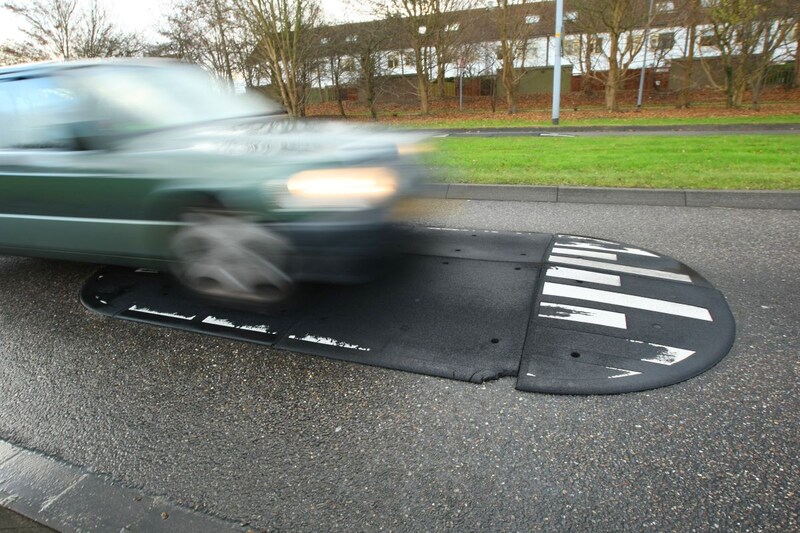
A new traffic obstruction element has been installed on a beautiful, leafy avenue near my house. It is one of those round bumps in the latest bullying fashion, a boil on the road surface. If the speed bump is hard terror, this is mild. You don’t feel much of it in the car. It also won’t make you drive slower, because it can’t be seen, especially in the dark. You think: Aha, a bump, another bag of public money gone up in smoke.
It is, in short, yet another pointless addition to the package of self-intimidation measures with which the country is richly blessed; speed bumps, road narrows, concrete blocks, pig ridges, intersection plateaus and traffic islands. Even though I’m used to them, I still despise them. Opposite my house, on the road to the parking lot where I charge EVs, there is a nasty short bounce bar that always hits harder than you think. In theory an effective remedy against hooligans, especially on busy summer days when there is a lot of bicycle and pedestrian traffic, in practice an hopeless weapon against road abusers. They drive over it at a speed of 5 kilometers per hour and put it in the parking lot, one of the largest in Groningen, and then take it for a spin. In the summer, happy little ones come there en masse to test their new teenage second-hand toys and I secretly enjoy it with them, despite the noise pollution. Never have I loved civil disobedience so much as in these good, raked times when every government website is choking on its own exemplary nature.
Back to my neighborhood. You could rightly say: If such a boil saves one human life per year, it has been worth the investment. But I never catch my neighbors engaging in the behavior that governments impose on citizens with their proverbial suspicion. Nobody drives fast here, I notice every day as a pedestrian or cyclist. That is not possible. The bump is in a dead end road for only local traffic and cyclists passing through to and from the city. It is narrow and the risks of cracking are too great. With ramps on both sides, the victim could be your neighbor, so social control is much more effective than speed bumps. The biggest pirates here are cyclists with average speeds that make drivers turn pale, and even they are happy to move a meter to let you pass.
Amsterdam has now reduced the speed limit in large parts of the city from 50 to 30. Amsterdam residents do not have to worry about this, they still use the bicycle and public transport. The transition will not be a big one for the motorist sentenced to Mokum, who already spent a large part of his travel time standing still along the way. Just look at the average speed of your car on the on-board computer, especially if you have never reset it. It is already closer to fifty than a hundred. Then you really won’t die from twenty kilometers less here and there. Especially because, in my impression, the average speeds in the city center were already well below the old maximum. I know this since a test drive with the Opel Rocks-e, that electric 45 km car. Beforehand I wondered whether something so slow in the city wouldn’t be a safety risk. To my surprise, I barely reached top speed anywhere. Afterwards you think: Ah, so everyone was already driving around 30 in practice. That is not a wild guess, I have been able to determine that in practice.
Of course, Amsterdam created a special information page on which citizens are taught in that insufferable familiar schoolmaster tone about the blessings of the new rules. The city expects 20 to 30% fewer accidents, higher survival rates for pedestrians, better anticipatory drivers and halving of traffic noise. “A different speed limit takes some getting used to,” it sounds disgustingly understanding, but “by driving a little slower together, we ensure that everyone can move around our city safely and without worries.”
Very curious to see how this turns out. According to Amsterdam, travel time has not increased in Brussels since the introduction of a 30 km limit in 2021. It doesn’t surprise me. Thinking about my own experiences with the Rocks-e, it could very well be that such a measure is just like that stupid lump around the corner. You would like to appoint a special civil service team to investigate the waste of public resources. Then have a gifted author write the final report and you have a bestseller.
– Thanks for information from Autoweek.nl