
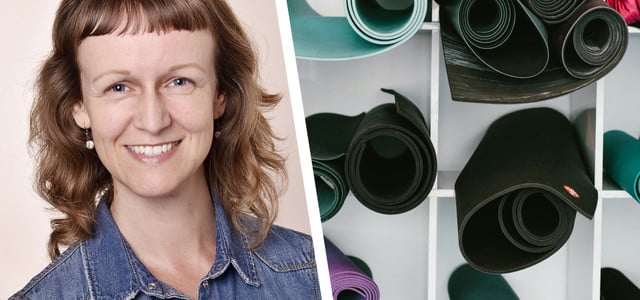
Soft virgin wool or non-slip plastic? The selection of yoga mats is large. Yoga teacher Kerstin Kopp reveals why the surface should match the yoga style and how to protect the material.
Whether sitting or lying down: yoga mats protect the body when you perform exercises on the hard floor. During asanas – the postures in yoga – they ensure a secure footing and when lying down they provide warmth and relaxation.
Yoga mats come in different thicknesses and materials. They are made of PVC, TPE, natural rubber, cork or virgin wool. Of course, they also have different properties in terms of slip resistance, cushioning and sustainability.
But who is which yoga mat suitable for? Kerstin Kopp explains that. The yoga teacher with health insurance certification has been teaching Vini and Hatha yoga for around ten years. She is also a press officer for BDYoga – the professional association of yoga teachers in Germany.
Which mat is suitable for which level?
Kerstin Kopp: As a beginner, a normal sports mat or sleeping mat may be sufficient. However, these often have the disadvantage that the material pulls apart in certain positions, such as downward dog. In addition, these mats often have a strong curl, a wave that is a hindrance in some asanas.
From the second course at the latest, you should decide on a proper yoga mat so that the focus can be on your own practice and not on fighting with the mat.
Which yoga mat is suitable for which yoga style?
Kerstin Kopp: Blankets made of virgin wool are wonderful for more calm yoga styles such as Yin Yoga or Yoga Nidra. Because they are soft and warm. [Anm. d. Red.: Die Wollproduktion geht oft mit viel Tierleid einher. Um dieses zu vermeiden, beachte unsere Tipps für nachhaltige Wolle.] For styles with more physical activity, such as Hatha, Vinyasa, or Ashtanga, you should pay particular attention to a non-slip surface in order to be able to safely perform asanas such as Hero Pose, also known as Warrior Pose.
The manufacturers provide relevant information here. Specialist retailers will provide you with advice and can, if necessary, test the mats directly on site.
A thicker mat is easier on the joints, while a thinner one is an advantage, for example when doing balance poses. Depending on your posture, the thinner ones can also be placed on top of each other to provide soft cushioning for the knees. Or you can use a folded towel or pillow. Sometimes ingenuity is required in the use of aids – whatever helps is allowed.
How does the mat last – and what else is important?
Kerstin Kopp: In general, the mats last quite a long time under normal use. However, you should be careful not to bend the mat, but always roll it so that the material does not break. You should also avoid rolling up against the curl.
Another important point is the issue of pollutants. Depending on the type of production, the production of the mats causes a burden on the environment and endangers the health of the workers in production and the end users.
As a user of yoga mats, you have to look carefully before buying and it is best to ask the manufacturer. Some brands have specific eco-lines and describe their quality guidelines quite precisely.
** marked with ** or orange underlined Links to sources of supply are partly partner links: If you buy here, you are actively supporting Techzle\.com, because we then receive a small part of the sales proceeds. More info.