
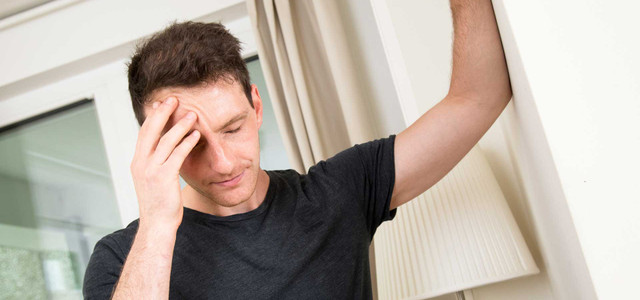
Did you fall while playing sports and fall on your head? A simple test helps children and parents assess whether a concussion has occurred.
Did you just escape with horror – or did you end up with a concussion? If the child has hit their head, it is not always easy to correctly assess their state of health.
Experts from the LMU Clinic in Munich and the ZNS Foundation – Help for people with traumatic brain injury have developed the so-called KEKS test for such situations. What each letter stands for:
Concussion: This is how the COOKIE test works
- K stands for “head.” Headaches, dizziness and nausea are signs of a concussion.
- E stands for “sensitivity”: Bad mood, irritability and sensitivity to light and noise are typical symptoms here.
- K stands for “concentration”: Forgetfulness, a feeling of being foggy and general problems with concentration are warning signs.
- S stands for “sleep”: Tired than usual – and somehow exhausted? Deteriorated sleep after a head injury can also be due to a concussion.
If one or more of the symptoms occur after a head injury, this indicates a concussion. Then the following applies: get it checked by a doctor as soon as possible.
What happens if you get a concussion?
If the head comes into contact with the kitchen cupboard or the floor, it is painful, but in most cases it is harmless. “The lightest form of contact is the so-called skull bruise. This does not affect the brain,” says neurologist Frank Erbguth. However, if the blow is so severe that the brain is also involved, doctors speak of a traumatic brain injury, which can have three different degrees of severity.
The mildest and most common form is popularly known as a concussion. “The brain is pressed against the skull wall, which can temporarily impair the function of brain cells. To put it bluntly, it’s like temporary software damage,” says Erbguth.
According to studies, there are around 500,000 traumatic brain injuries in Germany every year, says Eckhard Rickels from the ZNS Foundation – Help for people with traumatic brain injury. About 90 percent of these are minor traumas.
Suspected concussion: what to do?
“The most important thing is to avoid doing,” says neurologist Frank Erbguth. Immediately after suffering a concussion, those affected need one thing above all else: rest. Ideally over several hours or days and not just a few minutes. “Getting back on the bike while staggering is not a good idea,” says the neurologist.
If possible, those affected should lie down in a darkened, quiet room and, ideally, be looked after by an accompanying person. It is also better to avoid screen work.
If you lose consciousness again or vomit repeatedly, you should be careful. “Those would be warning signs that something has happened in the brain that goes beyond the concussion,” says Erbguth.
When should I go to the emergency room?
The severity of head injuries is often difficult for laypeople to determine with certainty. Attentive observation can help. If the symptoms persist, you should quickly go to the emergency room. “As a rule, the impaired consciousness can last up to around 30 minutes. If symptoms persist for a longer period of time, an image of the brain should be taken very quickly,” says neurologist Frank Erbguth.
In addition to persistent disorders of consciousness, recurring dizziness or vomiting, symptoms such as paralysis or seizures are also clear warning signs. Then, according to Eckhard Rickels, the following applies: see a doctor as quickly as possible.
What applies to children and older people?
If a child hits their head, there is a lot of screaming. Parents often find it difficult to assess how serious the injury is and whether it is a concussion. In addition, children are usually unable to provide precise information about their complaints.
When it comes to young children, “the threshold for emergency admission is significantly lower here,” says Frank Erbguth.
The situation is similar with old people. Another factor plays a role for them. A mild traumatic brain injury usually heals without consequences, even in this age group. But because the brain shrinks somewhat with age and the gap between the brain and the skull wall becomes larger, head injuries pose additional risks.
If there is bleeding in this area, it can take significantly longer than in younger people for symptoms to appear – you should know that. They can range from paralysis to speech problems and even slowing down. “It can happen that the symptoms are then confused with those of a stroke,” says Eckhard Rickels.
** marked with ** or orange underlined Links to sources of supply are partly partner links: If you buy here, you are actively supporting Techzle\.com, because we then receive a small part of the sales proceeds. More info.