
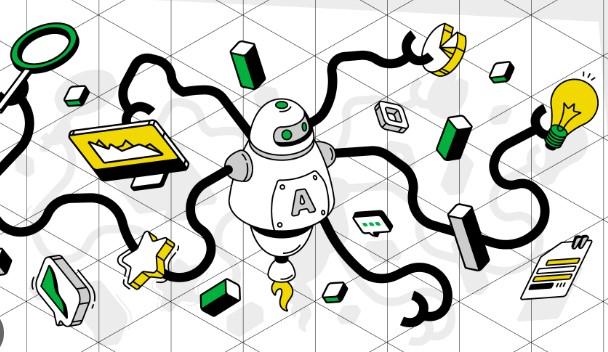
All you need to succeed in any organization is accurate information gathering, straightforward management, and suitable analysis, which further establishes the foundation of direction and is required for crucial understanding. However, in every industry—from finance to healthcare to crypto—the volume and diversity of data generated daily is too great for people to handle on such a big scale (think White Label Crypto Cards).
Moreover, over time, artificial intelligence’s significance becomes apparent as it plays a crucial role in distilling these enormous databases into precise and useful data points that greatly simplify people’s lives.
What are the benefits of artificial intelligence overall, and how might it impact our daily lives? This is a read-through of the advantages of AI in practical applications.
Principal benefits of artificial intelligence.
The possibilities of how computing devices might be utilized and managed to improve people’s lives have been expanded by artificial intelligence. Supercomputers with artificial intelligence can operate more smoothly and perform various human-like functions.
As a result, it can be regarded as a fantastic example of next-generation discoveries and breakthroughs that fully automate and instrument various intricate processes, therefore decreasing human error.
Without a doubt, the numerous benefits AI-enabled systems offer in the following areas have allowed them to revolutionize several industries:
Minimize human error:
- Even well-developed artificial intelligence-enabled systems occasionally make mistakes.
- Since predictive analytics is the foundation of AI models, inaccuracy is not an option.
- Helps produce accurate and effective results while saving time and resources.
Automating routine operations and tasks:
- Artificial intelligence makes the automation of repetitive processes like data input, data collection, customer-facing business operations, email responses, software testing, invoicing, and many more possible.
- Workers are provided time to concentrate on assignments requiring interpersonal skills.
Manages large data with ease:
- With the right algorithms and abilities, artificial intelligence can quickly handle large amounts of data and derive conclusions from it.
- AI can gather and extract pertinent data quickly, which may be required for analysis.
- AI can also interpret and transform this data to process it further.
Expedites the process of making decisions:
- Artificial intelligence speeds up the process of acquiring useful and trustworthy information.
- Machines can bring together consolidated facts and predictions thanks to artificial intelligence and essential algorithms.
- AI systems are always ready to assist in accelerating decision-making.
AI-driven digital assistants:
- Artificial intelligence-based chatbots eliminate the need for pointless customer support agents.
- Aids in responding to basic and frequent client questions.
- Chatbots are intelligent customer service agents who deliver precise and timely information whenever needed. Examples of voice assistants are Siri and Alexa, which respond to people’s voice commands and help them solve their questions.
Effectively performs risky tasks:
- AI applications can be used in dangerous areas for humans. Artificial intelligence systems reduce the risks associated with dangerous tasks.
- For example, robots can perform dangerous tasks such as coal mining and marine exploration, help in rescue operations during natural disasters, etc.
Improves procedures and workflows:
- Artificial intelligence helps firms run more efficiently while increasing revenue and productivity.
- Facilitates the creation of more error-free processes and improves laborious tasks.
Support for medical application:
- Artificial intelligence directly affects health-related applications and therapy.
- In complex medical procedures like radiosurgery, intelligence is essential.
- Surgical stimulators powered by artificial intelligence monitor and diagnose neurological disorders while encouraging regular brain activity.
- Doctors can anticipate health risks with precision thanks to artificial intelligence.
Available full-time:
- AI-powered systems are always on and can be accessed whenever necessary. AI-based systems are capable of constant productivity, unlike humans.
- Artificial intelligence (AI) systems are designed to work longer hours and are adept at handling tedious, repetitive jobs.
Does AI pose any risks at all?
Even if AI is revolutionary, there may be some negative effects. Concerns about artificial intelligence are being raised on several fronts. Automation-related job loss is a serious problem; if AI proves effective, it may render many jobs obsolete, upend the labor market, and lead to socioeconomic disparities. Invasion of privacy is another possible threat.
Large data repositories, frequently containing personal information, are necessary for artificial intelligence to function well, which raises questions regarding abuse and permission. In addition to being ambiguous, AI systems can make complicated decisions that are incomprehensible to humans, frequently leading to ethical dilemmas.
Technology bias is another innate issue; an AI system trained on biased data will likely produce discriminatory or unfair choices. Lastly, significant concerns are associated with using AI technology, such as in autonomous weaponry or deep counterfeiting. Therefore, AI must be properly regulated and ethically considered to minimize potential risks, even with its benefits.
Conclusion:
Technology bias is another innate issue; an AI system trained on biased data will likely produce discriminatory or unfair choices. Lastly, significant concerns are associated with using AI technology, such as in autonomous weaponry or deep counterfeiting. Therefore, to minimize any potential risks, AI needs to be properly regulated and ethically considered, even with its benefits.