
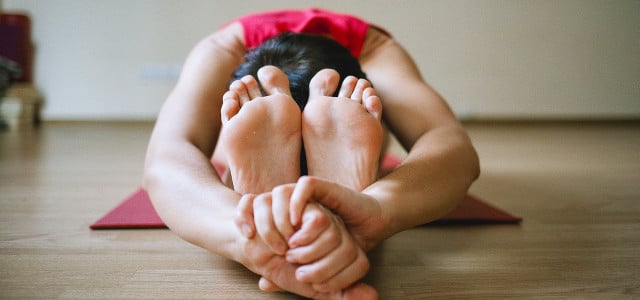
Ashtanga yoga is one of the most popular yoga styles. Here you will find the most important information about the challenging type of yoga and what lies behind the eight-part yoga path.
When we talk about yoga in the West, we immediately think of physical exercises like headstand or downward dog. These so-called asanas are only a part of yoga, which in its original form sees itself as a practical philosophy that includes all aspects of life.
This becomes particularly clear in the so-called Ashtanga yoga – “Ashtanga” means “the eight-limbed path”.
Ashtanga Yoga: More than just physical exercises
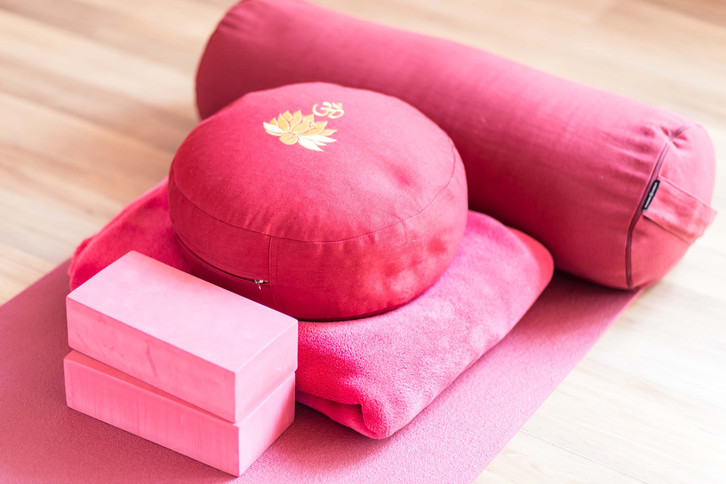
These eight parts of the yoga path were first described in writing in one of the oldest yoga writings, the “Yoga Sutras,” probably in the 3rd century. This is what Ashtanga Yoga stands for:
-
Yamas – moral code towards the world around us (e.g. not stealing and non-violence)
-
Niyamas – self-discipline (e.g. physical purity and self-study)
-
Asanas – the physical exercises we know
-
Pranayama – controlling the breath (to control the flow of energy)
-
Pratyahara – withdrawal and control of the senses
-
Dharana – concentration (for example on breathing or a mantra)
-
Dhyana – meditation and associated higher states of consciousness
-
Samadhi – deep meditation (complete immersion in the all-unity)
As you can see, the asanas we know only make up one of eight parts of traditional yoga teachings. However, you should not understand the eight-part path of Ashtanga Yoga as eight consecutive steps or stages, but rather as parts that should all be practiced equally.
Ashtanga Vinyasa Yoga: What makes this style of yoga special?
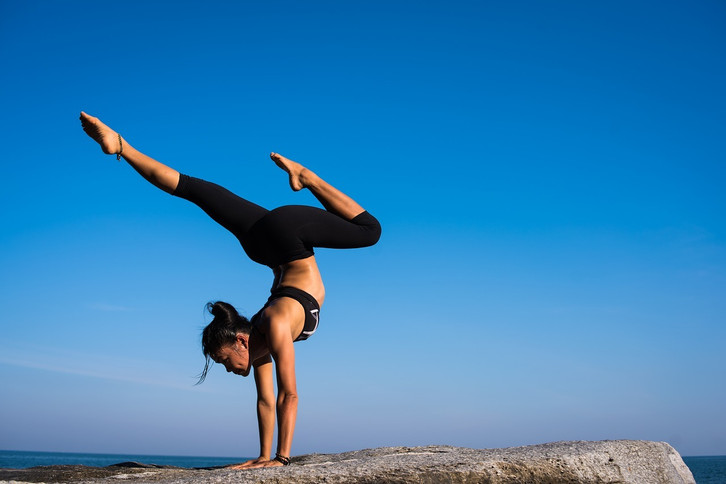
When we talk about Ashtanga Yoga, we usually mean Ashtanga Vinyasa Yoga. This style of yoga – like most yoga styles we know – focuses primarily on physical exercises, but also on meditation and breathing exercises. Other styles such as Power Yoga or Flow Yoga are also derived from Ashtanga Yoga.
Ashtanga Vinyasa Yoga builds heavily on the eight-limbed path of traditional Ashtanga Yoga explained above. It’s about the interaction of movement and breathing, as the Yogabar studio explains:
-
Vinyasa refers to the combination of two different asanas, i.e. the transition from one body figure to the next. This connecting movement is performed with one breath and is one of the characteristic features of Ashtanga Vinyasa yoga.
- Unlike static yoga styles such as traditional Hatha Yoga or Yin Yoga, Ashtanga Vinyasa Yoga has a very dynamic asana practice. Individual figures flow together to form a coherent movement.
- Another special feature of Ashtanga Vinyasa yoga is the division into fixed series. While in most styles of yoga the hours vary and are adapted individually, in Ashtanga yoga the same asana sequences are always practiced.
- The focus on breathing should direct your attention inwards.
Further special features of Ashtanga Yoga: Ujjayi and Drishti
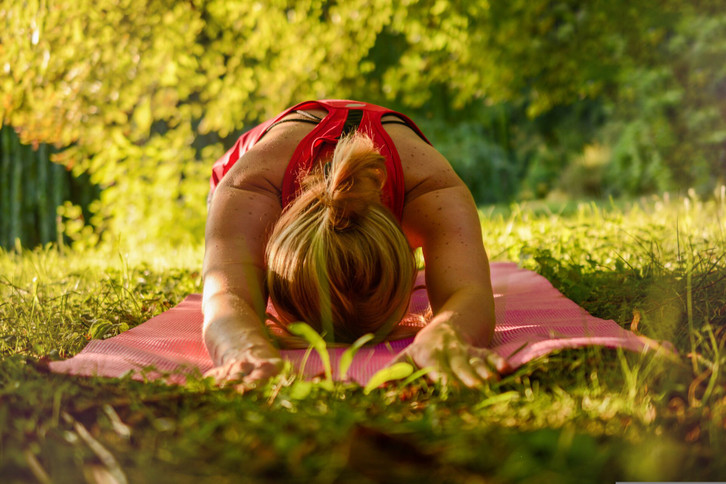
Concentration and breath control play an important role in Ashtanga Vinyasa yoga. This is achieved with the so-called Ujjayi breathing:
- The glottis is slightly closed, which creates an audible noise when you breathe in and out.
- This allows you to slow your breathing significantly while using conscious control of your breath as a focus point.
On the visual level, the so-called Drishti serves as a focal point:
- In Ashtanga yoga, for every physical exercise there is a specific point of view on which you constantly focus your eyes.
- This also helps with concentration and sharpens the senses.
Through these two aspects of Ashtanga Yoga, with enough practice, the asana practice becomes a meditative experience in which you focus your attention on yourself and your inner self rather than on external influences.
Special feature of Ashtanga Yoga: Mysore style
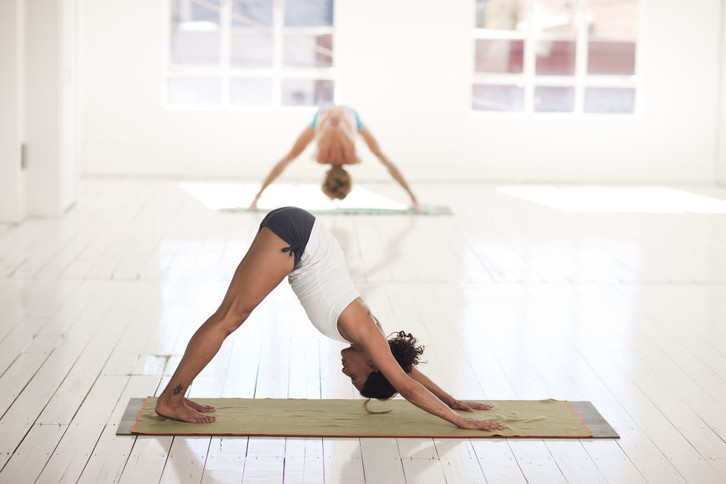
This meditative yoga practice in the so-called Mysore style can reach its peak:
- This is a specific type of Ashtanga Yoga class in which the students follow their own (breathing) rhythm.
- So instead of practicing synchronously, you practice the asana sequence at your own pace.
- There are no instructions – instead, the teachers walk around the room and assist the students with the exercises.
Is Ashtanga Yoga right for you?
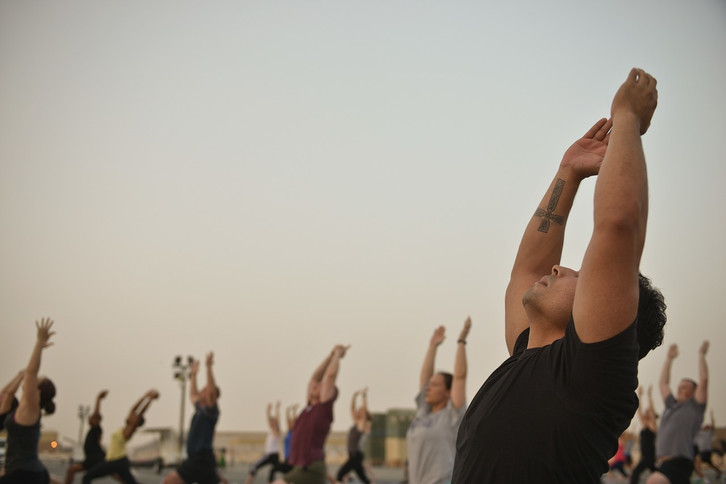
Ashtanga Vinyasa Yoga is considered one of the most demanding yoga styles for several reasons:
- On a physical level, the dynamic asana sequences require an advanced level of physical fitness. They are particularly demanding because there is practically no time to breathe due to the constant Vinyasa transitions.
- On a mental level, Ashtanga practice requires a trained and stable mind, as the focus on breathing and point of view, but also the asana sequence itself, requires a high degree of concentration.
This style of yoga is most suitable for you if you have already established a regular yoga and meditation practice – or are at least fit and trained in mindfulness through other sporting activities.
Of course, you shouldn’t let the challenge put you off: in the end, with a strong will and regular practice, you can achieve much more than you might think. You can also just try Ashtanga yoga. The yoga style is offered in many studios.
However, if you are a yoga beginner, it is better to choose a gentler introduction to the practice.
Edited by Lea Hermann
Read more on Techzle\.com:
- Healthy yoga: What you should pay attention to when buying yoga mats and clothing
- Study proves: Those who do yoga and meditate live healthier lives
- Cleaning a yoga mat: tips for every material
Independent journalism needs people who stand behind it – including in Google searches. Now send a signal for more sustainability and → Save Utopia as a preferred source.
** marked with ** or orange underlined Links to sources of supply are partly partner links: If you buy here, you are actively supporting Techzle\.com, because we then receive a small part of the sales proceeds. More info.