
Only delivery van in the GDR
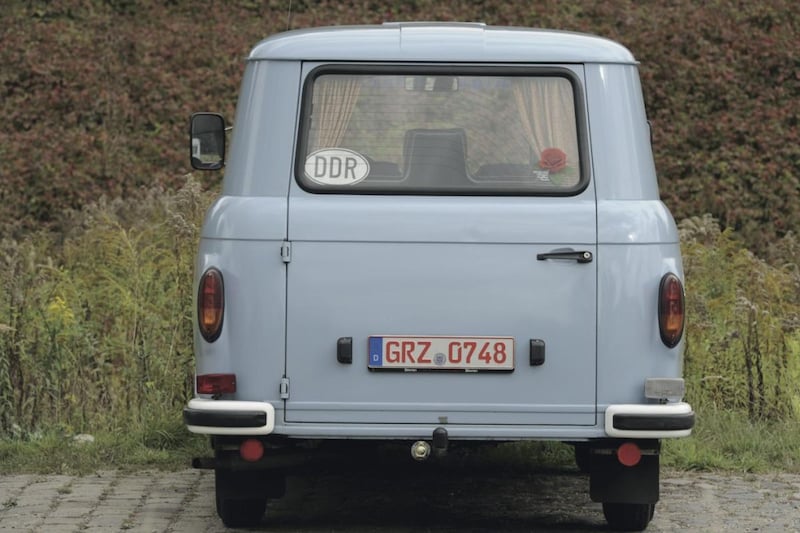


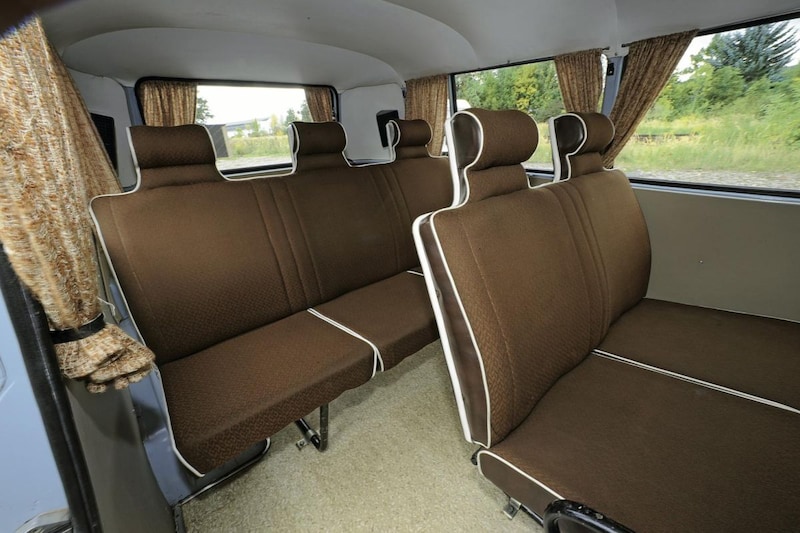
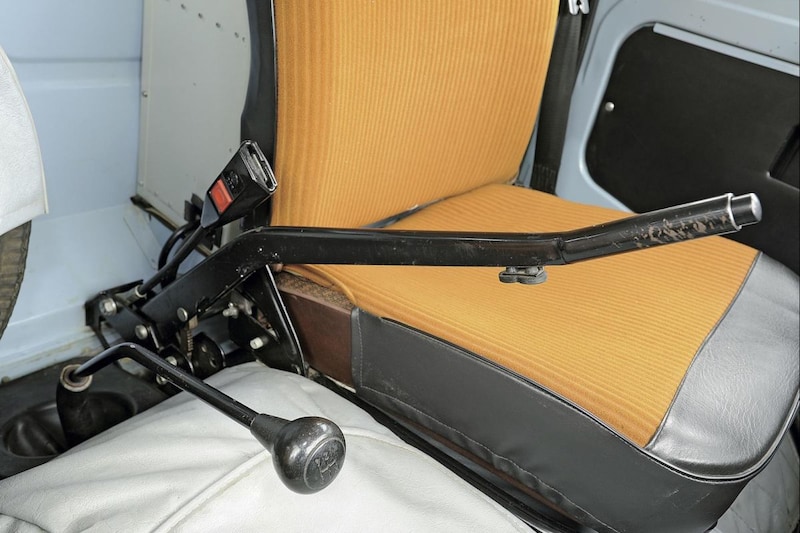


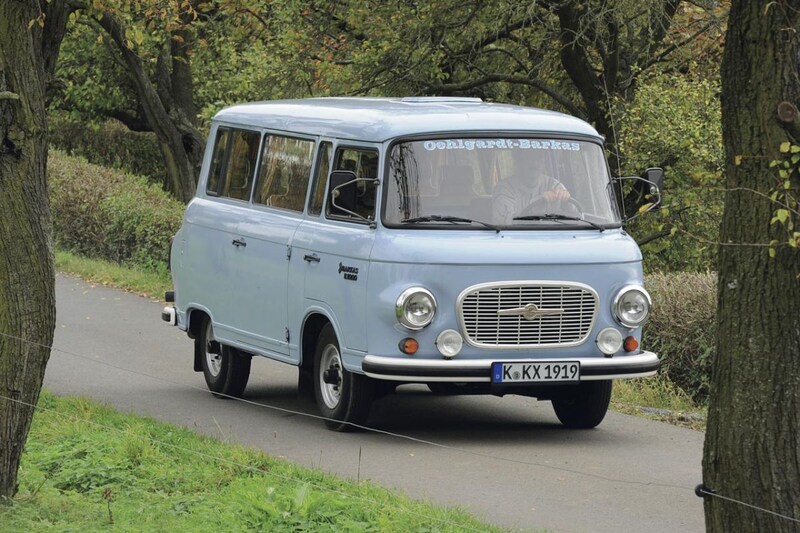
One for all: Since it was the only delivery van available in the GDR, the Barkas B 1000 had to take on endless tasks. He fought back bravely. The ‘Communist T2’ held out longer than intended.
This is a story about a folk hero and about a man who has named himself a folk hero. They had to rely on each other in the struggle to keep the communist ideas alive. On the one hand, this unassuming hero with his subtle, turbine-like engine sound, friendly face, easy-going curves and a silhouette that evokes associations with a diligent hamster busy expanding his food supply. And the Barkas B 1000 was also diligent. It was used for numerous transport tasks – it had to be, because it was the only monoton truck available in the later GDR years. On the other, the man who determined the fate of the Barkas—and that of millions of people. You recognize his face immediately. That rather threatening-looking smile, those narrowed eyes behind the thick glasses: that’s how Erich Honecker appears in his official state portrait from 1974. And that’s how he looked out over his small republic. Honecker was then still the young dog who had knocked the ultra-conservative wall builder Ulbricht off his pedestal. Honecker was the innovator. At least, that’s what he claimed to be, because there were hardly any actual innovations. On the contrary, he nipped in the bud all attempts to do so. The Barkas also remained practically unchanged for decades.
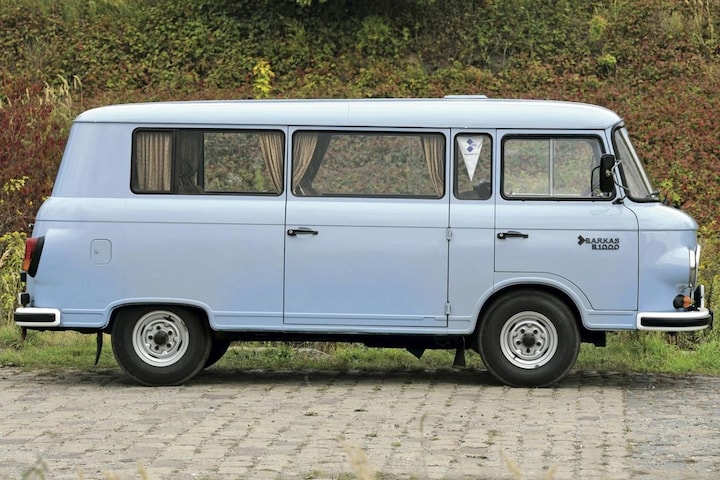
The Barkas B 1000 was even progressive when it debuted in 1961
The Barkas has front-wheel drive
At its debut in 1961, the Barkas can be called progressive: it is equipped with a low-mounted chassis, a load-bearing body, independent wheel suspension all round, a front steering cabin and front-wheel drive. The latter aspect in particular ensures that the problem of vans is solved in an elegant way: that of the changing loading condition. Sometimes there is no weight on the rear axle, sometimes a ton. If, like many other vans of the era, it had been equipped with rear-wheel drive, the drive wheels would have had hardly any traction when unladen. However, thanks to the weight of the engine and gearbox, the front wheels of the B 1000 always have sufficient grip.

The early Barkas models have more power than the Volkswagen T1 and, unlike the Volkswagen van, their cargo space is not reduced by an engine. The Barkas is powered by Wartburg’s three-cylinder petrol engine – coupled in the B 1000 to a high-load gearbox – and the wheels are suspended from torsion bar springs. A successor is even being developed. Not that many people will remember, because that model gets killed before it gets a chance to prove itself. And that while the Barkas B 1100 is just as well thought-out and even more versatile than the model it would follow. He has a more businesslike appearance and he has a four-stroke engine, with which he would also have a chance in non-socialist foreign countries. Three prototypes are tested, until the all-powerful Zentralkomitee (ZK) decides that the project should be stopped, as always without giving any explanation. The successor disappears from view and Honecker smiles more and more grimly.
A hopeless attempt at modernization
A few years later, Wartburg engineers try to change their two-stroke engine to a four-stroke. And they even succeed in that. In 1984 the engine is ready to go into production. It fits in the engine compartment of the Barkas and he can also give the Wartburg a boost, but Honecker pulls the handbrake again. This time, however, there seems to be a logical reason for his decision.
Four years of work to fit a Volkswagen engine
On the other side of the Wall, a Wessi named Carl Hahn – from 1982 the top boss at the Volkswagen group – is looking for new markets. The DDR also comes into the picture. Hahn throws a ball and lo and behold, the ZK shows its willing side and has allowed the installation of Volkswagen engines in DDR cars since 1984. However, Volkswagen does not tolerate competition and so the three-cylinder from Eisenach has to clear the field. But having the Volkswagen engine act as a replacement for the Eastern European three-cylinder does not appear to be easy in all cases, East and West do not go well together yet. The operation therefore takes no less than four years and nevertheless proves to have no chance.
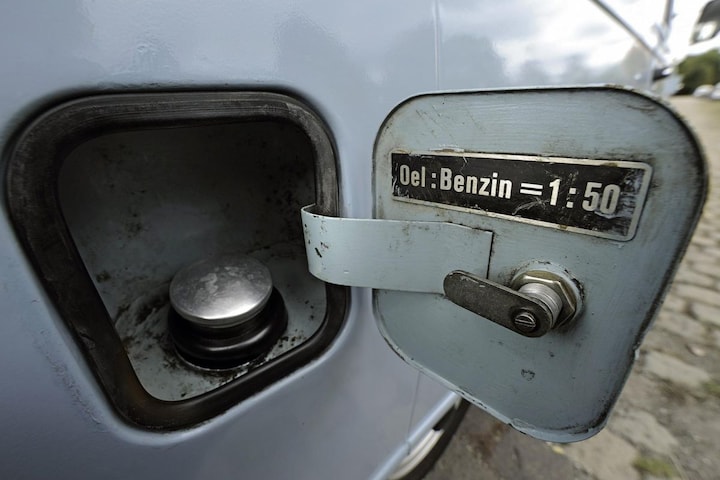 Mixture lubrication for the Barkas B 1000, which drove most of its life as a two-stroke.
In 1990, the industrious hamster made life miserable. Although it now has a more powerful four-stroke engine, it is now suddenly side by side with the brand new Volkswagen T4, which is forty years younger and for which no delivery times apply. Honecker, meanwhile, lies exhausted in the military hospital Beelitz-Heilstätten, while the factory workers at Barkas in Frankenberg screw together their vans and painstakingly scour the sales advertisements during the lunch break to find the western car of their dreams. The days of the East German cars are numbered. On April 10, 1991, the last Barkas rolls off the line, although no one is waiting for it yet. A few years later it is time for reflection. Lovers of IFA products (Industrieverband Fahrzeugbau, which includes the brands Sachsenring, Wartburg and Barkas included) unite and also embrace the B 1000. After all, a true folk hero should not be forgotten.
This story was previously published in AutoWeek Classics 8 2014
.
– Thanks for information from Autoweek.nl