
…but ‘colourless’ remains popular
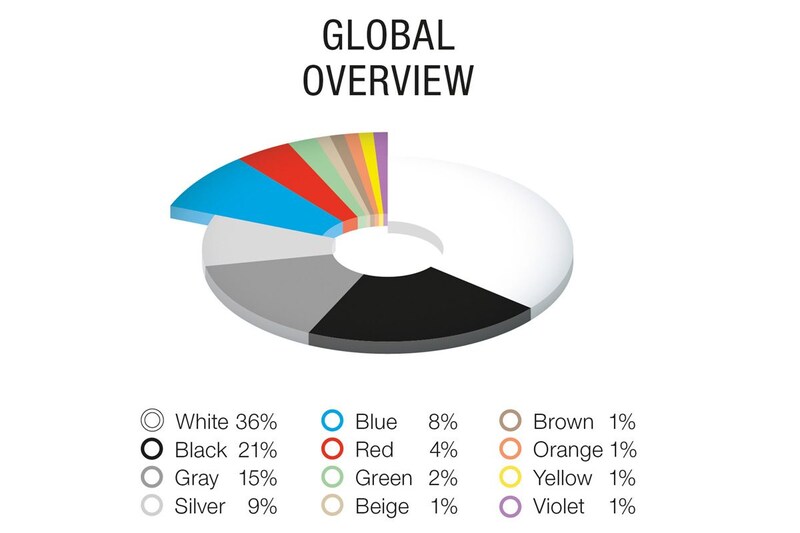
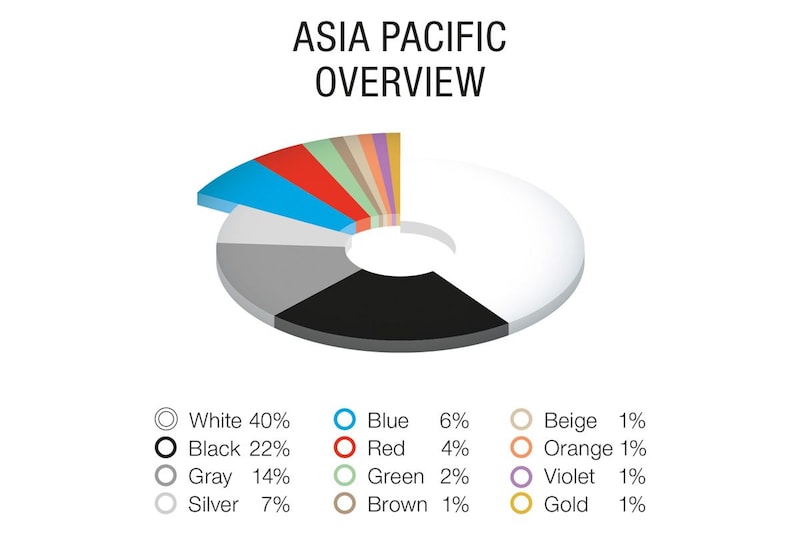
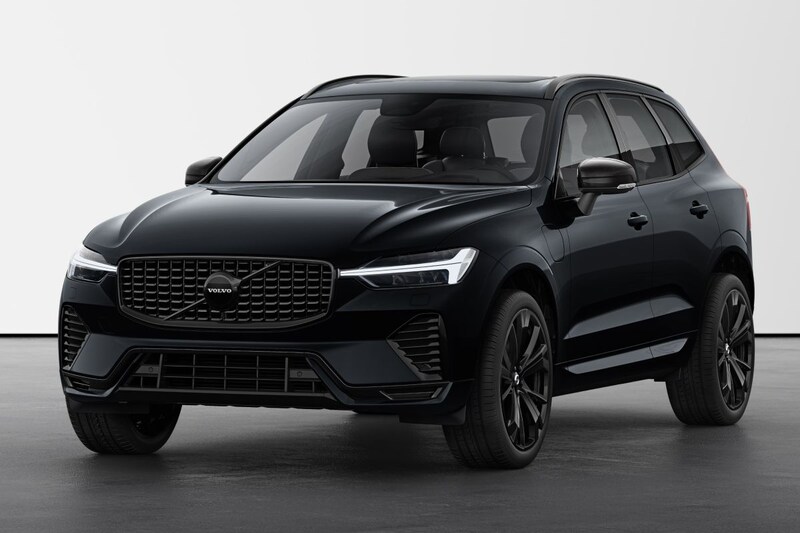

The annual report from chemical company BASF shows that there are quite significant shifts in the field of car colors. Don’t get happy right away: this shift mainly takes place between white and black.
The German-based BASF, through its Coatings division, is involved in, among other things, car paints and has an unparalleled view of global trends in car colours. This knowledge is used to write an annual report on the prevailing trends, although it is fair to say that this makes color lovers more sad than happy. The so-called achromatic colors, i.e. white and black and everything in between, dominate the image.
Nevertheless, a major shift took place in 2023 compared to 2022. White loses three percentage points and that share is transferred one to one to the black pie slice. Silver actually gains a percentage share, which is at the expense of the very popular (darker) gray in the Netherlands. Despite the shifts, white is still by far the largest among car paint colors. No less than 36 percent of the cars sold in 2023 were white, although it should be noted that these are non-commercial vehicles. The also often white vans do not even count.
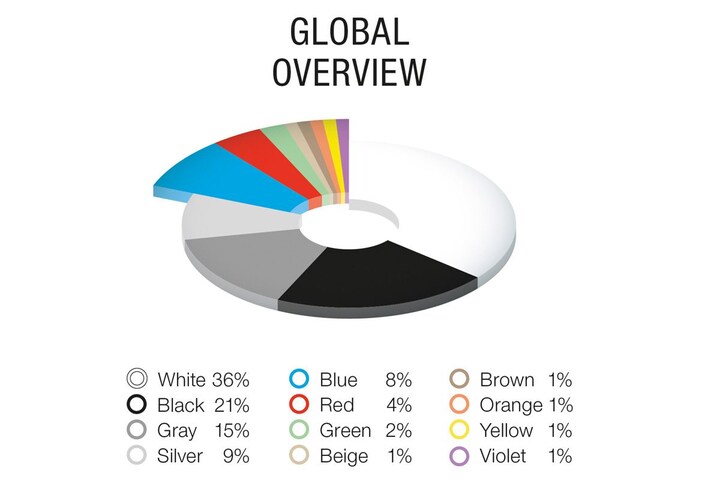
Black accounts for 21 percent of the total, gray accounts for 15 percent and silver for 9. Together, the four colorless shades account for no less than 81 percent of the cars sold, just like last year. This automatically leaves only 19 percent for real colors. Within that category, green is surprisingly slightly more popular than before, at the expense of red. Of the real colors, blue is the most popular with 8 percent of the total.
Europe versus the rest
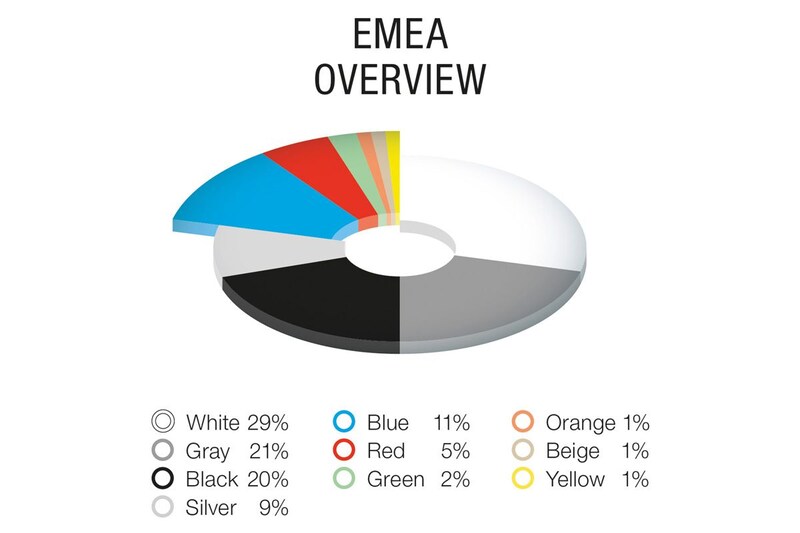
Of course there are regional differences, but this report does not make them very clear. Europe is merged with the Middle East and Africa under the EMEA region, where the tastes are not the same everywhere. In this region, even more shades of gray have been sold than before (2 percentage points) and the shift from light to dark shades of gray is clearly visible, BASF says. The company notes that there are major differences in color between countries in Europe: the French are more likely to buy green cars and Germans are relatively fond of blue, while red and orange-colored cars do relatively well in Spain and the United Kingdom. The most colorful major European country is Italy, where chromatic colors account for a total share of no less than 30 percent.
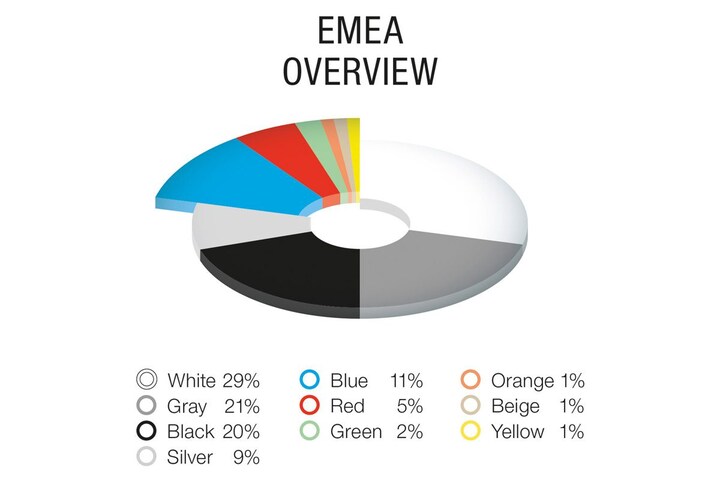
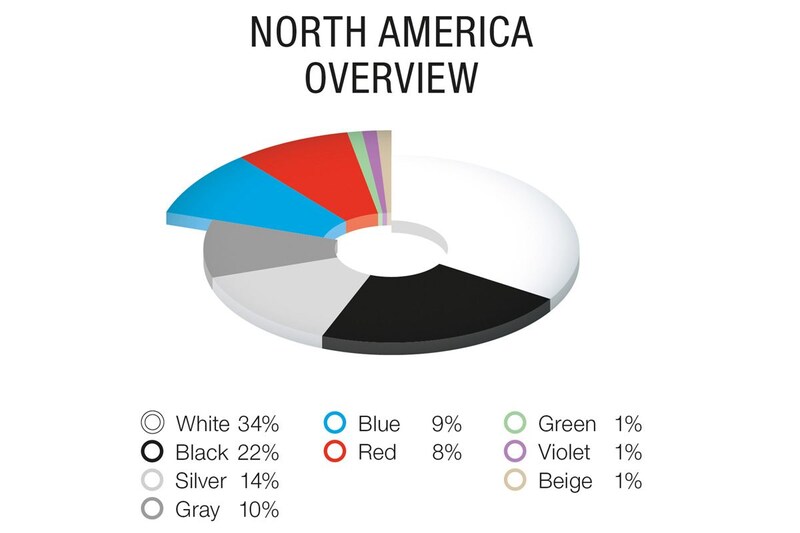
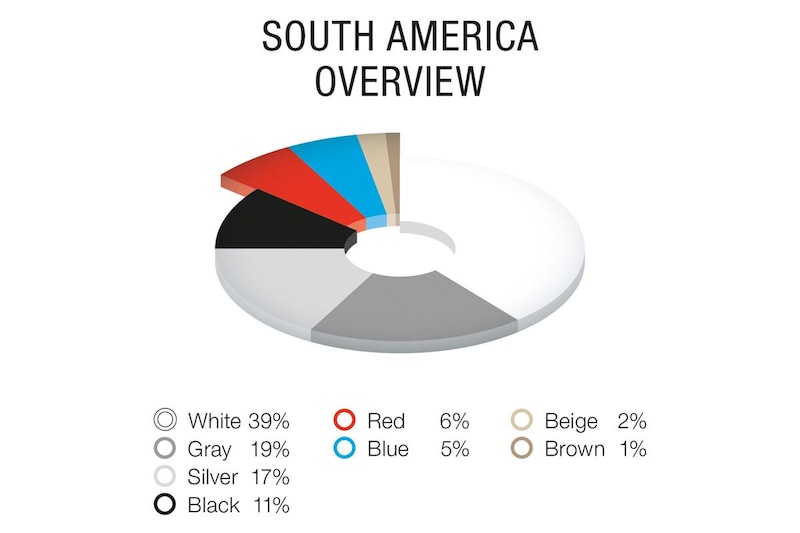
In North America the colors are not much better than ours, but the preferences are different. For example, silver-colored cars are much more popular than gray ones in America, while gray is still more popular in the EMEA region. The least colorful world region appears to be South America, where 86 percent of new cars will be provided with achromatic paint by 2023. The rest of the cake is also divided into fewer different colors than elsewhere in the world.
In addition to colorless countries and regions, there are also particularly colorless cars. The most colorless copy on the Dutch market was pilloried on AutoWeek.nl last week.
– Thanks for information from Autoweek.nl