
The next batch


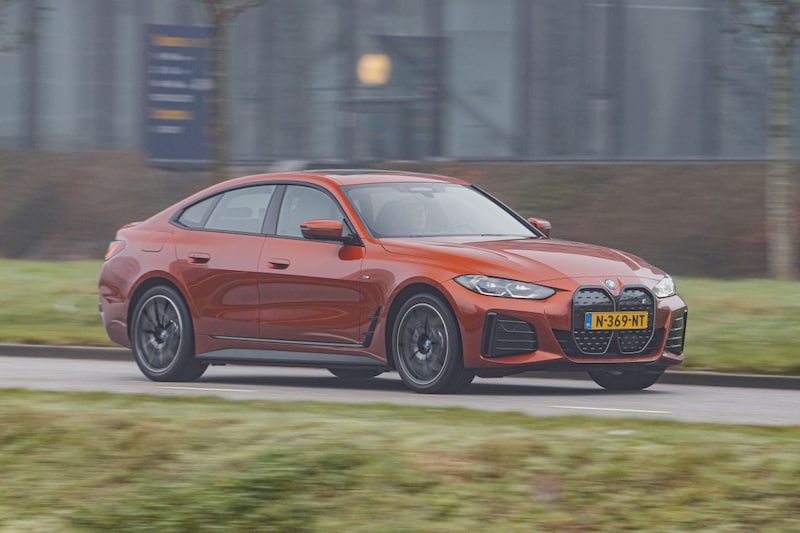


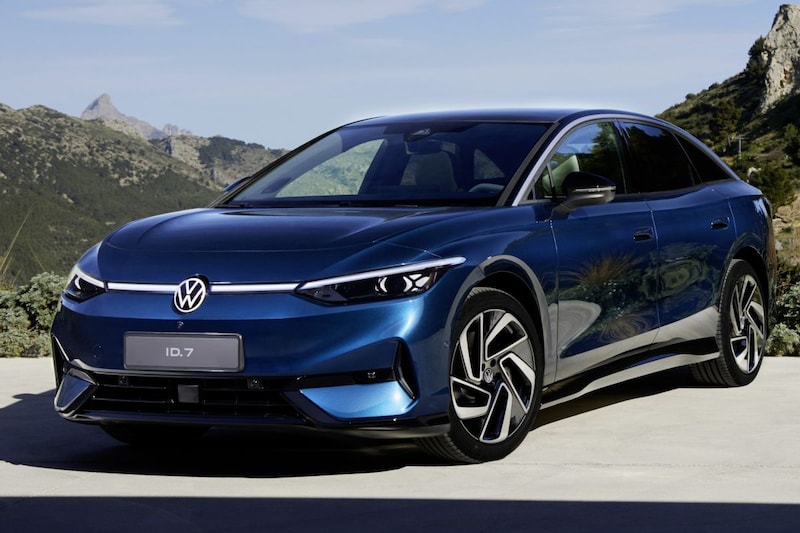

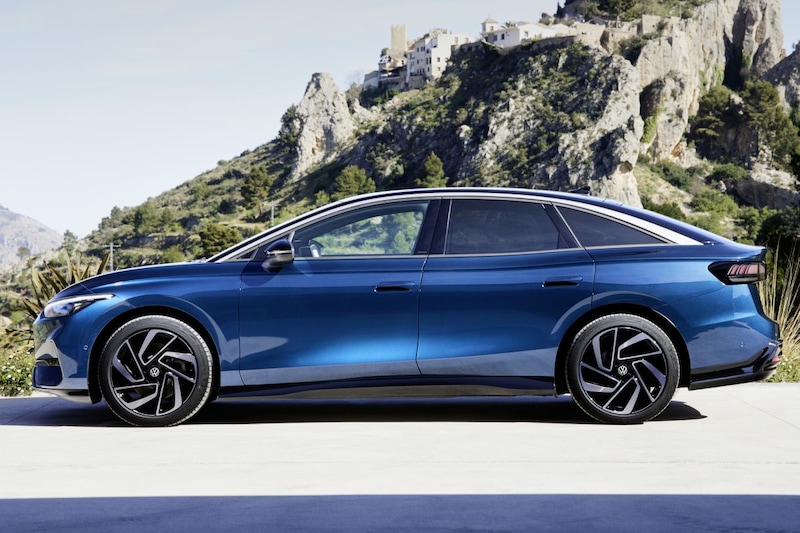
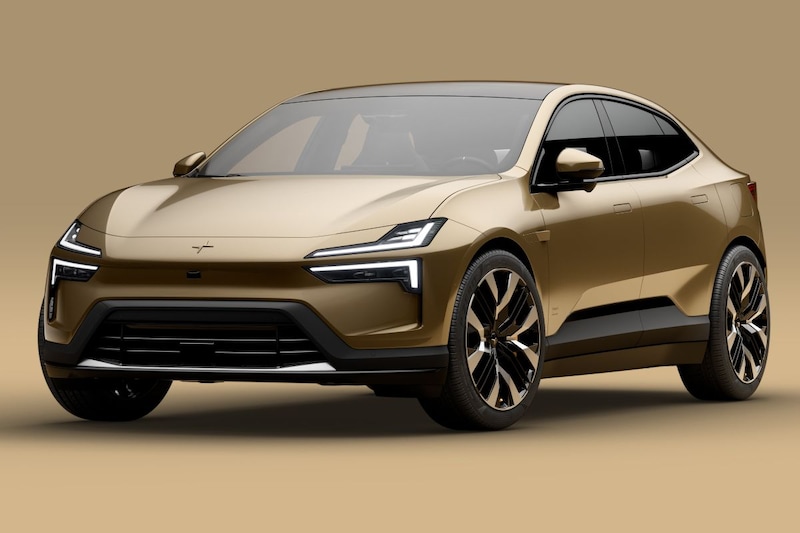
After a whole series with mainly higher-legged electric cars, several manufacturers are now also introducing EVs with a lower body. Four of these are the Polestar 4, BMW i4, Nio ET5 and Volkswagen ID7: each roughly 5 meters long and costing around €60,000 EVs with an (optional) range of approximately 600 km. Today we put them next to each other virtually.
2024 seems to be the year of the oversized streamlined electric sedan with short butt. And yes, the Volkswagen ID7 and BMW i4 are actually liftbacks, but in terms of overall shape and dimensions, they have a lot in common with the other two models featured here: Polestar 4 and Nio ET5. All four are available with different powertrains and battery packs. For this comparison, we chose the variants that are most similar.
The Polestar 4, the most recent and last to be launched, will initially be available as a Long Range Single Motor and Long Range Dual Motor, the former being the cheapest and most efficient. As a Single Motor, the 4 has a driving range of ‘more than 600 km’, an indicated starting price of around €60,000 and will be on the market in 2024.

The Polestar 4 has the most pronounced body of the four.
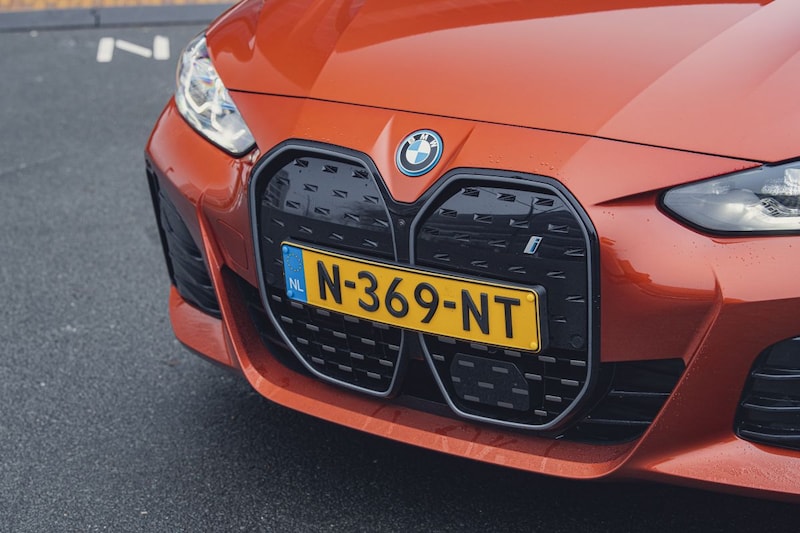
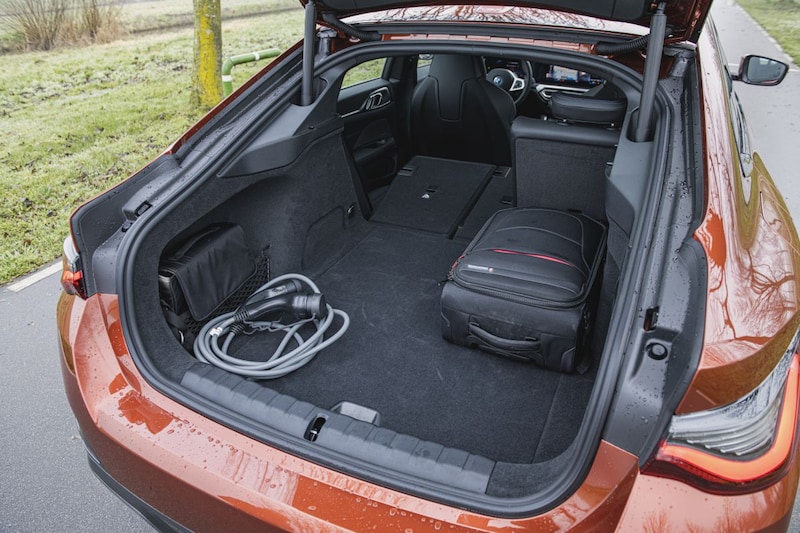
If we want to put a BMW i4 next to it, we end up with the i4 eDrive40. That version has a range of 590 km, where the i4 has recently also been available with a smaller battery pack (the eDrive35), or as a more powerful (and more expensive) M50. The Volkswagen ID7 takes the crown in terms of range and is the only one that offers a variant that offers more range than the version discussed here, the ID7 Pro. The ID7 can also be ordered as a Pro S with a range of about 700 km, but as a Pro-without-S it can travel more than 600 km on a battery charge.
Pricing
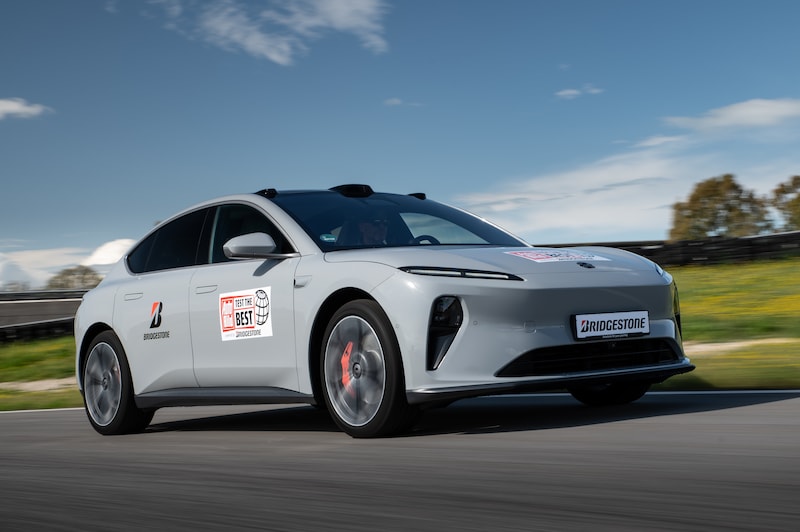
We complete the foursome with the Nio ET5, which will also be for sale with a thick 150 kWh battery pack at a later stage. Now that car is still for sale with a battery of up to 100 kWh, which makes it considerably more expensive than the other three. Please note: you can also buy the Nio ET5 without a battery pack, which means that the Chinese sedan can be considerably cheaper. Then you only have to pay €289 per month for the rental of a battery that can be exchanged at battery exchange stations.

With the Nio you can change batteries in more and more places (a Nio ET7 is shown here).
Speaking of the price of the Nio: for €51,900 or €72,900 you always get a complete car, and a fast one at that. The Nio is the only one in this comparison to have two electric motors, which ensure that the car can accelerate to 100 km / h in 4 seconds. The BMW and Polestar need 5.6 and 7.4 seconds respectively, while the sprint performance figures for the Volkswagen are not yet known.
Just assume that you can still go wild on the option list at BMW. This is slightly less the case with Volkswagen and Polestar, but count on those two that there will be a few thousand euros on top of the starting price before you can speak of a complete copy, where the Nio is always complete. The Nio, like the Volkswagen ID7, will later also be marketed as a station wagon.
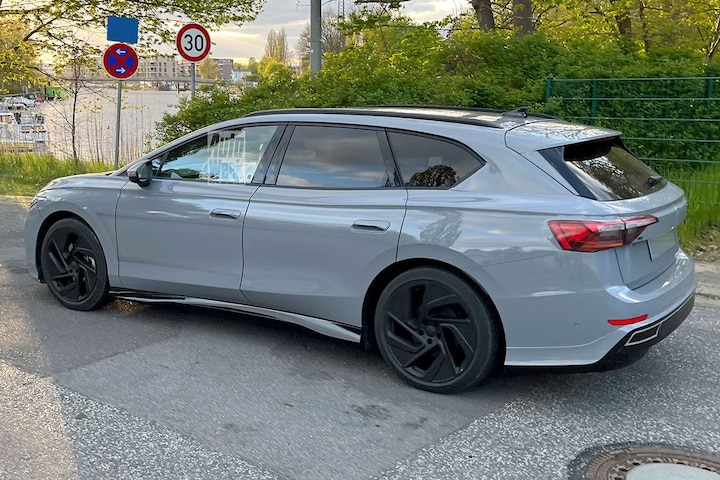
We recently spotted the upcoming ID7 Variant in camouflaged form.
Worth mentioning
Curious how the four relate to each other in other areas? Then take a careful look at the table at the bottom of this article. You can see that there are quite a few similarities, but also the necessary differences. For example, the Volkswagen seems to be the most practical, at least on paper, since the ID7 combines a large and more accessible luggage compartment with an efficient powertrain and the lowest car weight. At the same time, the Volkswagen may pull the fewest kilos and we expect that the ID7 as a Pro will not be a sprint gun.
The width of the Polestar 4 is also striking. For a regular car, a width of 2.14 is almost unheard of, and we can imagine that for some it is a reason to leave the car. For example, if you often have to parallel park or enter tight parking garages. The range of the four is almost identical, where we should mention that the Nio requires a 100-kWh package for a range of just under 600 km, while the ID7 can travel more than 600 km with a much smaller unit.
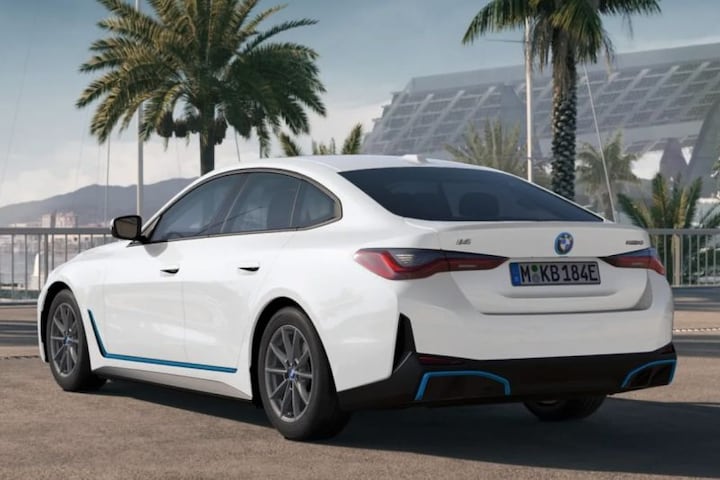
This is what the BMW i4 looks like if you manage to resist the option list.
Overall impression
To conclude with less measurable topics, we briefly consider the impression we get from the four EVs. The Polestar fulfills its Chinese roots very nicely with its sleek state of the art appearance and Scandinavian-style interior, but will soon share its platform with cars that are probably placed a lot lower in the market. We have yet to find out what the consequences will be for driving behaviour. Furthermore, the Polestar is somewhat obese, but that is hardly worth mentioning with four values of already above 2,000 kg.
The Nio came out well in the first test and quickly proved itself to be quite a mature product – especially considering the age of the brand, which is already very young in Europe. Although it is somewhat less efficient, in the long term it is perhaps best suited to frequent drivers due to its battery replacement technology. Although; the Volkswagen ID7, which will soon also be available with a range of 700 km, can also do something about it. The German is perhaps the most interesting for ratio enthusiasts (efficient, practical, non-Chinese), but is the least appealing in terms of appearance. Finally, we can be brief about the BMW: you don’t want it, or you do – and your wallet knows that too. He does not drop very large stitches.
Which differences between the four do you notice the most, which model would you add fifth to this comparison and which do you think is preferable?
| Fashion model | Price | Battery capacity (net)/range | Dimensions in meters (L/W/H) | On the market | Wheelbase in metres | max. draw weight | Empty weight | Luggage room | 0-100 sprint |
| Polestar 4 Long Range Single Engine | €60,000 (indication) | 94 kWh / 600+ km | 4.84 / 2.14 / 1.54 | 2024 | 3.00 | 1,500 kilograms | 2,300 kilograms | 500 l. | 7.4s. |
| Nio ET5 Long | €72,900 (€51,900 without battery) | 100 kWh / 580 km | 5.10 / 1.99 / 1.51 | Now | 2.89 | 1,400 kilograms | 2,160 kilograms | 390 l. | 4.0s. |
| BMW i4 eDrive40 | €62,992 | 80.7 kWh / 590 km | 4.78 / 1.85 / 1.45 | Now | 2.86 | 1,600 kilograms | 2,125kg | 470 l. | 5.6s. |
| Volkswagen ID7 Pro | €60,000 (indication) | 77 kWh / 615 km | 4.96 / 1.86 / 1.54 | Second half 2023 | 2.97 | 1,200 kilograms | 2,100 kilograms | 542 l. | note |
.
– Thanks for information from Autoweek.nl