
Hackers use a new technique to attack holidaymakers. Not only unsecured Wi-Fi is a danger, but also juice jacking where a public USB charging port is used to steal data or install malware on a device. Read here how to prevent it.
According to research from cybersecurity company NordVPN, 85% of travelers are afraid to use public Wi-Fi on vacation. However, unsecured Wi-Fi isn’t the only thing travelers should worry about. juice jack is the latest technique used by hackers to attack travelers.
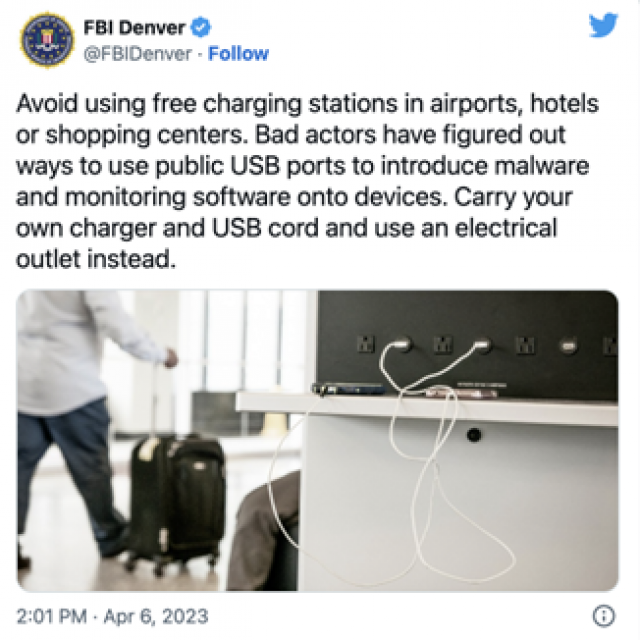
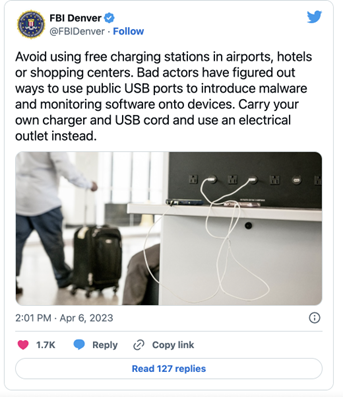
This month, the FBI published a tweet warning users about smartphone charging stations in public places (airports, hotels, and malls). Hackers can modify the charging cables to install malware on victims’ phones to launch an attack. This is called juice jacking. (text continues below image)
What is Juice Jacking?
Juice jacking is a cyber attack that uses a public USB charging port to steal data or install malware on a device. Juice jacking attacks allow hackers to steal users’ passwords, credit card information, addresses, names, and other information. Attackers can also install malware to track keystrokes, display ads, or add devices to a botnet.
Is juice jacking detectable?
Juice jacking attacks are hard to detect. If your device is compromised, you might notice suspicious activity, but that’s not always the case. For example, you may notice something you don’t recognize – such as purchases you didn’t make or calls that look suspicious. Your phone may also respond unusually slowly or feel warmer than usual. Chances are you picked up malware.
How can you protect yourself?
Since it is often difficult to spot a juice jacking attack, the best way to avoid becoming a victim is to follow the advice of NordVPN cybersecurity expert Adrianus Warmenhoven:
* Buy a power bank. Power banks are a safe and convenient way to charge your device on the go. With a portable power bank, you’ll never have to use public charging points where juice jacking attacks can take place. Always make sure your power bank is fully charged so you can use it on the go.
* Use a USB data blocker. A USB data blocker is a device that protects your phone from juice jacking when using a public charging station. It plugs into your phone’s charging port and acts as a shield between the public charging station’s cord and your device.
* Use an electrical outlet. Juice jacking attacks only happen when your device is connected to a USB charger. If you need to charge your phone on the go, avoid the risk of contaminated cables and USB ports by using a wall outlet. This is usually a safe way to charge your mobile device and other devices on the go.