
Electric driving splits you apart
Electric driving splits you apart. It makes you more optimistic and more pessimistic and more put into perspective and cynical about it.
With these mixed feelings I find the British über-petrolhead Harry Metcalfe at my side. In his unsurpassed YouTube series Harry’s Garage, he delivered a nuanced and hard-hitting sermon about the pros and cons of plug-in cars. Conclusion: they do not perform sufficiently and by opting for full electrification, car manufacturers are taking a very dangerous gamble. Despite my love for my plug-in BMW, I’m starting to agree with him more and more. As cars, EVs are great, but as utensils they are still too often too limited.
Despite a warehouse full of supercars, Metcalfe is not anti-electric. In 2018 he bought a Jaguar I-Pace, only to find that the thing didn’t work for him. Perhaps his skepticism is fueled by a charging infrastructure that in England lags badly behind ours. But he lays the ax to the root of two core problems that I also see after a few rounds around the globe. The range remains problematic from October to March, and battery degeneration is a concern.
What do you mean?, I hear twin-engine Model 3 drivers say. We get 500 kilometers on a charge and supercharging with 250 kW, we go like crazy. Did I know how well those Tesla battery packs hold up after tons of use? Yes, I know the statistics, so I also know that they are less favorable for other parties. But indeed, range should no longer be a problem since fast chargers. It is, because apart from Tesla with its hyper-efficient powertrains, virtually no one comes close to fulfilling its great WLTP promises and the suggestion of progress on this point is therefore almost always a fool’s errand. I burst out laughing at almost every new WLTP figure. Really, 600, 700 kilometers? Yes, on my economy trips. With a normal person at the wheel, a quarter or more can be removed.
For example, Rivian is announcing a new basic version of the R1S, the SUV of the American start-up launched two years ago. A 106 kWh battery pack should take you 367 kilometers. I take note of the key figures with a shaking stomach. The thing weighs 3,200 kilos. More than 500 horsepower will soon be working there desperately to keep things going. And that should reach 28.9 kWh per hundred kilometers? Guys, you don’t believe that yourself, do you? That thing is empty here after 200 kilometers with a bit of a headwind.
On paper, my technologically old-fashioned and not exceptionally efficient i3 loses out to the Rivian, but in practice it could well win in terms of endurance. On harsh winter days with a headwind on the highway, I see the range plummet dramatically, at worst to just over 200. But in the summer I can easily get 300 kilometers on one charge, depending on the weather, traffic and route, sometimes slightly. more. The fact that a hypermodern BMW iX xDrive40 does not perform better than my electric dwarf below ten degrees indicates exactly what is wrong; evolution has stalled.
So you can see how dramatically the SUVization of the offer is turning out. Those fashion machines are too heavy, too high, too big. Viewed in this way, my average of 25 kWh/100 km with the huge Kia EV9 is an ecological achievement. The six-seater can travel 400 kilometers relatively easily thanks to a 100 kWh battery. Pretty clever. In general, in the electrical field, from small to large, you can be happy with a realistic average of 300.
There wasn’t much more available for the Extended Range version of the new Volvo EX30 recently, even though with 64 kWh you still have a lot of power under the floor. And 300, on top of that other obstacle of prices, no matter how quickly they are falling on the fighting market, is not enough to convince everyone. It is sufficient if you live in the Netherlands and you limit your travel to countries with reasonable infrastructure. I get along fine with my BMW, but mainly thanks to my adaptability. Better yet, a lifestyle that allows me to adapt. The time-consuming mile-eater with ten appointments a day does not have that luxury. For him, the lower limit in terms of range must quickly be 400 to 500 kilometers. Always, under all circumstances. Furthermore, he does not want to spend more than twenty minutes sitting at the charging station. He doesn’t want to be bothered by his car. He’s used to it. He drove a BMW diesel. He paid a lot for that, but he got a lot in return. That is why it remains extremely important for the energy transition to quickly come up with more energy-efficient EVs.
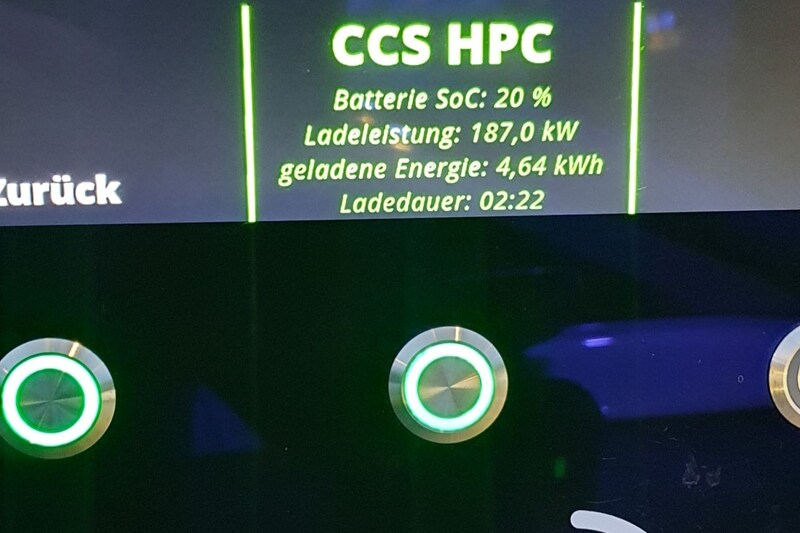
It starts with building cars differently than we do now. That does happen. Of the previously relatively powerless Tesla competitors, first the Mercedes EQE and EQS and now the Volkswagen ID7 have set the bar a bit higher on long distances. It is no coincidence that all three are low, streamlined cars. The ID7 was the first EV with which I was barely faster in Munich than with diesel or petrol. With average speeds of 120 to 130 I always had a minimum range of 400 kilometers. I had also booked the two longer charging stops with the Volvo or the Copen as senior breaks and fast charging went well with peaks of up to 187 kW. So I can live with the Volkswagen. But yes, with a price of 60 to 70 grand, it is not exactly for everyone. Unfortunately, price and range are fatally linked (except for Rolls-Royce, about which later).
The stagnant sales of electric cars are generally and not unjustly attributed to the loss of subsidy incentives and, in the Netherlands, to fear of a new MRB regime. But I think the underlying distrust of the product plays a much larger role than is thought. That’s why the Harry’s and all other high-speed drivers in the world choose their money’s worth. Once again: I am happy with my BMW. But very occasionally, after a failed loading action and the associated delay, I find myself on Mobile in the evening. Search terms: BMW, Mercedes, diesel, red. Delicious. A thousand kilometers of torquey and dead quiet cruising, refueling in Basel and on to Rome in one go, 1 in 20. What cars. Harry Metcalfe bought a Range Rover Sport with that overwhelmingly smooth three-litre turbo diesel. I understand.
– Thanks for information from Autoweek.nl