
Only then will it cover costs
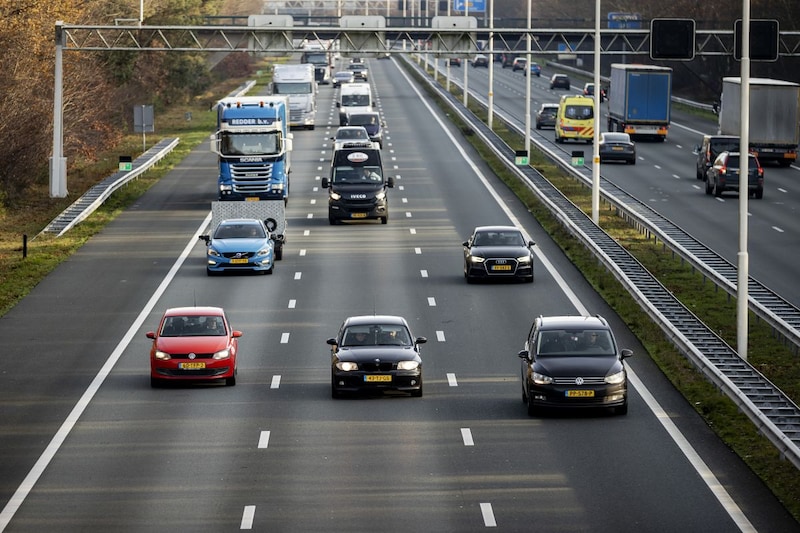
Anyone who drives to work in a private car should realistically receive a mileage allowance of 31 cents per km. The Business Drivers Association emphasizes this once again in response to the tax-free 23 cents proposed by the cabinet.
The tax-free mileage allowance in the Netherlands has long been 19 cents per kilometer, but this year it went to 21 cents and next year to 23 cents per kilometer. Although there is finally an upward trend, it is still far from enough. At least, that was already apparent from calculations by the VZR earlier this year. The association emphasizes this once again in response to the government’s plans to move to 23 cents per km.
According to the VZR, 23 cents is no more than covering the costs for the smallest cars and is therefore not a realistic amount. Chairman Jan van Delft states: “The second increase in the tax-free kilometer allowance in a year and a half is an important milestone for VZR and its members. It is proof that our lobby makes sense and of the impact that the association has on policy and the decision-making regarding business mobility in the Netherlands. However, it is not yet enough. This is also logical, because previously this amount had not been indexed for 17 years.”
31 cents would be a realistic kilometer allowance, the VZR advises, because that is also sufficient to cover the costs for middle-class cars. Then we are talking about cars with a list value of €20,000 to €40,000 and the costs per kilometer are 27 cents excluding depreciation and 36 cents including depreciation. In that case, approximately half of the depreciation per kilometer is still borne by the owner. The VZR uses costs per kilometer calculated by the ANWB for its calculation. It emphasizes that these are expected to be even higher next year.
– Thanks for information from Autoweek.nl