
Bad for the consumer
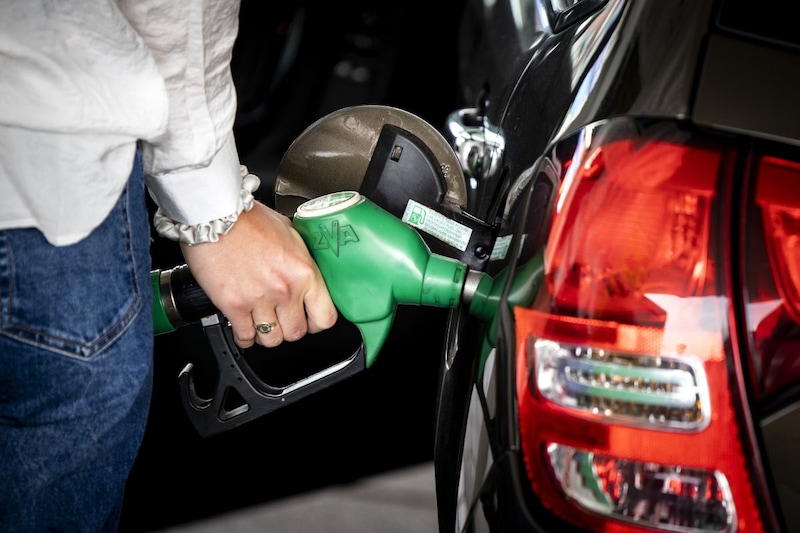
Gas station owners benefit significantly from price changes on the global oil market. Many motorists already thought they would notice that prices at the pump would rise faster than they would fall again if there was room for this, and this has now been proven.
Anyone who travels their daily kilometers in a car with a combustion engine has undoubtedly noticed in their wallet that fuel prices are certainly not cheap. Research shows that when there are changes in the oil price, prices at the pump are adjusted upwards more quickly than prices are adjusted downwards, if there is room for this. This is evident from reporting from economic trade magazine ESB.
According to ESB, this asymmetric price pass-through cost Dutch consumers an average of 2.2 to 4.8 cents per liter of fuel tanked in the period 2007-2023. This means that it quickly amounts to a few euros per refueling. Researcher Stef de Jong gives several reasons for the fact that the price at the pump goes down less quickly than up. Consumers generally do not quickly look for alternatives, also because prices are not easy to compare.
There also seems to be a kind of tacit agreement among gas station owners to implement price reductions more slowly, so that they jointly keep the price high for longer. In addition, according to the research, it is more difficult for petrol suppliers to implement price reductions, because they can only store the cheaper fuel to a limited extent and are therefore not guaranteed the lower price.
De Jong says that it could help to oblige gas station owners to publish their prices online, so that drivers can compare them more easily. Something like this is already happening in Germany. These practices could also be prevented if the supervisory authority, the Netherlands Authority for Consumers and Markets (ACM), were allowed to take more action. ACM’s function is currently limited to monitoring mergers and prohibited price agreements, but according to the researcher this could be expanded.
After the outbreak of war in Ukraine, recommended retail prices at the pump rose rapidly, reaching a record high of €2,505 per liter of Euro95 in June 2022. According to consumer collective United Consumers, the recommended retail price (GLA) of a liter of Euro95 at the time of writing is €2,095. The GLA of a liter of diesel is now €1,905. Please note: you can often refuel locally – and far from the highway – considerably cheaper.
– Thanks for information from Autoweek.nl