
Amsterdam example?
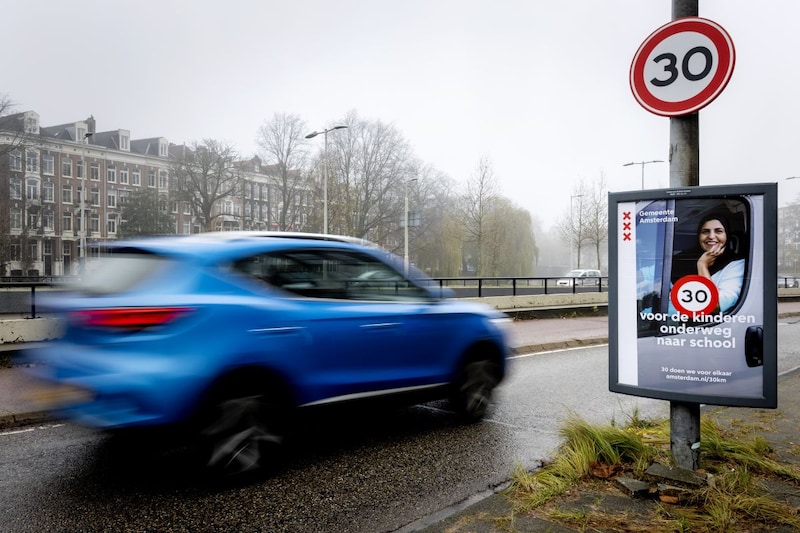
In Amsterdam, the speed limit is now 30 km/h in a large part of the city. According to the Rai Association, this is a good example that all cities should follow.
Amsterdam has had its first weekend, with 30 km/h as the speed limit in most of the city. Whether the intended effect, improved road safety, is actually achieved remains to be seen in the longer term. According to Frits van Bruggen, chairman of the Rai Association, the Amsterdam example is certainly one to follow in all city centers. In conversation with it A.D the former ANWB CEO explains: “Something needs to change urgently to keep our cities livable and safe. The Rai Association advocates lowering the speed limit in urban areas to 30 km/h, when there are no separate lanes. This is how speed differences smaller, resulting in fewer (serious) accidents.”
Van Bruggen argues that cities are becoming increasingly busy and in various places they are simply not equipped for all that traffic at speeds of up to 50 km/h. “Our cities and towns were once built to be traversed on foot, on horseback or by boat. We now have 18 million people living on this small piece of land, half of them in the city. Together we own more than 9 million cars, more than 23 million bicycles, of which 4 million are already electric. More and more other electric means of transport are being added.” If it were up to the industry, 30 km/h would also become a nationally uniform rule in inner cities, to avoid confusion. Van Bruggen: “Now the rules are different in every municipality, which causes chaos and uncertainty for road users. It is as clear as 30 km/h applies everywhere within built-up areas if there are no separate lanes.”
Design roads differently
According to various experts, whether people really drive slower and whether a lower maximum speed has an effect is indeed related to whether or not the lanes are separated. Last week, an expert from architectural and engineering consultancy Sweco stated that many roads in Amsterdam ‘invite you to drive faster’. He does not expect that many people will adhere to it and advises that the roads be adjusted.
The national scientific research agency for road safety SWOV came up with a similar analysis: “Lowering the speed limit and putting up new signs is not the only thing. Roads also have to be designed differently, otherwise people will not understand that they have to drive differently. And enforcement is important,” said quotes it ANP. “The police are overloaded and understaffed, so enforcement will be inadequate. That will affect the success of such a measure. The municipality must tackle roads, otherwise speeds will not go down.”
– Thanks for information from Autoweek.nl