
The Netherlands in the lower regions
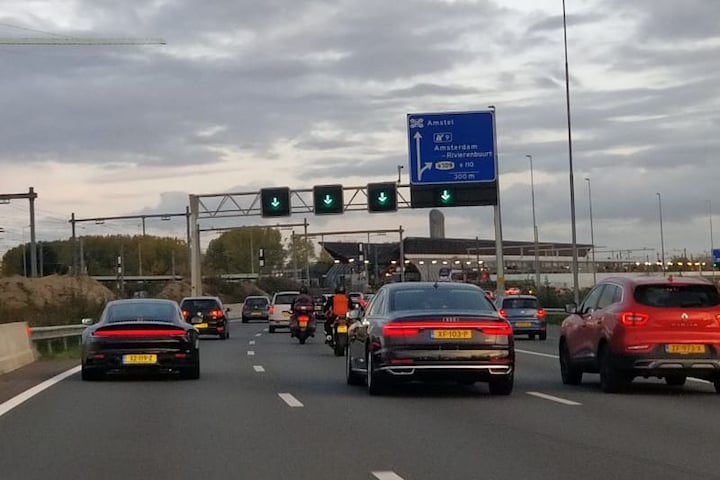
The Netherlands is one of the most prosperous countries in the European Union and you may think that vehicle ownership is high here. Yet that is actually not too bad, as figures from the European trade organization ACEA show.
Is the Netherlands a car country? Well, if you look at the enormous traffic jams that sometimes occur and the lively hobby in our country, you might think so. On the other hand, it is also a country with traditionally quite high petrol prices and a fiscal climate that does not exactly encourage car ownership. In any case, from figures from the ACEA on vehicle ownership in the EU (2021), we could cautiously conclude that the Netherlands is not really a car country.
ACEA calculates that the EU average of vehicles per 1,000 inhabitants is 651. The Netherlands is quite a bit below that; According to the ACEA, there are 593 ‘motor vehicles’ here per 1,000 inhabitants. Mind you, this logically also includes motorcycles and mopeds. The absolute leaders in the EU in this area are Poland and Cyprus. There are no fewer than 796 vehicles per 1,000 inhabitants. They can also do something in Luxembourg, with 788 pieces per 1,000 inhabitants. Large countries such as Italy (763 per 1,000), France (676 per 1,000) and Germany (634 per 1,000) are also ahead of the Netherlands. The situation is quite similar with our southern neighbors: in Belgium there are 594 motor vehicles per 1,000 inhabitants, only one more than here. Not surprisingly, it is mainly less prosperous countries that we encounter at the bottom of the list. At the bottom is Latvia, where there are 453 cars per 1,000 inhabitants. Romania (461), Hungary (476), Croatia (499) and Lithuania (523) follow.

However, it is certainly not the case that there is a clear relationship across the board with GDP per capita and the number of vehicles per capita. The Netherlands is certainly not in line with a high GDP and low vehicle ownership, nor is Poland, for example, with a low GDP and high ownership. It is of course also related to other matters, such as to what extent public transport is an alternative and whether driving is relatively expensive or cheap in a country. In the Netherlands, a combination of a relatively dense public transport network and high car costs logically results in the relatively low number.
– Thanks for information from Autoweek.nl