
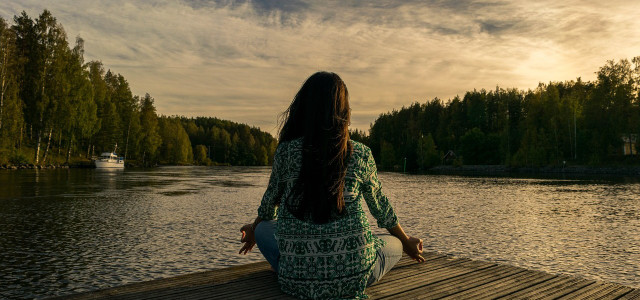
The right posture is crucial in meditation and not every sitting position is suitable for you. We’ll show you how to find the right meditation seat.
You can learn the right meditation. This also includes taking the right meditation position. The goal of the meditation seat is to make you feel “grounded”. Therefore, it is important that your body is completely relaxed below the waist. For beginners, some sitting positions are initially uncomfortable and cannot be endured for long. So you should approach it slowly.
Not only does meditation relax you, but regular meditation can also help with mental illnesses and problems. For example, meditation can be helpful for depression and anxiety disorders.
Preparations for meditation

(Photo: CC0 / Pixabay / Energy Angel)
Before you go into the meditation seat, you should consider the following tips:
-
Take off jewelry and glasses: Accessories can interfere with your meditation. Anklets, for example, can cause pressure points. However, you can use a mala in a mala meditation. In Buddhism and Hinduism, such prayer beads with beads are used when meditating. For example, you can use the beads to count how many times you inhaled and exhaled or recite a mantra. This will help you focus.
-
Cover your shoulders: You can get cold quickly while meditating. A blanket can help to keep you from freezing. Just drape them over your shoulders and back when you’re seated.
-
Shoes off: Shoes only bother you when meditating.
-
Comfortable clothing: Tight pants and tops can quickly make sitting uncomfortable. Therefore, wear soft and comfortable clothing.
The posture of the upper body is the same for all seat types

(Photo: CC0 / Pixabay / rauschenberger)
You can meditate in different sitting positions, depending on what is most comfortable for you. But in all positions, the posture of the upper body and arms is the same. Therefore, you can apply the upper body posture guide to any meditation seat.
- Your tailbone forms a straight line with your head. To do this, sit up straight and tilt your hips forward. The natural curve of the back is quite normal.
- The shoulders are relaxed and not pulled up. Your gaze is straight ahead.
- You can either bring your hands in prayer position in front of your chest (Anali Mudra) or place them on your knees with the backs of your hands. Here you can form a circle with your middle finger and thumb and stretch out the other fingers (Mudra Sanskrit). Alternatively, you can also make a circle with your index finger and thumb (Jnana Mudra).
Meditation position 1: Half lotus position
The half lotus position is also referred to as the “perfect sitting position”. This pose is similar to cross-legged, but the position of the heel is different. With these steps you get into the meditation position:
- Sit on a yoga mat or rug. The ground should not be cold.
- First go into the normal cross-legged position.
- Now take a heel and pull it towards your pubic bone. You’re half sitting on that foot now.
- Place the instep of the other foot on the lower leg of the other leg.
- Assume the upright posture of the upper body.
Meditation seat 2: lotus position
(Photo: CC0 / Pixabay / lograstudio)
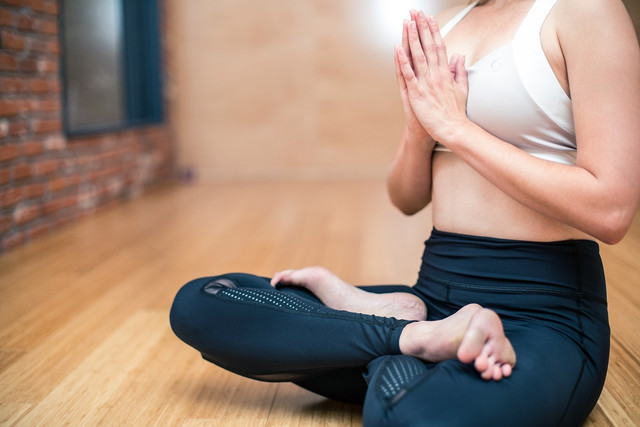
You can also meditate in the normal lotus position (Padmasana). This one is a bit more difficult and requires a little practice. How to get into the lotus meditation position:
- Sit on the mat with your legs stretched out.
- Now bring your right foot onto your left thigh. The sole of the foot points upwards.
- Now bend your left leg and place your foot on your right thigh.
- Both feet are close to the stomach and can also touch it. Toes point outwards and your knees touch the floor.
- Now assume the upright posture of the upper body.
Alternatives for physical complaints or limitations
(Photo: CC0 / Pixabay / Srresume)
If you have pain in your back, hips or knees, it is better if you do without the meditation seats described above. But there are alternatives that you can still use to meditate while seated.
-
For back pain: Sitting on the bare floor, even with a mat, can cause back pain in the tailbone. There are meditation cushions that promote an upright posture and relieve the back a little. The higher the pillow, the more forward you tilt your pelvis and your posture becomes more upright. You can also achieve the same effect with a folded or rolled blanket.
-
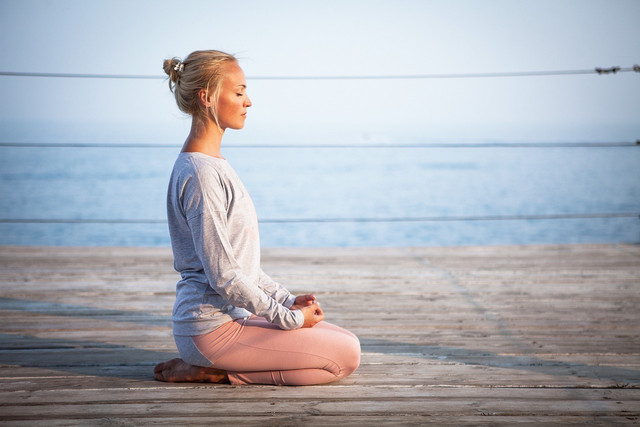
Problems with the hip opening: In the lotus position, the hip joint is opened and the knees lie to the side. If this pose causes you pain or you are unable to properly position your knees, you should refrain from sitting in this position. The heel seat (Vajrasana) is an alternative. To get into this position, kneel on the floor and sit on your heels. Now tilt your pelvis forward and straighten your back. This meditation seat can start to pinch your feet after a while. To avoid this, you can put a small pillow underneath.
-
For knee pain: If you have knee problems, you should avoid the lotus or heel seat. But you have the option of sitting upright on a chair. The chair should be firm and hard, you don’t need a backrest. Again, tilt your pelvis forward to get into an upright position. Position your calves so that they form a 90-degree angle to your thighs and straighten your torso so that it also forms a right angle to your thighs.
Lying down meditation
You don’t have to sit down to meditate, you can lie down too. The lying meditation position is also called Shavasana and is particularly suitable for starting meditation exercises.
- Use a yoga mat or rug for this as well.
- Place your legs hip-width apart and place your arms palms up on the mat. Make sure you leave some space between your hands and hips.
- If you have neck problems, you can place a flat pillow under your head.
- As described above, you can bring your fingers into either the Sanskrit Mudra or the Jnana Mudra.
Read more on utopia.de:
- Meditation to fall asleep: How it works
- Healthy yoga: What you should pay attention to when buying a yoga mat and clothing
- Yoga for beginners – these tips will make it easier for you to get started