
What do the gas stations notice?
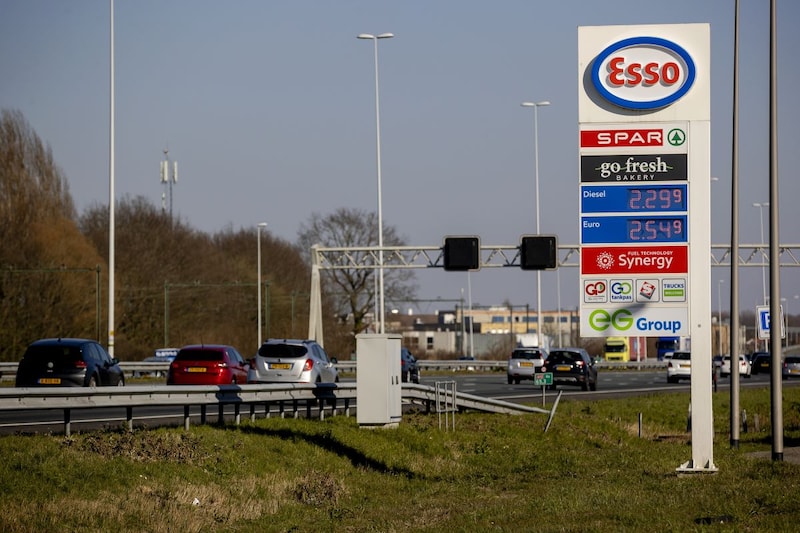
Until recently, fuel prices broke record after record and are still sky-high, but things don’t seem a bit calmer on the roads. It seems we can’t get out of the car, no matter what the cost. What do the gas stations notice about the astronomical petrol prices?
Besides the war in Ukraine, it is the talk of every new day: fuel prices are breaking record after record and motorists are complaining. But anyone who thinks that we will leave the car at home a little more often is mistaken for the time being, as appears from a brief tour of the gas station world. Ewout Klok has a Shell filling station in Hoogeveen, but we are now talking to him as chairman of BETA the interest group of petrol stations. According to him, we have been driving more consciously in recent years: “In our experience, the Dutch petrol price has always been high. A year or two ago, when the corona crisis broke out, we had historically low fuel prices and then you saw an increase in day trip drivers again, but that was only for a very short time; after that we got bogged down again in the old pattern, in which people very consciously drove miles, thought it through carefully before going to grandma and grandpa or doing errands. What remained was business traffic, which has always been stable.” Of course, working from home has also had an impact on our fuel consumption, says Klok. “We have very strange excesses. Within two years from historically low to historically high, with in the meantime a period in which everyone was forced to work from home. Since a few weeks, more work has been done in the office, but we have benefited little from that, because then the next crisis came again, which only makes fuel more expensive. That is another reason for many companies to tell their people that they should stay at home for a while, this time because of the travel costs.” Fuel is a very special good in the eyes of the consumer, Klok explains: “You pay good for it, you throw it in the car and use it up, and then it’s gone. If you buy a nice book, you will enjoy it on the couch, and if you spend your money on a stuffed animal, you will cuddle with it. You can’t do that with fuel. That is a necessary evil. You buy it, it’s expensive, you consume it and it’s gone. You have no emotional connection with it, apart from the mobile freedom it gives you.”
Very expensive locations
“You don’t so much see the shift to unmanned stations, but especially to other countries,” Klok continues. “There can be about two cents per liter of price difference between manned pumps and the unmanned pump, that’s a kind of unwritten rule. Mind you, I’m talking about the underlying road network, not the highways, that’s a completely different story. Highways are very expensive, but also busy locations. But abroad is something completely different. I recently saw a difference of 50 cents per liter with Belgium; 50 cents! And in Germany you see a 40 cents per liter difference. Well, then it pays to drive there to refuel. You can no longer call that competition, that is a completely different world.”
The limit for refueling abroad is moving up
Jan Harmen Akkerman, director of MoveYou, endorses this, which provides ICT services for more than 700 filling stations and also has 36 unmanned stations (TanQyou) itself. “What is special about the Netherlands is that we levy excise duty on fuel and then add VAT on it. This means that our liter prices are rising exponentially and therefore faster than those in our neighboring countries. As a result, the boundary of the area in which people refuel abroad, previously 10 to 15 kilometers from the national border, is shifting considerably. The Netherlands is getting smaller and smaller. We as gas station operators therefore do not benefit from those high prices. That does not give us any more profit, which is sometimes thought.”
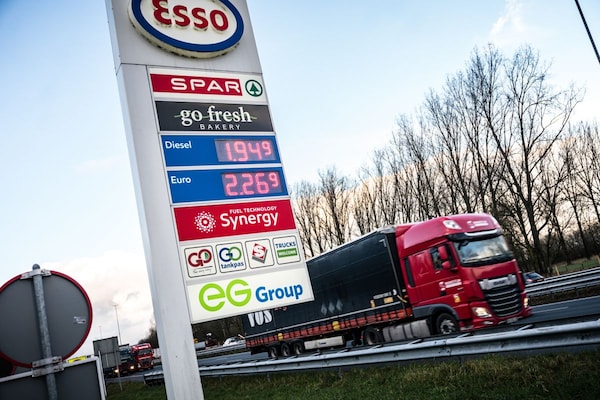
(Photo: ANP)
High housing costs along the highway
The differences in price between the highway stations and the others are also significant. Klok: “The fact that petrol is so much more expensive along the highway is mainly due to the high accommodation costs there, but also to the competitive position. On the highway there is always at least 20 kilometers between the pumping stations, but on the underlying road network the stations are much closer together. The Netherlands is the most densely populated country in terms of filling stations. A lot of offer, so a lot of competition and that puts pressure on the price compared to the recommended retail price. Here in Hoogeveen we have about twenty filling stations for 50,000 inhabitants.”
Lease drivers also go to a cheaper pump
Well, that will make little difference to the consumer. He wants the lowest price per liter and avoids the highway stations, where they now have to rely almost entirely on business drivers. Even so, they more often go to cheaper addresses, says Klok. “Leasing companies with contracts that also include the fuel often send the driver to specific filling stations by means of an app. If such a person refuels on the highway, he will receive a message on the app that this can be done cheaper. In this way they are sent to the underlying road network and we also see this in the payment system. But they still drive. That representative has to be on the road, he has to go to his customers.”
Consumer not sharp
MoveYou alleviates the suffering with its Tankey app, which motorists can use to save for a discount on the liter price, says Akkerman. Like Klok, he does not see any decrease in fuel consumption for the time being. “Since the outbreak of the war in Ukraine, we have seen the opposite. On the Thursday it started and the day after, we saw record sales in the Netherlands, as everyone expected prices to rise further. So people often wanted to fill the car to the maximum. This only brings out the volume a bit more. A week later we saw the same thing happen again. It is actually curious: on Wednesday the oil price rises, on Thursday the media write about it and on Friday people run to the pump and we get turnover peaks of about 20 to 40 percent. If the consumer had been keen, he would have refueled on Wednesday evening. But in the long run, we have not seen any impact on the driving behavior of our customers since the start of the Ukraine crisis.”
Maybe after six months different driving behavior
According to Akkerman, the price elasticity of mobility is enormous. “Nevertheless, if you look at mobility expenditure over the past ten or fifteen years, you see that it is fairly stable in relation to gross domestic product. At the moment, gasoline is extremely expensive, but you still don’t see people adapting their driving behavior to it. However, they do talk about it all the more. If this situation continues for another six months or more, I think things could change.”

more price conscious
Nevertheless, the current situation makes people even more price-conscious, says Akkerman. “A big part of fuel consumption is psychology. People are well aware of the much higher liter prices on the highway and what also comes into play is that fuel prices are in the news every day at the moment. As a result, the awareness much bigger at the moment, everyone is talking about it, on the news and at the coffee machine. In the past we did a survey asking what the liter price was at that time. Then only a few people knew how to tell. If you asked that now, almost everyone would know roughly how expensive it is.”
Jan Harmen Akkerman’s own gas stations are unmanned, so he also has to deal with the limit of €125, which is often no longer sufficient. “People with the bigger cars and who fill up with premium fuel often don’t get their cars full anymore. In the meantime, the limit has been raised to €150 in many locations and there is even talk of bringing it to €200. Those kinds of customers could pass a second time, but in practice we rarely see that happen. They fill up to the limit and come back a few days later. That group is therefore less price conscious.” 
Beaters
An old phenomenon is resurfacing due to the extremely high fuel prices in combination with inflation, says Klok. “The energy costs at home are skyrocketing, the same happens with the fuel costs, but your salary does not increase. People are left with much less, but they have to keep driving. Mainly for work and family, but – that may surprise you – also for the neighbour. They should not get the impression that you can no longer afford the petrol, so the car should not be left standing. So around the 20th of the month we see an increase in knockers. These are people who have refueled, come to the cash register and stand there knocking on their pocket as if they have forgotten their wallet. That way they still have their petrol, payment comes later. But that involves a lot of administrative and civil law work and bailiff costs.”
It is remarkable that driving on without paying has not increased due to the high prices, says Klok: “Because we are alert to that. We will immediately pass this on to the police. It gives them a criminal record.”
CoCos and DoDos
There are three types of filling stations, explains Ewout Klok: “CoCos are company owned, company operated† Those stations are owned by the oil company, which also runs them, and thus determines what happens there. Then you have the CoDo or CoFo: company owned, dealer operated or franchise operated† Such a station also belongs to the oil company, but a franchisee runs the operation. It is already a bit more free, but society determines the forecourt. Finally you have DoDos, dealer owned, dealer operated† The station belongs to the dealer. This one also runs it, and the earnings and expenses are his.” The gas stations at supermarkets are a kind in themselves, says Ewout Klok: “They have a gas station to attract customers. They won’t work below cost, but they will sell for almost that cost. It is not a core business for them.”

Many gas stations also have side activities that they earn from. Klok: “Under pressure from the fierce competition, we are giving away almost all discounts on the forecourt. We pay costs such as personnel, gas, water and light from the profit we make in our shops. Those shops are getting bigger and bigger. Many gas stations are now investing in lunchrooms. They also do this to be ready for electric driving. After all, refueling only takes a few minutes, fast charging easily takes half an hour and you can facilitate that very cleverly with a lunchroom.
– Thanks for information from Autoweek.nl