
Only a primal Kadett

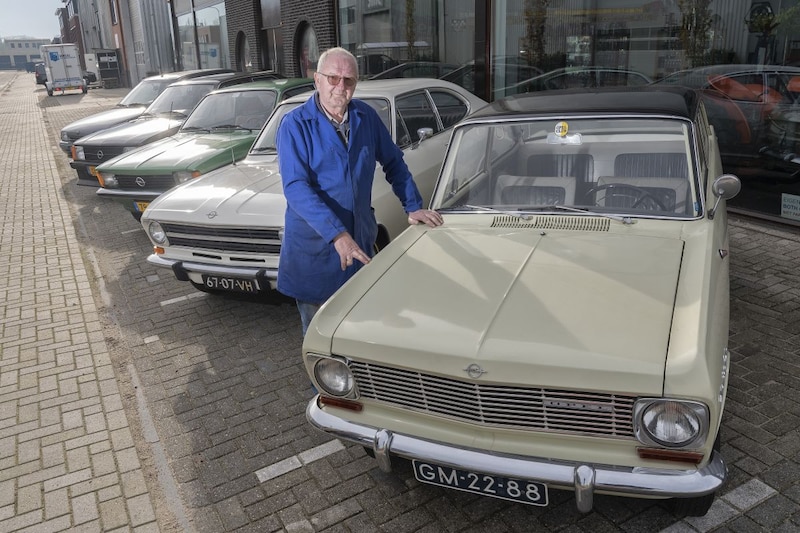
Wim Both is a collector and he does so on two floors. In the middle of a billiard table we find scale models, paintings, about fifteen hundred (!) beer glasses, old turntables, mopeds from days gone by and … a large empty room on the ground floor. Because all generations of Opel Kadett are outside, on the street corner. Just like before.
Actually, it’s not quite right, ‘all generations’, because the Kadett already existed before the Second World War. As the successor to Opel’s P4, it was seen in 1936 as an alternative to Hitler’s upcoming KdF car. The conveyor belt that this later Volkswagen Beetle had to roll off soon produced war material, so Opel saw its chance. Various variants were available, including the 1795 Reichsmark Normale, which was marketed in 1938 as a real ‘Beetle Cracker’, rather against the will of the Nazi leadership. In May 1940 it was over with the primal generation of Kadett. Opel left the model name in mothballs for decades and in June 1962 casually introduced the Kadett A, as if they wanted to forget the past.

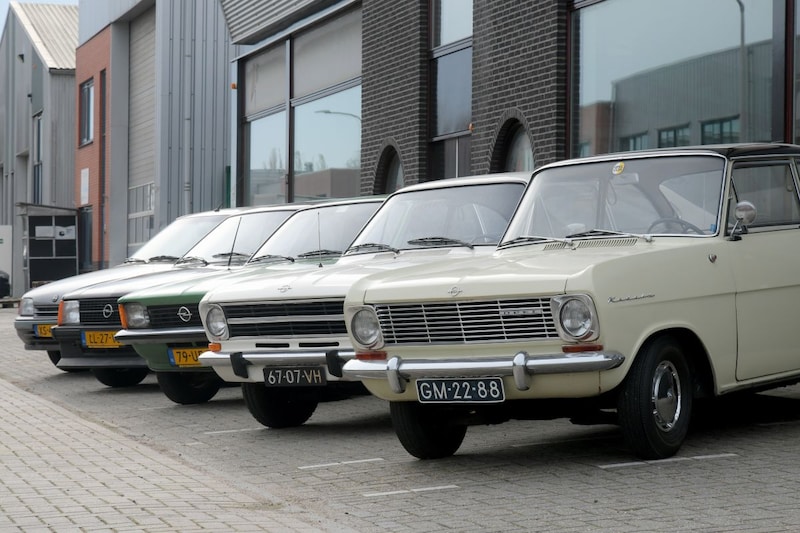
From left to right, the E, the D, the C, the B and the A, the earliest three are all a Coupé.
Primal Kadett is missing, but otherwise Wim has all Kadetts
Although Wim Both’s Kadett collection lacks a copy of that original version, that does not make the collection any less interesting. They are all original Dutch cars and with odometer readings between 90,000 and 125,000 they are – although over-aged – almost oven-fresh. For years, the Opel Kadett was the (street) cornerstone of society, which is why it was seen as an object of use and not as a mobile heritage. So it’s great that Wim’s copies are so oven-fresh. Figures from that time speak volumes: Between 1969 and 2004, Opel was the best-selling car brand in the Netherlands for 35 consecutive years, with 1986 as the peak year with almost 100,000 vehicles sold. The standard bearer was always the Kadett, which also had its best year in ’86: almost 60,000 units. As a brand, Opel has not achieved those numbers for years, let alone any other manufacturer.
Opel Kadett was a tool for Jan Modaal
So there is no doubt that the release of tens of thousands of these sandwiches on our roads year after year has led to the image of utility, of car for Jan Modaal. After work was done it was good to rust (and they did!), if they didn’t get off the road literally and figuratively before. Especially the first generations are considered mopping. In short: for cherishing five virgin exponents of as many generations of Kadett, Wim gets our hands together. But how did it come about?
“Actually, from my childhood I have alternated between two and four-wheelers. For example, I was already trading mopeds when I was 14 in Utrecht. Kreidlers, Zündapps, that kind. My father was rather easy-going, he was also busy with his farm in Berkenwoude, so I could do my own thing in addition to my training as a furniture maker. Until I had enough of my studies and started working for my brother who was a Fiat dealer in Lekkerkerk. Unfortunately, the fun was over in 1969: I had to enlist. It became Oirschot, which led me to buy mopeds in nearby Tilburg, which I then managed to sell at a profit in Utrecht during my leave. After my military service I did everything from driver on an oil tanker to builder of silos in a construction company. However, cars never let go of me, I always ‘fumbled’ with them in my private time. I loved special models, cherish fond memories of the Fiat 850 Spider, for example. Later more and more Opels came my way, which I then traded. In the end, I started a car company in Schoonhoven in 1995 with my son Wijnand.”
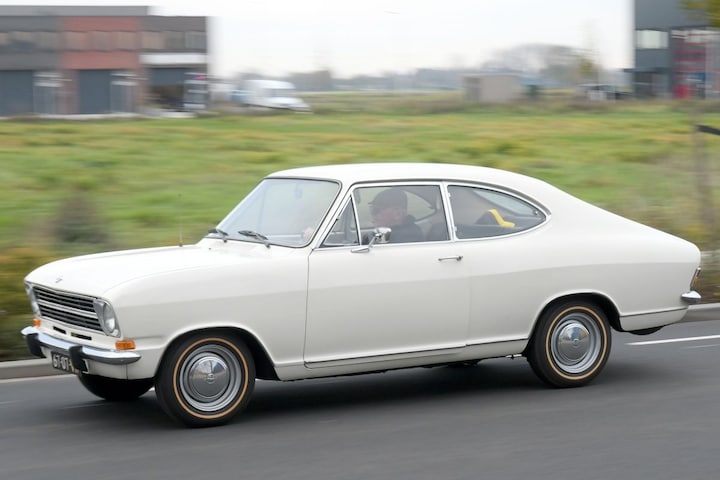
The Kadett B Coupé is Wim’s favourite
Business went well and a year later the men moved into larger premises in Bergambacht. The current building was built in 2000. Spacious and equipped with a mancave. In 2011 I retired and my son took over the business, but I kept the mancave.” The latter was a good move, because the first Kadett had settled into it long and wide. “I found the B-Kadett Coupé 1.2 Automatic from November 1972 in 1997 at the Volvo dealer in Schoonhoven. I don’t know how it got there, but it had already been restored. I loved it so much that I just couldn’t pass it up. I drove back home with exactly the same feeling as before, because you don’t forget something like that. The B is my favorite of the quintet. Not only do I find him the most attractive, apparently others do too. AWhen we go to an event, for example the annual old-timer festival in Alphen aan den Rijn, we have the most demand with the B. In addition, it is handy, because of the towbar. I have a cart for my old-timer mopeds of which I have about fifteen, so I drive a nice classic team. All in all, that makes the B my favorite. If someone makes a good offer, I could say goodbye to my Kadetts, but the B last …”

C-Kadett also with Wim after the B-Kadett
Whoever says B must also say C and so the green coupe became the next conquest. “I saw it in Stolwijk. I thought it fit well with the B: also a coupé, also originally Dutch, not much experience either – its odometer reading is not yet 95,000, the B has not yet passed 110,000 – and also in good condition. The latter was nice, because at my age I didn’t feel like starting a major restoration job. In any case, very little needs to be done to all the cars, otherwise I can always visit my son next door. I think it is a plus of the Kadett that they are so reliable, and also quite simple in design. For example, all five generations were delivered with the same engine: the one-litre OHV, which was later enlarged to 1,078 and 1,196 cc and also ended up in many other models – from GT to Olympia. I think the handling is a downside, although the C drives quite well.”

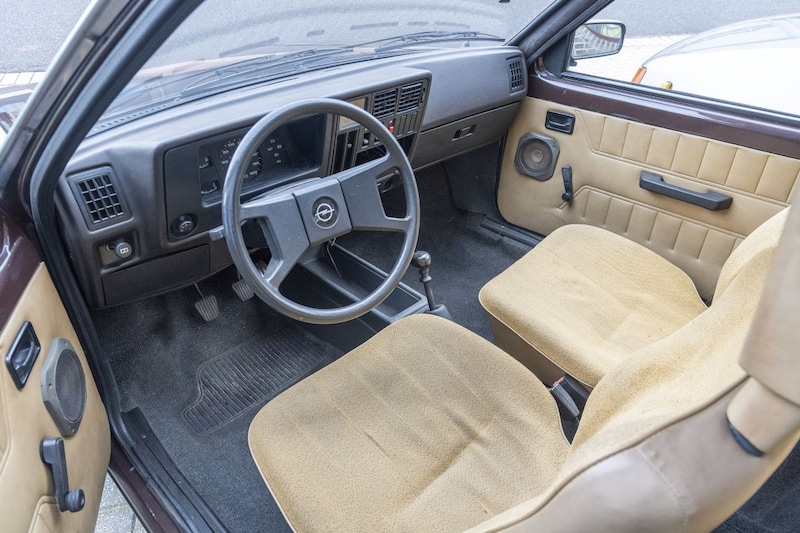
Opel Kadett C, nice and bare inside.
Cadet D and E
The D and E were more or less thrown into his lap, they were trade-ins. The angular D (from October 1984) may look martial, but under the hood the old 1.2 still hums. And coincidence or not, the clock hadn’t gone round yet either. The 1.6-injection engine of the rounder E (September 1989) is the most experienced with an odometer reading of approximately 125,000 km, but if you spread this mileage over its entire life, you will still not get further than four thousand per year.
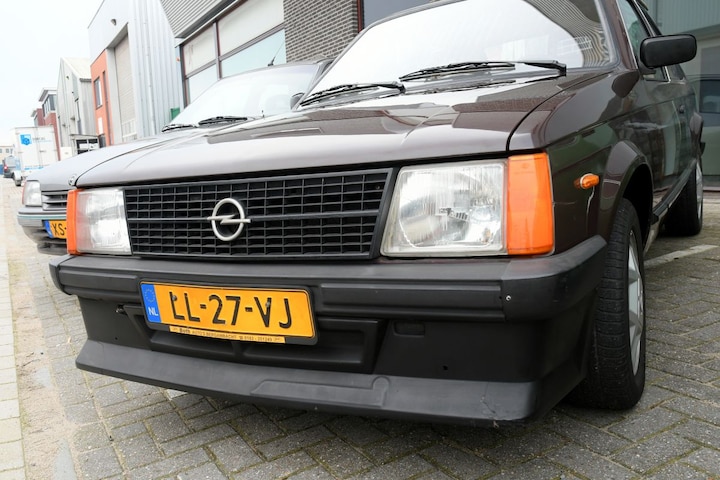
Opel Kadett D, the first front-wheel drive.

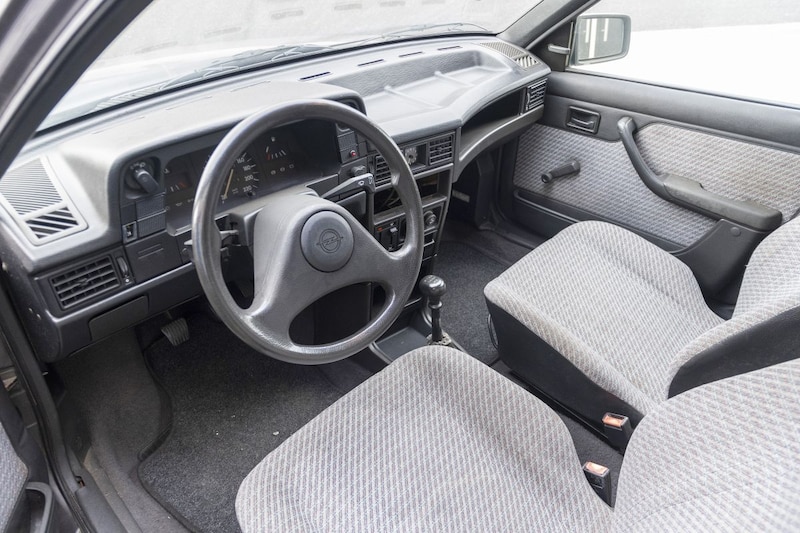
A neat Opel Kadett E, also almost disappeared from the street scene.
The A-Kadett came last
“Well, and then I had four: B to E. Then the A should not be left behind, but that turned out to be not so easy. The cars I had were both Dutch and low mileage. Then try to score one of the oldest generation, which also existed for a relatively short time: from 1962 to ’65. During an old-timer meeting in Voorthuizen I saw one and I started talking to the owner. He told us that only seven original Dutch A’s still existed, and … one of them was for sale. I went for it and not long after that I owned the GM-22-88.” A fitting license plate for this beautiful elegant coupe, the lines of which are devoid of any form of aggressiveness. In contrast to the ‘wild’ creatures of today who often also have a one liter under the hood …
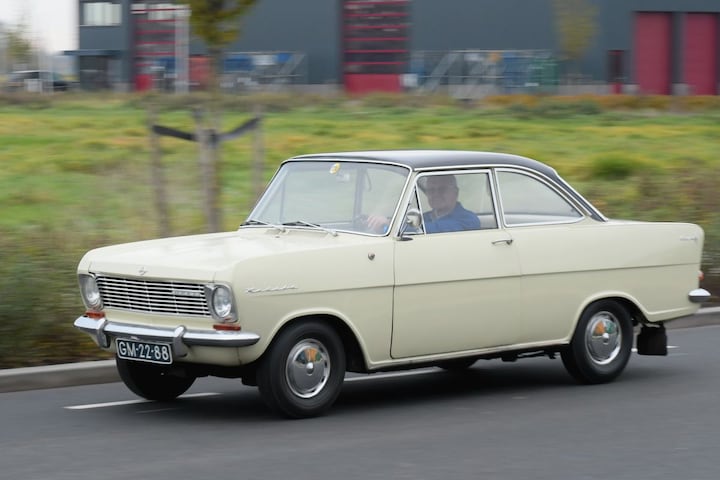
Wims Opel Kadett A.
The A is also under 90,000 kilometers
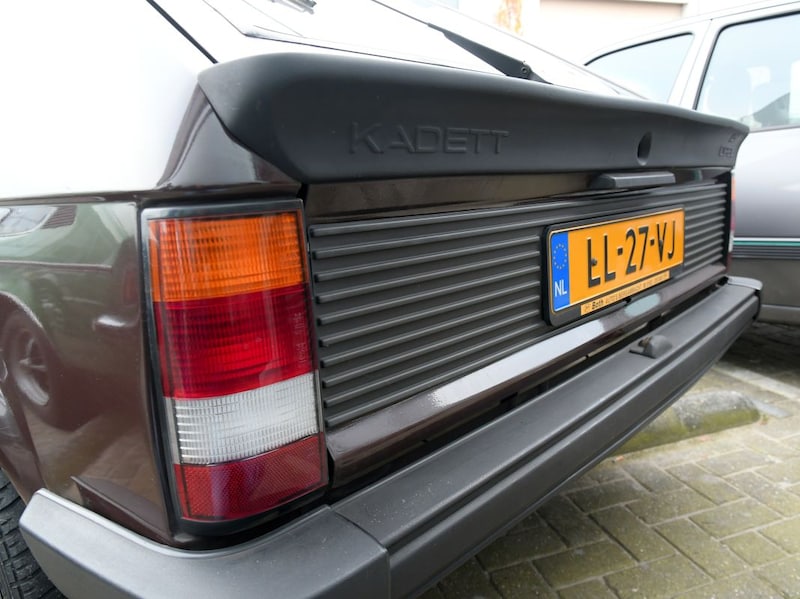
Like the D, the A has run less than 90,000 kilometers. Now Wim had all five, each a nice reflection of his time. For example, the A has a two-tone paint scheme that is continued in the interior. Striking are the Opel logos that are punched into the door trim. The B, with modest white walls, is characterized by the black cabin. “That would serve safety,” says Wim. In the 1970s, color returns to the interior, brown of course. The angularity of the D is further expressed in the sporty version of the LL-27-VJ: see the spoiler work.

The Dutch bought a Kadett E with LS equipment
The fairly simple equipment level LS of the E neatly met the modest wishes of the down-to-earth Dutchman; this version was the most sold. The barely sold L was almost Spartan, the GL, GLS and CD were more luxurious. In terms of appearance, it was more aerodynamic, something you didn’t notice much inside. And under the hood? An injection engine to get the exhaust gases cleaner. All typical of the second half of the 1980s. Wim has captured a beautiful image of the era, something that comes to life when we shoot the image with the oldest two cars. When son Wijnand drives up with his beautiful Rekord C Coupé from 1970, you suddenly find yourself in a random residential area in the 1970s. Bring on those platform soles, wide pipes, cork wallpaper and beanbags! Anyway: it is nice that these cars are preserved. But then someone should not come along with a Kapitän. Wim also thinks it is very beautiful. However, he no longer has room for it, while he indicated that he could say goodbye to his collection. All Kapitän drivers should therefore avoid Bergambacht, so that we can continue to enjoy this perennial, but still fresh series of sandwiches for a long time to come.
This story was previously published in AutoWeek Classics 02 2021
.
– Thanks for information from Autoweek.nl