
Nice recharge
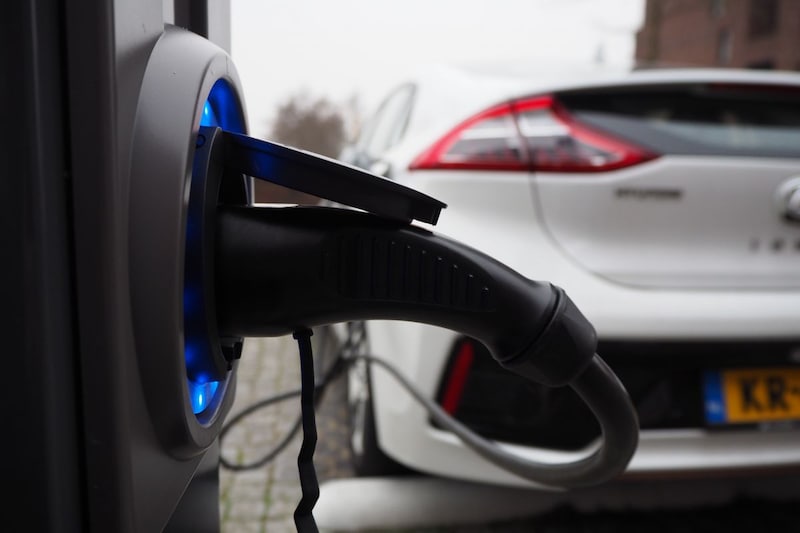
There are now more than half a million charging points for electric cars in the Netherlands. This marks an important milestone. Most of the charging points are private points.
The Netherlands has passed the limit of 500,000 charging points for electric cars. This is stated by the National Charging Infrastructure Agenda (NAL) in a progress report that has been presented to the House of Representatives. There were 518,000 charging points in the Netherlands at the end of April. These are private points, (semi-)public points at offices, on business parks and at supermarkets, and fast charging points along motorways, for example. The vast majority (384,200) are private points at home, according to the NAL, which in its own words ‘has the task of realizing sufficient charging infrastructure so that a rapid transition to electric transport is made possible’.
“We are well on track. The Netherlands is one of the frontrunners in Europe when it comes to charging infrastructure. But there are also challenges,” says NAL chairman Gerben-Jan Gerbrandy in the report. “The growth of electric transport is increasing every year. Sufficient capacity is particularly a concern when it comes to the roll-out of fast chargers and charging options for heavy transport. National and regional governments and network operators are doing a lot to make smarter use of and expand capacity. Those interests for mobility should be more firmly anchored in decision-making,” says Gerbrandy. The organization points to bottlenecks such as the need to accelerate the pace of installation. The network congestion, or shortage of supply and demand on the electricity network, is also a bottleneck in the realization of a nationwide network of charging points in 2025, according to the NAL.
The NAL also points to the costs, because electric driving has become economically less attractive compared to driving a fuel car due to the energy crisis. The organization states that electric driving should be financially more attractive than driving on petrol or diesel and asks the cabinet to take measures in this regard. “Due to the energy crisis, charging a car has sometimes become two to three times more expensive. The disappearance of tax incentives after 2025 and the higher motor vehicle tax due to the higher weight of electric cars will further exacerbate that effect. Without measures that put the electric car in proportion to make the fossil fuel engine more financially attractive, the government’s climate goals with regard to mobility could be seriously jeopardized,” says Gerbrandy.
.
– Thanks for information from Autoweek.nl