
Maij-Weggen fiasco
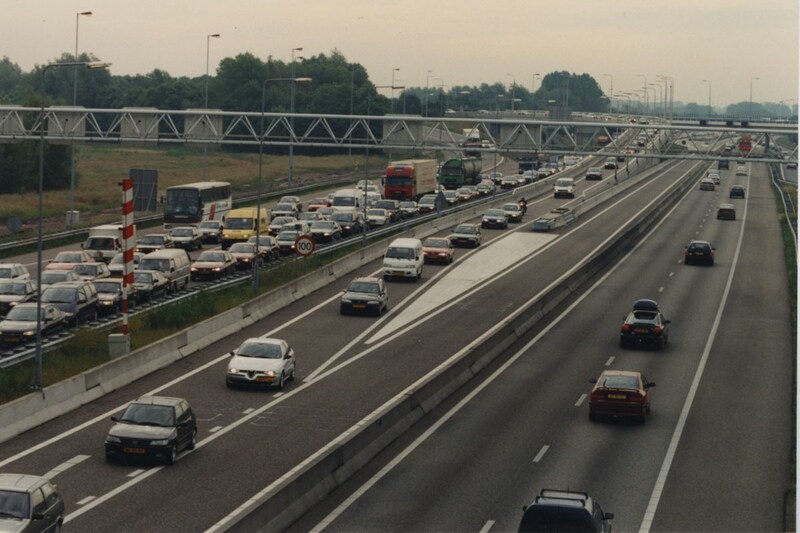
What should have been the jewel in the crown of her Dutch ministership for Hanja Maij-Weggen, ultimately became the disgrace of her political career. More and more countries are currently experimenting with the carpool formula, of which the Netherlands was the European first in 1993, so why was there so much resistance to that experiment with car sharing?
It was recently thirty years ago: on October 27, 1993, the first carpool lane in Europe was put into use at one of the busiest junctions in the Netherlands – the A1 between Diemen and Muiderberg. Only cars with at least three occupants were allowed to enter the alternating lane, which costs 62 million guilders (with inflation correction, almost 55 million euros). During the morning rush hour, commuter traffic towards Amsterdam used the seven kilometer long lane, in the evening the same happened in the opposite direction, to Amersfoort.
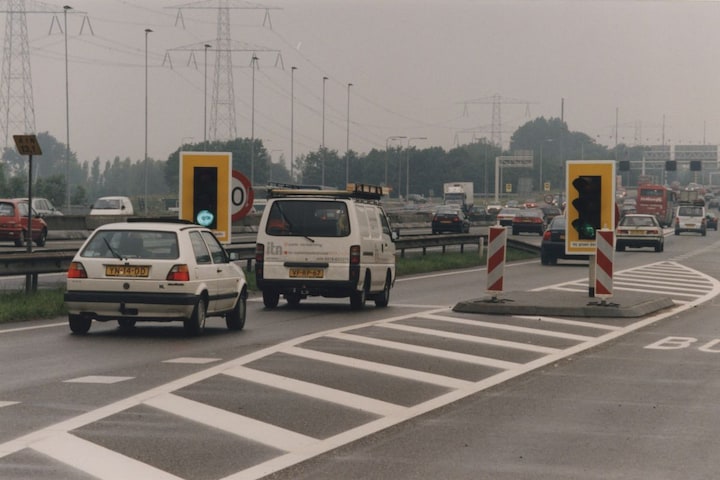
The carpool concept came from the US and was adapted to the Dutch situation. It proved to be a resounding success in major American cities, but its usefulness was hotly debated in the Netherlands before even a meter of asphalt had been laid. Not only did the majority of motorists receive the test case from the Ministry of Transport, Public Works and Water Management with the necessary skepticism, politicians in The Hague also had reservations about the most expensive piece of asphalt in the Netherlands, for which it was highly questionable whether it could offer a solution. for the daily blockage on the A1 at the Muiderberg junction. And what political consequences would it have if it turned out that 62 million guilders had simply been thrown away for Maij-Weggen’s painfully enforced prestige project?
Immediately at the opening, the cauldron with pitch and feathers was ready for her. Former Minister of Transport, Public Works and Water Management Tjerk Westerterp took the plunge by recalcitrantly driving over Maij-Weggen’s prestige project alone. He promptly received a fine from the then strict police. He refused to pay the fine of one hundred guilders and initiated a trial. Westerterp found the new carpool lane ‘discriminatory’. He said for Avro television: “Everyone with a gray license plate has helped pay for the strip, but then not everyone is allowed to use it.” He stated that he would continue to litigate and was soon vindicated by the judge. Legally it was a mess on all sides: Dutch traffic legislation did not provide for a requirement that three people be in the car. The ministry had come up with something like that; the cobbled together traffic signs also had no legal basis.
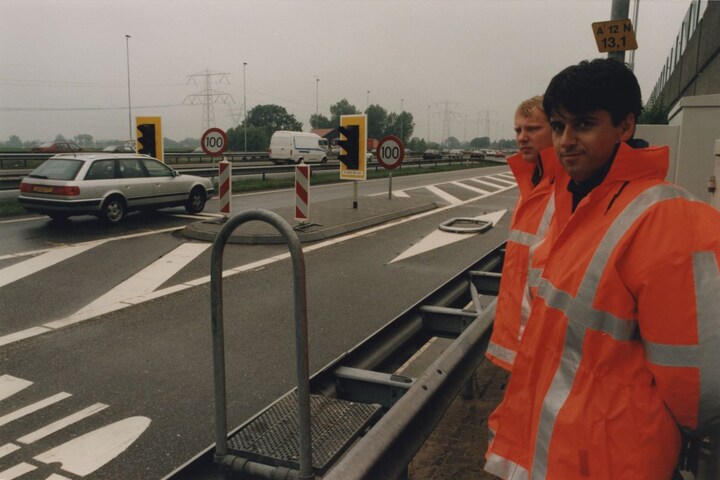
Back then, there were already four thousand vehicles per hour from Amersfoort and Almere
It was understandable that Rijkswaterstaat wanted to implement a blueprint of Houston’s carpool system at that location. In 1993, there had been great annoyance for at least two decades about the daily traffic jams at the place where the A1 and – from the polder – the A6 came together. On an average working day in the morning, four thousand vehicles per hour passed here from Amersfoort and almost the same number from the ever-expanding Almere. The three-lane bottleneck at Muiden was not designed for this. To reduce the chaos, Rijkswaterstaat created an extra lane in the 1980s that was used alternately during the morning and evening rush hours. In both cases, the traffic flow was provided with at least four lanes.
Wishful thinking of three or more occupants per car
There has even been talk of five lanes between Amsterdam and Baarn twice. Because that would cost many hundreds of millions and North Holland had even more prestigious projects (near Schiphol and the Wijkertunnel, for example) in the pipeline, those plans remained on hold. However, it was already clear that the A1 was far from finished. The capacity of the existing road, even with the carpool lane, could never accommodate the explosive growth of Almere. By making the strip only accessible to cars with three or more occupants, The Hague thought it could solve two problems at the same time: reducing traffic jams and reducing car use. Such was the wishful thinking of Maij-Weggen and the civil servants and traffic experts at her ministry and at Rijkswaterstaat, but it was a pipe dream; the reality turned out differently.
Time savings of ten to fifteen minutes
Those who drove through the carpool lane from Almere to Amsterdam usually saved time by five to fifteen minutes compared to traffic jam drivers. Apparently that wasn’t enough incentive to drive to work with multiple passengers. From the opening, approximately a thousand cars drove across the strip, but that number remained unchanged from then on. Initially, police fined motorists who drove alone, but after five months the number of checks gradually decreased. There were also smart people who thought they could avoid the verbalizations by placing inflatable sex dolls, life-size cuddly toys and mannequins next to them in the car. Ultimately, the government gave up the carpool experiment after less than a year; all motorists were allowed to use it without restrictions.
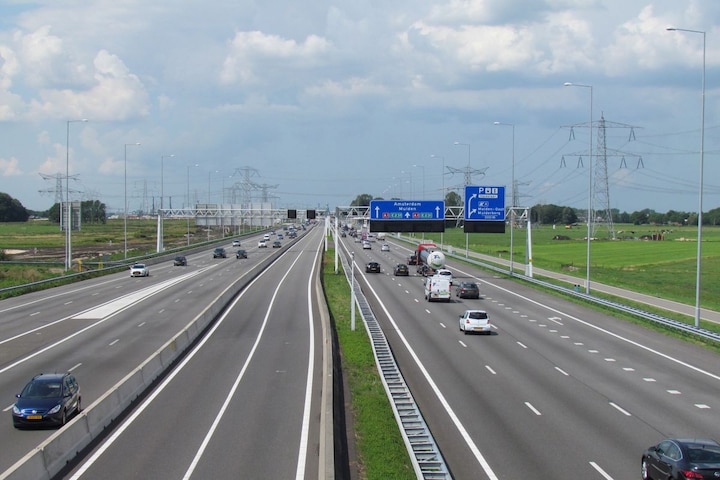
Concrete pourer and asphalt caster: that was the image of the Ministry of Transport, Public Works and Water Management for a long time
Until the early 1970s – the peak years of Dutch reconstruction, so to speak – the Ministry of Transport, Public Works and Water Management persistently retained the image of a concrete pourer and asphalt caster. Due to the increasing protest from the environmental movement, it will become increasingly difficult to build new roads from then on. From the second half of the 1960s onwards – and after the oil crisis of 1973 at an accelerated pace – the collectively cherished illusion of a harmonious development was in any case challenged. Road construction projects come to a standstill or are canceled due to the economic crisis. However, there is a lot of widening, tunneling and bridging going on and bottlenecks are also being resolved.
However, no new roads are being added, which means that the traffic jam problem – and the complaints about it – increases every year. It is striking that female Ministers of Transport, Public Works and Water Management come up with the most diverse measures: encouraging public transport use, increasing petrol excise duties, road pricing, toll gates, rush hour allowances, 80 km/h zones, road pricing, rush hour surcharges, to name just a few. . But all proposals with a price tag – almost all of them – cause so much social unrest that political action in concrete decisions usually fails to materialize.

What remains unchanged is the elitist unworldliness of Hanja Maij-Weggen, a kind of blueprint for the current outgoing cabinet. After 2004, when she had long since returned to the golden mountains of the European Parliament, Maij-Weggen claims without blinking that she looks back on her results at the Ministry of Transport, Public Works and Water Management with satisfaction. The rush-hour lane only failed due to legal and political obstruction.
– Thanks for information from Autoweek.nl