
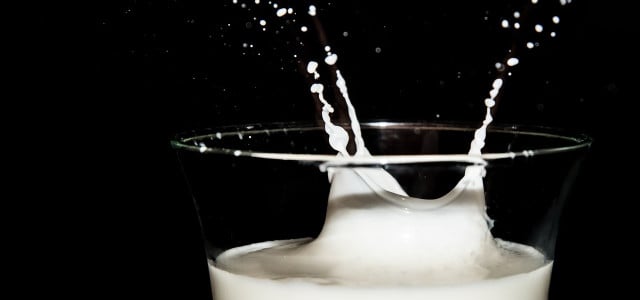
Natural lactose is found in milk and dairy products. It provides the body with important energy and supports intestinal function. If the milk sugar is not absorbed in the intestine, it is called lactose intolerance.
In addition to proteins, fats and nutrients, milk also contains carbohydrates. Most of them are natural milk sugar, also known as lactose. Lactose is the most important source of energy in mammalian milk. This makes them ideal food for the offspring.
What is lactose?
Milk sugar is a so-called disaccharide – a double sugar. It consists of two different sugar molecules: mucus sugar (D-galactose) and glucose (D-glucose).
Natural milk sugar or lactose occurs in both pure milk and processed milk products, but in different proportions. (You can find out more about how much lactose various foods contain later in this article.)
By the way: Despite its name, lactose is significantly less sweet than conventional cane or beet sugar, which is also known by the chemical name sucrose.
Lactose in the human body

Lactose has various important functions:
- It provides the body with energy
- When lactose is broken down in the intestines, lactic acid is formed. However, the long-suspected effect that probiotic foods improve the immune system and intestinal function has not yet been proven.
- There is evidence that lactose can promote the absorption of calcium and other minerals such as phosphorus, magnesium, manganese and zinc.
So that our body can process the lactose, the disaccharide is broken down into galactose and glucose in the small intestine. The enzyme lactase is responsible for this. If the body produces too little lactase, it cannot break down milk sugar. It travels undigested into the large intestine and can lead to intestinal disorders – known as lactose intolerance.
Good to know: Lactic acid is vegan. It is formed during glycolysis and is contained in fermented foods, for example sauerkraut or kombucha.
Lactose in foods
Fresh cow’s milk contains an average of around 4.8 grams of lactose per 100 milliliters – our breast milk contains around seven grams.
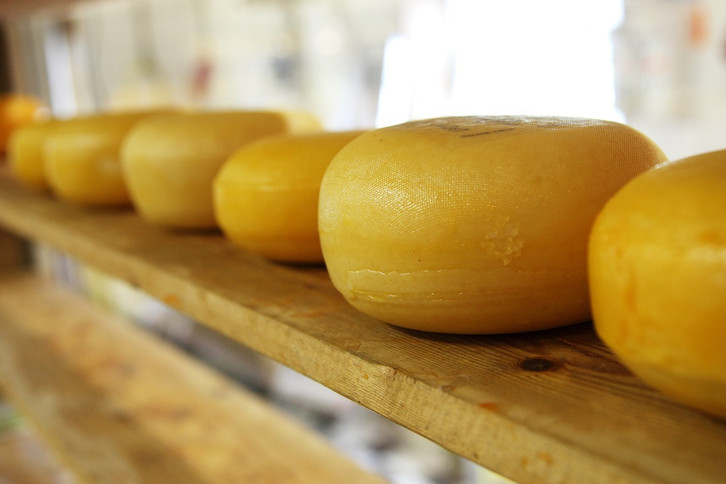
When processed into dairy products, the milk sugar content decreases. For cheese, quark or yoghurt, the milk is heated and curdles into cheese and whey. Most of the milk sugar remains in the whey. As the cheese continues to ripen, the remaining lactose is further broken down – very little lactose remains in the finished hard cheese.
Different dairy products have different lactose contents:
-
Whey (sweet): 4.7 to 5.3 percent
-
Whey (sour): 2 to 4.5 percent
-
Whey products: 2 to 5.2 percent
-
Yogurt: 2.5 to 6 percent
-
Mozzarella: 0.1 to 4 percent
-
Cream cheese: 2 to 4 percent
-
Butter: less than 1 percent
-
Soft cheese: around 0.1 percent
-
Hard cheese: less than 0.1 percent
Use of lactose
Lactose is obtained industrially from milk and processed into various products. Lactose is not only found in food, but also in medicines, cosmetics and antibacterial cleaning products. It is also used to make gentle laxatives such as lactulose.
Milk sugar is added to other foods to create a creamy consistency. If you cannot tolerate lactose, you should not only be careful with dairy products, but also take a closer look at the ingredients in ready meals, for example.
Revised by Philipp Multhaupt
Read more on Techzle\.com:
- Lactose intolerance: symptoms and dairy-free alternatives
- Lactose-free foods: when are they useful?
- Maltose: What you need to know about malt sugar
** marked with ** or orange underlined Links to sources of supply are partly partner links: If you buy here, you are actively supporting Techzle\.com, because we then receive a small part of the sales proceeds. More info.