

We mainly encounter blue light in LED screens and energy-saving LED light bulbs. But how harmful is blue light actually? We have answers to that.
We encounter blue light every day without us consciously noticing it: many smartphones, televisions and LED lamps, whether at home or in public spaces, emit blue light. It has long been discussed whether blue light waves have a negative impact on sleep and may also be responsible for retinal damage to the eyes.
We have put together all the important facts on the topic for you and at the end we will give you useful tips on how you can use blue light gently.
This is “blue light”

But what is blue light actually?
- According to Stiftung Warentest, blue light consists of high-energy, short-wave light waves. In the natural way, we experience blue light primarily in the light of the midday sun. It stimulates our circulation to stay awake and not get tired.
- Electronic devices that contain LEDs emit artificial blue light. LED stands for Light Emitting Diodes. Devices with LEDs can be, for example, tablets, smartphones or even LED lamps. LED lamps have been successfully represented on the market since the 1990s because they are considered to be very energy efficient.
A few years ago, many scientists were of the opinion that blue light from screens and similar sources could cause serious damage to the eyes and even lead to blindness. There is also a frequent recommendation on the Internet to avoid screens before going to bed, as blue light can disrupt sleep because of its waking effect.
What damage could blue light cause?

Three main fears are often raised when it comes to blue light:
1. Blue light could be responsible for damage to the retina in the eye.
Professor Stephan Degle from Jena University explains in the Stiftung Warentest report that damage to the eyes caused by blue light cannot be ruled out. This is particularly the case when it hits the eye in a concentrated form, as with some LED lights. Degle expresses this concern primarily in connection with excessive use of appropriate light sources.
BR24 also reports that too much blue light can, in theory, trigger oxidation processes in the eye, causing the retina to age more quickly.
2. Blue light could dampen melatonin release.
In the evening, the proportion of natural blue light is significantly lower than during the day. The soft evening light prepares the body to produce the sleep hormone melantonin. The Harvard Medical School published a study that shows that LED light can greatly suppress the release of melantonin.
But: Stiftung Warentest tested LED lamps and found that the LED lamps had no greater influence on sleep than ordinary light bulbs. Only LED daylight lamps have a higher proportion of blue light and can therefore have a strong influence on melantonin release.
3. Blue light is said to age the skin prematurely.
Another fear, according to Stiftung Warentest, is that blue light could promote premature skin aging. This claim is circulating again and again, especially on social networks. Stiftungen Warentest refers to the assessment of an expert from the Federal Office for Radiation Protection, who explains that there is no scientific evidence for such statements.
Blue light: how harmful is it really?
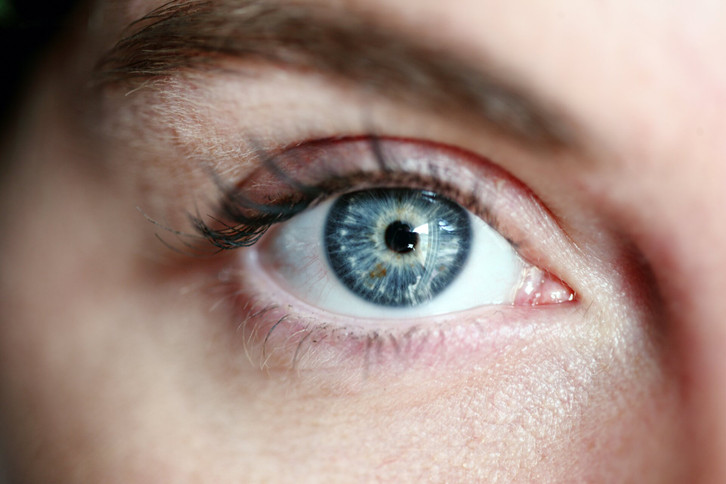
Many statements about supposed damage caused by blue light are not based on experiments with humans, but only on animal experiments and theories about how light behaves when it hits the retina, for example. However, many of these theories have been refuted in recent years. In many ways, blue light is not as harmful as first thought. At least according to recent scientific findings:
-
Blue light has not been proven to damage the eyes: The German Medical Journal writes that blue light has far less influence on good sleep than was assumed a few years ago. The light intensity of the screens we sit in front of every day is far too low to actually cause serious damage to the eyes. However, too much screen time can lead to nearsightedness. For this reason, among other things, children should not spend too much time in front of the PC or smartphone.
-
Blue light does not disrupt sleep as much as assumed: The assumption that blue light affects sleep has now largely been refuted. A corresponding study suggests that it is not the type of light that affects our sleep, but rather the use of screens in the evening in general. Read more about this in this article: Blue light filters and night mode: Do they really protect your eyes?
-
Blue light can have an effect on skin aging: Recent studies have found that blue light can cause certain skin damage and could therefore accelerate the aging process of the skin. However, exact processes are not yet entirely clear. In addition, the relevant studies are still largely carried out exclusively on animals. The results are not always transferable to humans to the same extent. In general, there is still a lot of room for further research here, as many factors are still unclear and can only be assumed so far.
Conclusion and tips for dealing with blue light correctly
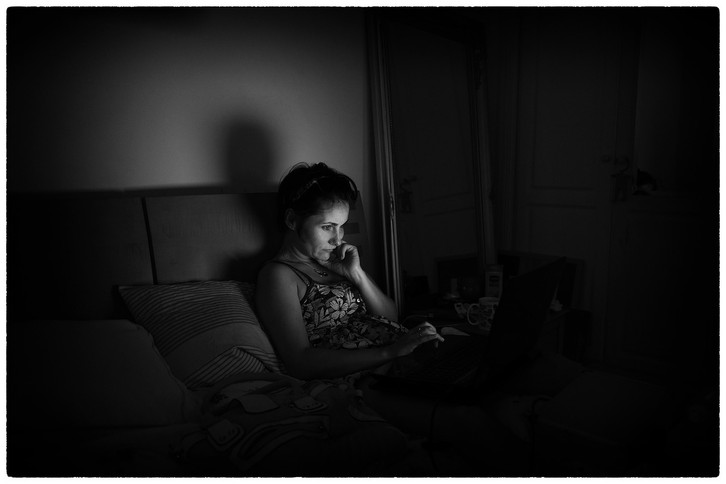
Ultimately, further studies are needed to examine the extent to which blue light can harm our health. With normal use of screens and LED bulbs, neither Stiftung Warentest nor more recent studies are currently assuming a worryingly higher level of exposure to blue light. However, it is now widely known that too much screen time is generally not good for us.
So blue light isn’t the only reason you should keep your screen time to a minimum. Experience has shown that just a few hours in front of the computer or laptop are enough for us to feel weak, tense or our eyes hurt. But this is not (only) due to the blue light. If you find that screen light or brightness is causing you headaches, trouble sleeping, or dry eyes, consider what you can change about your lifestyle:
- It’s best to turn off all screens before you go to bed in the evening.
- If you want to relax before bed, a good book or a relaxing evening routine is better than doom scrolling through social media or an exciting series on Netflix.
- Avoid LED daylight lamps in the last few hours before bed.
- Do you need glasses to work in front of the screen? You can buy glasses with lenses that absorb blue light more than regular lenses. Although the effect of such blue filters has not been clearly proven, experience has shown that some people find it pleasant to wear such glasses in front of the screen.
- However, it is more helpful not to set the screen too bright in general – especially in the evening.
Edited by Jennifer Watzek
Read more on Techzle\.com:
- Fall asleep better: These 6 tips can help
- Itchy eyes: causes and home remedies that help
- Sustainable sunglasses: good UV protection and little plastic
** marked with ** or orange underlined Links to sources of supply are partly partner links: If you buy here, you are actively supporting Techzle\.com, because we then receive a small part of the sales proceeds. More info.