
Can it handle it?
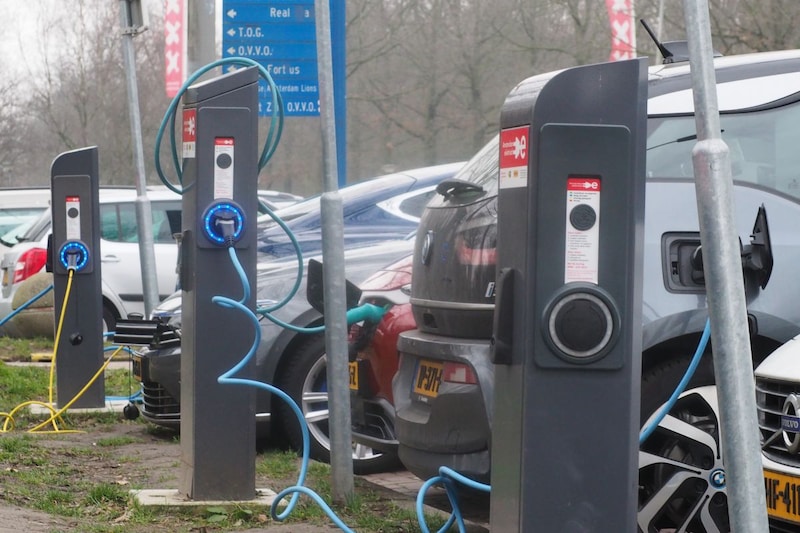
The growth in the number of charging stations and electric cars in the Netherlands goes hand in hand with a power network that can handle this. There are still some concerns about that.
The Netherlands is still a European pioneer when it comes to installing new charging points. In the first half of 2023, the number of public and semi-public charging points grew from 123,000 to 138,000, according to figures from the National Charging Infrastructure Agenda, a partnership of governments, network operators and companies. They foresee an explosive growth in the number of plug-in cars: almost 700,000 will be added between 2020 and 2025, and another million in the following five years. The rate at which new charging points are installed must therefore at least remain the same, or actually increase slightly. However, the limits of the power grid seem to be coming into view and have already been reached in some places.
Vattenfall, a major player in the market, has been installing charging points in Gelderland and Overijssel for a year now and sees that the time it takes from planning to commissioning is increasing here and there, by several weeks to months. One of the reasons, according to a spokesperson: “Because the net must first be made heavier before a charging station can be installed.” He foresees for the future: “In some places that will not be possible in time,” he tells it AD.
ElaadNL, the knowledge center of the network operators about electric driving, is investigating how cars can charge each other so that they do not burden the electricity grid. Because overload is lurking, both between now and 2030 and beyond, according to a report by ElaadNL. The power grid is already squeaking and creaking under the growing demand for electricity, not only from cars but also, for example, from heat pumps that have to replace central heating boilers at home. Projects to solve bottlenecks are ‘sometimes delayed for months to years’. That is why upgrading the power grid must become a ‘spearhead’ in the party programs for the upcoming parliamentary elections, says a spokesman for the Bovag car industry club. “As the Netherlands, we are doing something right, because we are a leader in Europe, but things are never going fast enough. Problems are looming, especially when charging trucks. We need to step it up a notch.”
– Thanks for information from Autoweek.nl