
Mostly annoying now
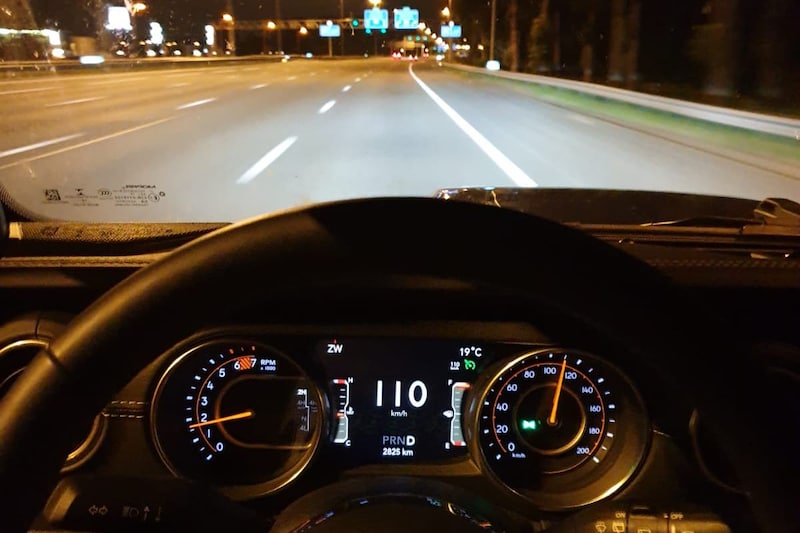
Anyone looking for a new car can be startled by an unexpected and loud warning during test drives. The culprit is the ‘Intelligent Speed Assistance’ (ISA), a system that has recently become mandatory on all new cars in the EU. Here’s what it is, what it can do and what you should know about it. You can also read our first practical experiences with ISA here!
“Beep, beep, beep!” The long list of driving aids, assistance systems and other automotive meddling has recently added another system: ‘Intelligent Speed Assistance’. Such a system is mandatory throughout the EU on all cars presented since 6 July 2022. From 7 July 2024, the measure will apply to all new cars, including existing models.
We haven’t noticed much of it in daily practice, but that is starting to change. After all, cars ‘from 6 July 2022’ are cars that only received their type approval after that date. After that moment, at least several months pass before the car actually arrives in the Netherlands. A concrete example: our endurance test Honda Civic of August 2022 does not yet have ISA, the Honda ZR-V in which the undersigned is driving this week does have it.
But what does it mean, that ISA? Well, that varies by manufacturer. The idea is, of course, the same for everyone: to warn drivers that they are speeding. How exactly this happens can be interpreted in different ways. The European Commission distinguishes four:
- Cascading audible warning
- Cascading haptic alert (vibration)
- Haptic feedback from the accelerator pedal
- A speed limiter
The ISA system can therefore warn (the first two options) or actually intervene (the last two), in various degrees.
The interpretation of the various ways of intervention is also described in detail. Option 1 means that a visual warning will flash first, after which an acoustic warning should sound after a few seconds. If those warnings are all ignored, there will be a pause. The vibrating warning works identically, but with a vibration in the accelerator pedal instead of a beep. With the haptic option, the accelerator pedal must, as it were, be pushed back if the car exceeds the applicable limit, although the driver can always ‘overrule’ this by simply pedaling harder. This is also possible with option 4. The speed is actually limited to the current speed, unless the driver deliberately ignores this.
The common denominator between all options is that it must be obvious that speeding is being done. The information about applicable maximum speeds is obtained via the already known traffic sign recognition system, with cameras, or via navigation information. As with other mandatory systems, such as lane assist, ISA is mandatory at every start. Switching off is therefore possible, but must be done again for every ride.
Practice
In practice, ISA turns out to be no party, at least not with the ZR-V and the Xpeng P7 with which we were already allowed to experience the system. Both cars opt for the acoustic option and start beeping as soon as a single kilometer per hour is exceeded, usually within a few seconds. 51 instead of 50 therefore irrevocably means a beep, and that makes the system so annoying that it is soon desirable to switch it off (see video below).
This irritation factor is acknowledged by the European Commission, but still seems to be present in abundance in its current form. In addition, as with lane assist, start/stop systems and similar assistants, it is often necessary to dig into a menu for a long time before switching off. It is to be hoped that car manufacturers come up with more convenient solutions for this, because staring at a screen in frustration obviously does not promote road safety in the least. Moreover, in order to obtain the much-desired acceptance, it does not seem a bad idea to us if a small margin is built in for the counter deviation. This results in less irritation and significantly increases the chance that the system remains switched on.
The European Commission will collect information about the use of the Intelligent Speed Assist from car manufacturers in the coming months and years. This includes looking at the extent to which the system is switched off and the extent to which the maximum speed is (still) exceeded.
– Thanks for information from Autoweek.nl