Philips Ambilight technology has been one of the most distinctive technologies in the TV market for 20 years now. Invented and developed in the Benelux, the extra dimension of light on the wall while watching TV is still increasing and there is a new technology with Ambilight plus in the OLED+959.
• In 2004, the international design and innovation team in the Netherlands (Eindhoven) and Belgium (Bruges/Ghent) were at the cradle of the Ambilight technology.
• Ambilight TV was introduced 20 years ago at the IFA in Berlin, the largest trade fair for consumer electronics that recently took place and this year itself celebrated its 100th anniversary
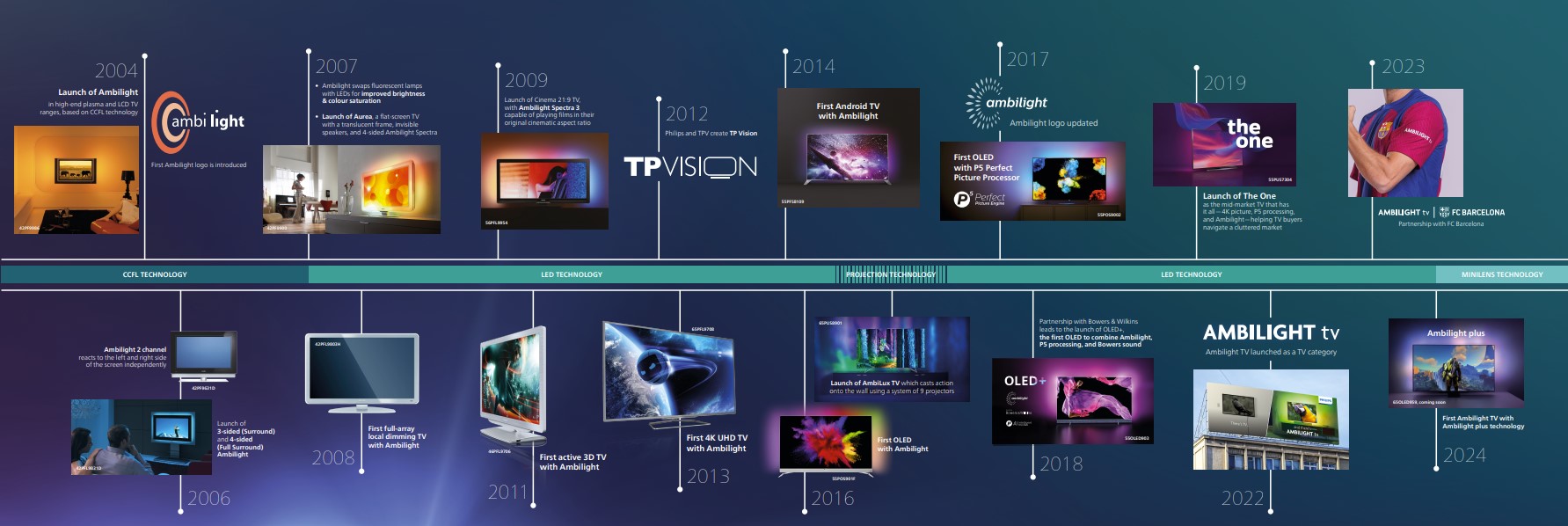
• Philips’ unique technology has been further developed over the past decades from relatively large CFL lamps to colorful small LEDs integrated into a thin screen.
• The latest technological development from the Innovation Center in Ghent is Ambilight plus. The new patented technology will be available this month in the Anniversary Edition Philips OLED+959 Ambilight TV and has been awarded the Award: Best Home Theatre OLED TV 2024-25 by EISA.
• With Ambilight plus, the colour LEDs on the back of the screen are grouped in groups of four and these individual LEDs are equipped with lenses that project the light in a targeted manner. This creates a two-dimensional effect with increased resolution.
• After 20 years, much knowledge and expertise still comes from Europe. Ambilight TV designs come from the award-winning design agency in Amsterdam, the televisions roll off the production line from the factory in Gorzów (Poland) and much image processing and technological development is done in the innovation centre in Ghent.
* Click here for the video 20 years Ambilight TV
Popular
With a whopping 35 million Ambilight TVs sold, Ambilight TV is one of the most popular consumer electronics products ever under the Philips brand. Ambilight was originally launched to reduce eye strain and increase contrast perception, for example when watching TV in dark rooms. Less contrast between the screen and the wall results in a more peaceful viewing experience.
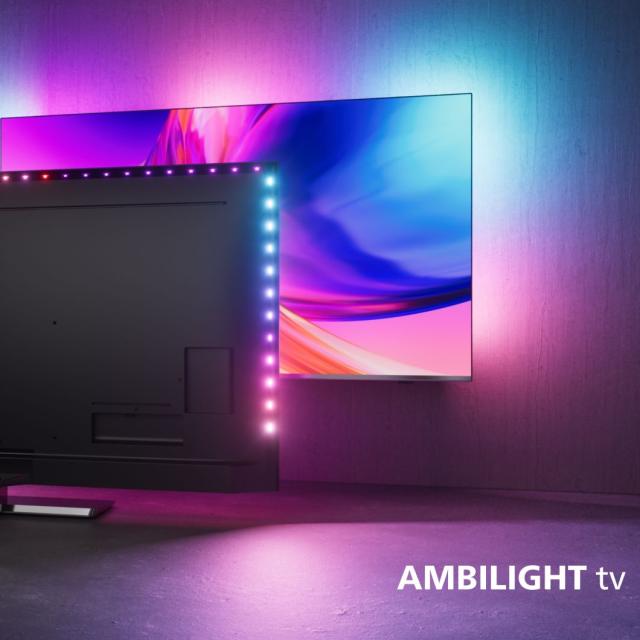
The system integrates intelligent lighting into the back of the TV, with Ambilight projecting a halo of coloured light onto the wall behind the TV, accurately matching the colours on screen. Since its original launch, Ambilight has undergone 12 major upgrades, becoming increasingly sophisticated and powerful.
At the same time, the TV’s bezels have been reduced to a minimum, which, together with the improved performance of Ambilight, has revealed one of the biggest advantages of the technology: the impression that the image on the screen extends far beyond the edges of the TV, adding an extra dimension to watching TV. A halo of colourful light makes the screen feel bigger and makes the TV float in space.
From yellow CCFL to small multi-colored LEDs
Ambilight was launched in 2004 with CCFLs (cold fluorescent lamps). At that time, the lamps displayed the same colour on each side of the screen. This was quickly followed in 2006 by the ‘stereo’ version which could display different colours on each side, and then the ‘surround’ and ‘full surround’ versions. These had lamps mounted on three and four sides of the TV. That year (2006) Philips TV announced that 1,000,000 Ambilight TVs had been sold, a milestone that was celebrated at CES Las Vegas in 2007 with the most exclusive Ambilight TV ever, the special edition had 2250 De Beers diamonds on the special mounting plate.
2007 also saw the switch from CCFLs to LEDs, ushering in a new era of refinement for the system. The use of LEDs made it possible to accurately match colours of local areas within the screen independently. The same year saw the launch of the flagship Aurea TV, extending the Ambilight effect to the TV’s edge. For many fans of Philips televisions, the Aurea range remains one of the most iconic TVs in history.
Ambilight TV European expertise and Taiwanese synergy
Since 2012, the television branch of the Philips brand has been under the care of TP Vision, with its headquarters in Amsterdam. It is part of the Taiwanese TPV Technology, one of the world’s largest manufacturers of screens (such as monitors, public displays and televisions). This provides the organisation with synergy benefits and access to the global market for panels, chipsets and other components. However, much knowledge and expertise still comes from Europe. Designs come from the award-winning design agency in Amsterdam and millions of Ambilight TVs roll out of the factory in Gorzów in Poland every year.
In addition, much of all image processing and technological development takes place in the innovation center in Ghent. The experts in the R&D Center ensure the recognizable Philips image quality and introduce features that focus on the wishes and preferences of the European consumer.
Philips’ unique technology has been further developed over the next two decades, leading to the introduction of the “Next Gen version” in 2022.
What is Ambilight plus?
With the launch of the new 65OLED+959 Ambilight TV, already crowned Best Home Theatre OLED TV 2024-2025 at the recent EISA Awards, TP Vision unveils the most advanced version of the Ambilight system by adding more lenses to the individually mounted colour LEDs. Ambilight plus creates a more dynamic, larger halo with greater depth and resolution. The system can project four different halos at different depths, creating a new two-dimensional effect.
To celebrate its 20th anniversary, Philips Ambilight TV is celebrating this anniversary with special offers throughout the coming quarter.