
the advantages and disadvantages of a private lease construction
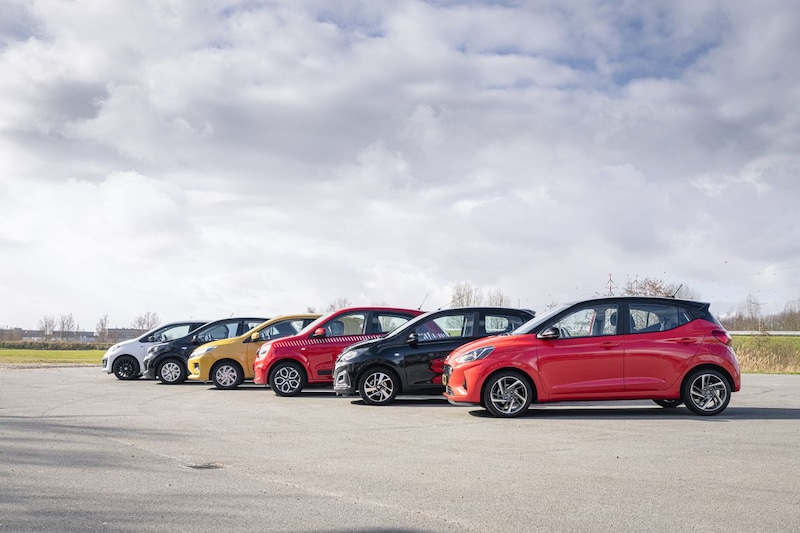
Once no dog was interested in it, but now it is impossible to imagine the Dutch car landscape without private lease. But there are catches in the grass.
In the past, lease cars were reserved for people with a high position. But more and more, both employers and employees discovered what a pleasant fringe benefit a lease car was. Cheaper than wages for the boss and a nice new car for the employee that, if you add up to the addition, you can also drive privately. This went up to employment agencies that purchased and purchased entire fleets of nice A-segmenters. Until ten years ago, however, it was not very popular for private individuals. However, financial lease was increasingly coming into the picture, but that was really no more than a fancy way of financing. Private lease, which completely relieves you as a driver – you still have the fuel costs – was not very popular. Because the relatively high monthly price made it a bit too clear what a major cost item depreciation actually is, and private individuals stuck to their trusted used cars or occasionally a new car.
Start of private lease
In 2015, leasing company Leaseplan managed to break the ban. The company set up strict campaigns in collaboration with Albert Heijn and Mediamarkt and thus marketed cars with a private lease construction through those stores. For just over €200 per month (a very competitive price, nowadays not feasible) you suddenly drove a new Fiat 500 or Hyundai i10. The success was overwhelming and the fence seemed off the dam. With the rapid quality improvement of new cars in combination with the rapidly rising fuel prices, it became increasingly attractive for private individuals to switch to a new car, which suddenly came within reach thanks to such a construction. The same applies squared to electric cars today. They are very expensive to purchase, but if you can drive them through a lease construction, you will be rid of the high petrol costs. Especially if you have solar panels to reduce your own power consumption, for example.
Label to protect people
But there are also risks. There is now a quality mark to protect people. As is well known, private lease takes over most of the costs associated with driving a car. Think of the purchase and depreciation, interest on a purchase loan, road tax, insurance and maintenance. So you only have to arrange the fuel and pay any tolls and traffic fines. You also have to arrange windshield wiper fluid, wax and oil yourself. The largest cost item of a new car is still the purchase and the associated depreciation. This is the argument why private lease can be beneficial. If you buy a new car yourself, you have to pay for it in cash or finance it. We then assume that you are not trading in a car, but that is also a car that you have already paid for.
Future trade-in value already included
With a private lease, the future trade-in value (and therefore the depreciation) of the car is already included. So you only pay for the value of the car you expect to use. Private lease can be especially beneficial for electric cars. They are more expensive to purchase and have a relatively high residual value. The road tax is also included in your private lease and insurance is another cost item. If you have already accrued many claim-free years, this item will be relatively more expensive with a private lease. But for younger drivers or for people who have had damage more often, it can be more advantageous to choose a private lease car.
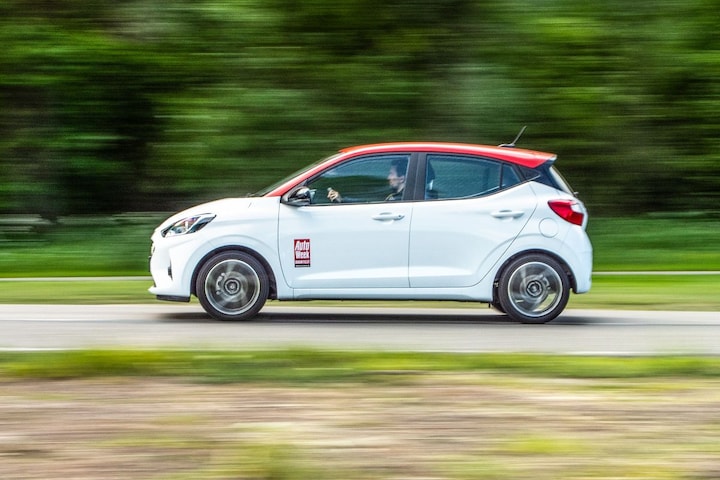
We did not drive our endurance test Hyundai i10 via private lease, but many i10s are driven that way.
Maintenance with private lease
Maintenance is also a major cost item, although it is often not too bad during the first years of a new car. But once the major service is approaching, in combination with new tyres, these are sometimes hefty sums. Normal prices of turns are included in the private lease prices. Also tires. For winter tires including the change, you logically often have a surcharge on top of the lease amount. Private lease contracts do not incur unexpected maintenance costs. And that can make them beneficial. Nowadays, various car brands also take care of maintenance for the first few years if you buy a car yourself, although certain parts are excluded. But if the car gets older, private lease is advantageous, precisely because you do not have unexpected maintenance costs. If you drive few kilometers, a private lease contract is often advantageous. However, the lease price is determined on the basis of the expected kilometers you will drive. And above 30,000 km that quickly increases. It is then better to consider buying a car yourself (possibly with financing). Above 40,000 km it becomes completely expensive and for such high mileages few private lease cars are offered in practice.
Quality mark
The Association of Dutch Car Lease Companies (VNA) has created a quality mark. The consumer is thus assured that he is dealing with a reliable party. The quality mark guarantees a number of certainties. – Fair conditions that have been tested by the Consumers’ Association. The lease price includes the following components: maintenance, repairs, insurance, roadside assistance, replacement transport and motor vehicle tax. The lease company looks at how much you are able and willing to pay, so that the customer has clarity about the actual monthly costs. The consumer always has a fourteen-day cooling-off period and can still withdraw from the contract during that period. Complaints are handled by an independent disputes committee. More than thirty lease companies are now affiliated with the quality mark.
Disadvantages private lease
Breach of contract is expensive: do you want to get out of the contract because your personal situation changes (e.g. divorce or dismissal)? Then in many cases you pay a fine. It is not the cheapest form of driving. That is always an occasion that you drive all the way up. Borrowing money from the bank to buy a car can also turn out to be cheaper than a private lease. Be sure to consider that option. It is more expensive with lower usage than expected: many private lease contracts assume a certain mileage per year, for example 15,000 kilometres. If you drive much less in practice, this will not always be settled with you. But it is also expensive if it is used too much: if you drive more kilometers than agreed, the lease companies charge extra costs of 5 to 16 cents per kilometer. Your claim-free years may be lost. The insurance is included in the lease contract and is not in your name. With most insurers you lose your accrued no-claims discount after three years. Moreover, you do not take that discount with you. The insurance costs included in the monthly amount are the same for all drivers. Certainly if you have an almost maximum no-claim discount, it is almost always cheaper to borrow money to buy a car. There is a deductible in case of damage! Insurance is included in the contract. In the event of damage, there is often an excess of up to €500. Private lease has consequences for the mortgage. These are not to be underestimated, also in view of the often long duration of a private lease contract. If you intend to buy a house in the long term, your private lease limits the maximum amount you can apply for a mortgage. You already have a financial obligation. And the differences are significant. You can sometimes borrow tens of thousands of euros less. Another disadvantage is that you have nothing at the end of the lease contract. Normally you always have a car to trade in, unless it is a total loss. But when your contract term is up, you return the car and start again from scratch. You can of course enter into a private lease contract again, but you are better off if you still have a nice occasion to trade in. Suppose you are so satisfied with your car that you want to take it over from the leasing company, then that is often possible, but you would probably have been better off at the bottom of the line if you had bought the car yourself at the time, with or without a favorable price. loan.
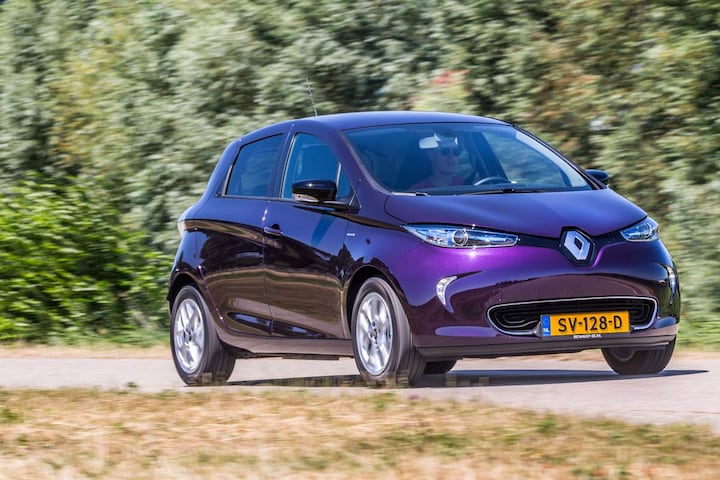
Electric driving can suddenly be an option through a private lease construction.
Private lease examples:
In this example, we assume a 27-year-old motorist with no claim-free years who wants to take a Kia Picanto, but cannot afford the full amount of roughly €14,000 for it himself. With a private lease you can already drive a Picanto for €219 per month. You can then drive 10,000 kilometers per year for four years. If you buy the same Picanto with borrowed money and take the same variables into account, you will pay an estimated €250 per month.
Suppose you wanted to buy a new Volkswagen T-Roc. The new price of the entry-level version of this car is around €30,000. If you drive 15,000 kilometers per year for five years and pay for the car entirely with your own money, you are looking at monthly costs of around €450. If you are looking for a private lease contract with the same conditions, you will end up with a monthly rate of roughly €450. 399. In this case too, a private lease would therefore be slightly cheaper. Above 30,000 km, the price of private lease rises quickly; consider buying a car yourself.
Your own situation
Do you want to get started yourself? See what you spend per month on: depreciation, motor vehicle tax (MRB), insurance and maintenance (including tires). And then look up the car of your choice (or your current car) in Autoweek’s Private Lease Comparator to calculate the lease amount.
Private lease benefits
Insight into the costs: you know exactly what you have to pay each month. Only fuel costs (or electricity) and traffic fines are for your own account.
No unexpected garage bills.
You don’t have to buy or trade in a car. All maintenance is also included in the price, so there is no chance of financial setbacks due to a poor residual value.
You don’t have to put in your own money. You must have a fixed income.-
You drive a new car that may otherwise be financially unattainable. This usually means more comfort, more luxury, more safety and lower consumption. Or perhaps a switch to electric driving, which is otherwise unaffordable.
– Thanks for information from Autoweek.nl