
Nowadays, when we talk about the cloud, the first thing that comes to mind is something virtual. The same goes when we talk about cloud hosting and the way it works. Traditional web hosting is usually combined with one or more websites operating on one physical server.
On the other hand, cloud hosting uses a cluster of virtual servers known as cloud servers. All the cloud servers combine to create a select network for hosting one or multiple websites.
In other words, if a traditional web hosting server crashes or malfunctions, all the websites will be down. If cloud hosting becomes faulty, the website will still be running due to its cluster server hosting. This is one of the reasons why cloud hosting has become such a popular choice.
Benefits of cloud hosting
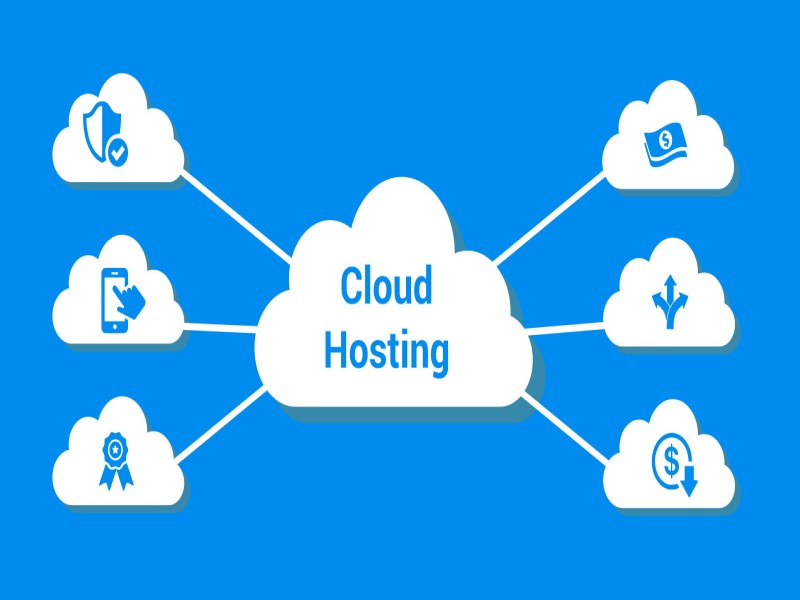
Cloud hosting has many benefits, such as traffic balancing, flexible pricing, high performance, scalability, and security.
Traffic balancing – When the website encounters traffic, the framework will divide that traffic between the cloud servers. This helps sustain the website running smoothly as traffic increases. For instance, in traditional website hosting, your website will crash when the server goes down. In cloud hosting, the website uses multiple Cloud servers, therefore, if one server goes down, the workload is spread out between the other Cloud servers to prevent downtime.
Flexible pricing – In most cases with hosting packages, you are offered monthly hosting, meaning you pay full price no matter what services you use or don’t use. However, Cloud hosting is known for its “pay for what you use” functionality. Therefore, you won’t be throwing away money for features that you don’t use. Instead of paying full price for all the services they offer, you pay only for the resources that you use.
High performance – The biggest issue traditional hosting faces is performance. In the case of multiple websites or a website with high traffic, traditional hosting servers can sometimes be swamped. With Cloud servers, it is quite the opposite. They provide really fast speed, and on top of that, they effortlessly increase the site’s capacity combined with fast loading time across servers. One server doesn’t have to take all the heat.
Scalability – Cloud hosting does not limit the user when it comes to storage, bandwidth, or processing power compared to a single server experience. Also, the cluster of servers makes it easy to scale up and down their resources as needed in situations with high traffic or low traffic.
Increased security – Since Cloud hosting uses a number of servers virtually intertwined, it’s less likely to experience malfunctions. Cloud hosting websites are isolated from physical server issues such as hacking, hardware malfunction, or system overload. In any given situation, if the server experiences any issues, the websites are simply allocated to another server.
For companies, enterprise cloud hosting is a robust solution that empowers businesses to leverage the power of the cloud for their data storage, application hosting, and scalability needs. With the flexibility to scale resources up or down as required and the security features to protect sensitive information, enterprise cloud hosting offers a dependable foundation for businesses of all sizes. Whether you’re looking to enhance your IT infrastructure, improve data accessibility, or optimize your workflow, enterprise cloud hosting has the answers you need. To delve deeper into the benefits and features of this cutting-edge solution, find out more here.
What types of websites could benefit from cloud hosting?
First and foremost, website owners need to consider if moving to cloud hosting is beneficial for their website. One of the main reasons to move to Cloud hosting is due to an increase in traffic on their website. For instance, if your website has modest traffic and few resource demands upgrading to cloud hosting might not be essential.
In other words, it’s a great fit for all websites that need a great amount of processing power, bandwidth, and storage to accommodate the high volume of traffic, files, and data they store.
In case of sensitive information and data being entered within the website, such as payment details and customer information, users may opt for private Cloud hosting as opposed to a public one. Private Cloud hostings come with a unique cluster of servers hosted on a private network to prevent unauthorized parties from accessing sensitive data.
Conclusion
In a nutshell, its primary function is reliability. Your website will be up and running at all times. The cluster of servers is great for distributing the workload across them to prevent downtime and, at the same time, provide the best user experience through its many benefits like processing power, traffic balance, security, and pricing.
In terms of pricing, it’s well known for its “Pay As You Go” structure, as you only have to pay for the resources that are being utilized. This is a reliable go-to solution for large-scale audiences like enterprise websites, online marketplaces, search engines, and social media networks.