
Solar panels and variable energy contracts
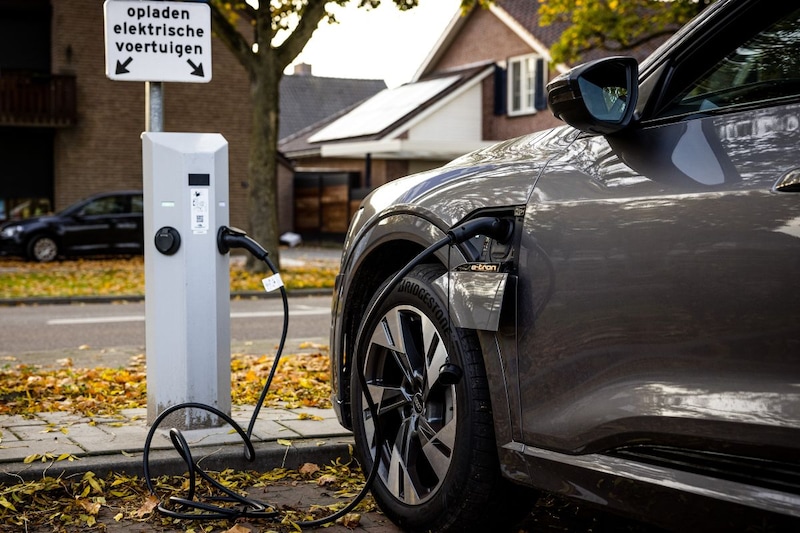
EV drivers are increasingly concerned with charging their electric car as cheaply as possible. This is evident from the annual National Charging Survey.
Due to the high electricity prices, people with electric cars are increasingly looking for ways to reduce charging costs, according to the annual National Charging Survey, conducted by the University of Groningen. That really doesn’t mean that hordes of EV drivers will take a detour until a cheap charging station becomes available or that they… en masse look for free charging promotions. No, according to the research, charging is mainly done at home, as a result of the increased rates at public charging stations. According to the latest figures, more than 50 percent of the kilometers driven are charged at home, 25 percent at public charging stations, 13 percent at work and 9 percent at a fast charger en route.
Charging at home is especially cheaper for people with solar panels. More than three-quarters (77 percent) of drivers of plug-in cars now have these panels on their roof. According to the researchers, a ‘remarkably large proportion’ of home chargers (20 percent) have now switched to a dynamic electricity contract with often much lower rates during off-peak hours. The rest would like to do this. “Dynamic rates are not only increasingly popular with home chargers. Nearly half of electric drivers also want dynamic rates to be possible at public charging stations.” This way you can choose to charge as much as possible during off-peak hours to reduce costs.
Many people with electric cars still experience problems with public charging. For example, they encounter defective charging stations or the charging station is already occupied. In addition, cars with fuel engines sometimes occupy the charging stations. In the eyes of electric car drivers, things are also often not well organized at work, partly due to a lack of charging places. Electric drivers are the most dissatisfied with charging abroad during holidays. “In particular, too few charging stations (en route and at destination), defective charging stations and lack of clarity about the operation of the charging card or charging app abroad are many perceived bottlenecks,” the report states. The research is an initiative of ElaadNL, the Electric Drivers Association and the Netherlands Enterprise Agency (RVO).
– Thanks for information from Autoweek.nl