
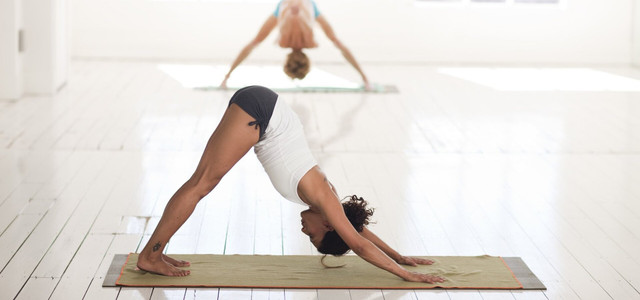
Contrary to what many people assume, flexibility and mobility are not the same thing. The differences are not only important for athletes, but also in everyday life.
The terms “flexibility” and “mobility” are often used interchangeably. They differ in some important points. What is certain, however, is that both factors play an important role not only in sport, but also in everyday life when it comes to pain-free and effective movement. Understanding the differences between the two terms allows you to specifically identify weak points in your movements and address them accordingly.
Here you will find out what the difference is between flexibility and mobility, why it is important and how you can specifically train each skill.
Flexibility and mobility: That’s what they mean

Both flexibility and mobility are important for free movement. Training both factors can help you improve your athletic performance and reduce the risk of injury during certain movements, writes Medical News Today. The latter also applies to everyday life. Both abilities enable pain-free, effective movement.
Flexibility:
- Flexibility is the ability of your muscles and surrounding soft tissue to stretch in length. (A typical example is the splits).
- More specifically, according to the physical therapy and sports medicine magazine Prolete, flexibility refers to passive stretching of the muscle through external support. (For example: you let gravity slide you into the splits or someone else pushes you deeper into the stretch while stretching).
- You can usually train flexibility through static stretching exercises (a position that stretches the muscle is held for several seconds to minutes).
- Training takes place when the muscles are already warm – either at the end of a training session or after warming up as part of a separate training session.
Mobility:
- Mobility is the ability of the limbs and joints to perform movements with the maximum possible range of motion without pain or discomfort. (A typical example of this is shoulder circles).
- In contrast to flexibility, mobility describes the ability to actively move the body into a certain position without external help. (Example: Many dancers can move their leg up to their head while standing without having to hold it and pull it in. This is an extreme example of good hip mobility).
- Mobility is trained through dynamic movement that requires the full range of motion of each limb.
- Training can take place at any time – whether as a warm-up, during training or during the cooldown afterwards.
Why you should train flexibility and mobility
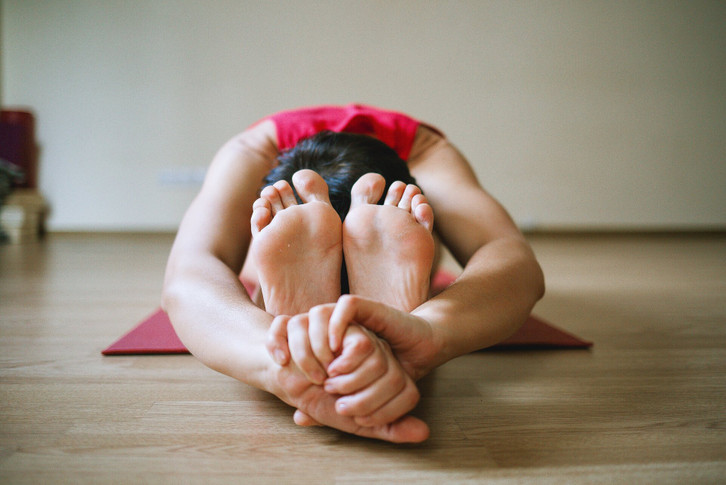
Flexibility and mobility are particularly important in sports in order to be able to carry out complex, fast movements and extreme positions easily and without injury. For example, martial artists need both flexibility (the ability of the muscles to assume extremely stretched positions) and mobility (the ability to move in and out of such extreme positions into the next movement).
But this also applies to everyday life. Limited flexibility or mobility can lead to injuries if you make unfortunate movements, warns the AOK.
As our comparison shows, flexibility and mobility are not the same thing, but they work together:
- Without enough flexibility, your body cannot assume certain positions.
- However, without good mobility, certain movement sequences become more difficult, even if you are well stretched. For example, your range of motion during lunges may seem restricted or unstable even though your hip flexors are well stretched if active control (i.e. mobility) in the hips and pelvis is lacking.
Flexibility and mobility work together to improve athletic performance but also to make everyday movement easier. They can also counteract pain, tension and injuries.
What is more important: flexibility or mobility?

Even if you have very flexible muscles, a lack of joint mobility can limit your range of motion – and vice versa. So both factors play a big role in injury prevention and neither is necessarily more important than the other.
According to the AOK, older people in particular can benefit from mobility training. Medical News Today and Prolete, on the other hand, point out that both factors are equally important for younger people in everyday life as well as in sport and should be trained accordingly.
The rule of thumb: To be mobile, you also have to be flexible. Conversely, flexibility also requires good mobility in order to be able to control the stretch. Therefore both factors are equally important.
If you suffer from restricted mobility or want to improve your sporting performance, it can be helpful to speak to specialists or your trainer to find out where you personally need to improve. Maybe you’re naturally very flexible but find it difficult to control your movements. Then you probably need more mobility training.
Training flexibility and mobility: This is how it works
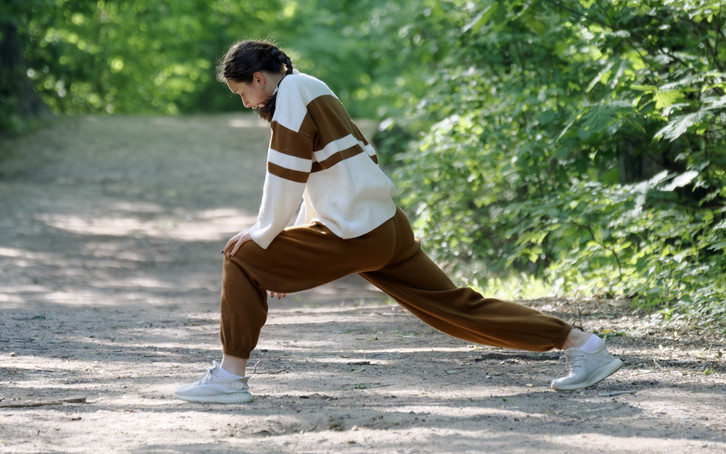
Because these are different skills, the training requirements for flexibility and mobility are not identical. Here’s what you need to keep in mind for effective training:
Train flexibility
Flexibility is trained during classic stretching. The following applies:
- It is best to perform the exercises on a yoga mat or other soft surface.
- Don’t stretch until your muscles are warmed up (for example, after exercise or a warm-up session).
- Stretch slowly and relaxed, avoiding springy stretches.
- Stretch until you feel a pull (close to the pain threshold, but not beyond). The stretch must be slightly uncomfortable to have an effect. But it shouldn’t be really painful. A sudden, severe pain is a warning sign.
- You can support the stretch by breathing in and out in a relaxed manner and letting yourself fall a little deeper into the stretch as you breathe out.
- It’s best to stretch every day. But even twice a week can be enough to achieve results.
- You can find tips on how to stretch your back or hip flexors, for example, in our guides on stretching.
Train mobility
You train mobility with targeted mobility training. This is how it works according to the AOK:
- Anyone can do mobility training and easily adapt it to their own performance level.
- If you have movement restrictions or an injury, you can consult a doctor beforehand to find out which exercises are suitable for you personally.
- You can do mobility training at any time – whether as a warm-up, as part of your training or afterwards. You can also incorporate a few mobility exercises every now and then in your everyday life.
- The same applies to your mobility: you don’t have to train it every day. But the more you do it, the more progress you will see.
- In general, it is often recommended to repeat a set of mobilization exercises approximately eight to twelve times.
- You can find suggestions and suggestions for mobilizing the whole body in this article from SWR, for example.
Read more on Techzle\.com:
- Do sports: This is how you find the right sport
- Not every sport helps with back pain: avoid additional strain
- Workout at home: 4 ideas for exercising in your own four walls
** marked with ** or orange underlined Links to sources of supply are partly partner links: If you buy here, you are actively supporting Techzle\.com, because we then receive a small part of the sales proceeds. More info.